
October 18, 2021
WEST CHESTER (October 18, 2021) – State Senator Carolyn Comitta recently voiced her opposition to Aqua Pennsylvania’s proposed rate increase, which would increase average monthly residential water bills by up to 17 percent and average monthly wastewater bills by nearly 33 percent.
“Affordable, quality water and wastewater services are a basic necessity,” Comitta wrote in a letter to the Pennsylvania Public Utility Commission (PUC). “This increase will place an undue burden on residents, families, senior citizens, and those on fixed incomes in communities across my district. Furthermore, it comes at the very time that we continue to face the unprecedented challenges associated with an evolving pandemic, an ongoing economic crisis, and significant storm and flood damage from Hurricane Ida.”
Under the proposals, the average monthly bill for a residential water customer using 4,000 gallons per month would increase by $11.97, from $69.35 to $81.32. The average monthly bill for a residential wastewater customer would increase $18.44 (33.2%) from $55.51 to $73.95.
According to Aqua, the rate increase would be used to cover necessary upgrades and repairs to its distribution and treatment systems.
The PUC may approve or deny the rate increase on Aqua customers, which would go into effect in 2022. Earlier this month, it voted to suspend and investigate the rate increase requests for up to seven months and assign them to the Office of Administrative Law Judge for evidentiary hearings and the issuance of recommended decisions or settlements.
Comitta also noted that while seeking the rate increase, the company continues to purchase and pursue the acquisition of municipal water authorities across the Commonwealth and the southeast region, including the Chester Water Authority.
“I strongly oppose this increase and respectfully ask that the PUC carefully consider its potential impacts on all our communities, especially our most vulnerable families,” she wrote.
Aqua Water provides water service to approximately 434,264 customers in portions of more than 200 municipalities throughout 32 Pennsylvania counties. Aqua Wastewater provides wastewater service to approximately 40,284 customers in portions of more than 40 municipalities throughout 15 Pennsylvania counties. Collectively, the two companies serve nearly 1.5 million people throughout the Commonwealth, including many in Chester County and southeastern Pennsylvania.
Aqua Pennsylvania’s last rate increase was filed in 2018 and became effective in 2019. It resulted in average water customers experiencing a nearly 10 percent increase and wastewater average customers shouldering a nearly 35 percent hike.
Residents are encouraged to submit public comments on this proposed increase.
Comments can be sent to the Pennsylvania Public Utility Commission, P.O. Box 3265, Harrisburg, PA 17105. For more information on this process, call the PUC at 1-800-692-7380 or visit the PUC website: www.PUC.PA.gov.
More information on the ratemaking process is available on the Commission’s website.
Senator Comitta’s full letter to the PUC can be found here

October 15, 2021
WEST CHESTER (October 14, 2021) – An important project to bring 50 affordable senior housing units to the Borough of Phoenixville is on track to receive nearly $1.2 million in tax credits through the Pennsylvania Housing Finance Agency (PHFA).
PHFA announced today that $1.187 million in Low Income Housing Tax Credits has been conditionally reserved for the Hankin Group’s proposal to build 46 one-bedroom and 4 two-bedroom affordable housing units at 115 Buchanan Street in Phoenixville. The units, reserved for those age 62 and older, will be available at or below 60 percent of the area median income.
“We are truly grateful for the support we received from the borough, county and our state leaders. Providing affordable housing for seniors has been the most gratifying work of my career and we are happy to partner with the borough to create a safe and beautiful community for those 62 and older. It was with love and care that we restored and repurposed the Phoenixville Foundry in 2008 and we look forward to breaking ground on another new landmark in Phoenixville’s continuing renaissance,” said Robert Hankin, President and CEO of the Hankin Group, said.
The new apartment community, estimated to be about 54,000 in total square feet, is envisioned as a place where residents can maintain an active lifestyle within a safe, walkable, and welcoming downtown. Meanwhile, access to reliable public transportation is located nearby, not to mention numerous opportunities for community involvement, educational programming, social activities, and quality health care services.
The announcement was welcomed by state and local officials, including Senator Carolyn Comitta, state Rep. Melissa Shusterman, and state Rep. Danielle Friel-Otten who continue to support this and other important investments in affordable housing opportunities throughout the region.
“With a thriving downtown business district and premier shopping, dining, and entertainment opportunities, the Borough of Phoenixville has blossomed into a top destination in southeastern Pennsylvania. With such success comes the demand for housing and rising housing costs,” Comitta said. “These tax credits help ensure housing availability for our older friends and neighbors so that those who helped lay the groundwork for the borough’s current success can continue to be part of the Phoenixville community and enjoy all its ongoing revitalization has to offer.”
“I extend my congratulations to the Hankin Group for earning the 2021 PHFA award! The PHFA recognizes the need for sustainable, affordable housing for all residents. I am pleased to recognize the Hankin Group for their dedication to this cause, and for a job well done,” Shusterman said.
“For communities like Phoenixville that have experienced so much growth, it is imperative they have access to affordable housing options. As we continue to recover from the pandemic, we have seen how important affordable housing can be to one’s health and quality of life. I am grateful for this investment in our community from the PHFA and the Hankin Group,” Friel Otten said. “Thank you to all of our community partners for their efforts to secure this vital funding.”
“The borough partnered with The Hankin Group by contributing the land for this project and is excited by the opportunity to provide homes for some of our most vulnerable citizens, which includes an 11.5 percent senior population. This great project is in a location that is in direct walking distance of nearby shops and restaurants in downtown Phoenixville,” said Phoenixville Borough Manager E. Jean Krack.
The Phoenixville project comes as part of more than $43.6 million in low income housing tax credits announced for 37 affordable housing developments statewide. Along with $7.4 million in PennHOMES funding and more than $15.9 million in National Housing Trust Funds, these investments will support the construction of 1,974 affordable multifamily rental units across the Commonwealth.
“Tax credits are the best tool we have for supporting the construction of affordable rental housing in Pennsylvania,” said PHFA Executive Director and CEO Robin Wiessmann. “Our mission at PHFA is to expand affordable housing options for the state’s residents, and these developments receiving tax credits today will help us do that.”
“The pandemic has shown just how important affordable housing is for people’s health and quality of life,” said Gov. Tom Wolf. “I’m pleased that we are able to help fund the construction of these new rental units to meet the demand for more affordable housing in the commonwealth.”

October 6, 2021
WEST CHESTER (October 6, 2021) – State Senator Carolyn Comitta reminded licensed child care providers to apply for $655 million in total pandemic relief to help cover expenses and stabilize this important industry.
The funds, being allocated by the Pennsylvania Department of Human Services (DHS) from the federal American Rescue Plan, are available to eligible child care providers with a license in good standing that have been open since March 11, 2021 – or, if temporarily closed, that plan to reopen by the end of September.
“Our early learning centers provide vital educational and child care services to both young children and working parents and families across the Commonwealth,” Comitta said. “These funds offer crucial and flexible support as we continue to face an evolving pandemic and ever-changing circumstances. I encourage all eligible applicants to apply for funding.”
Comitta, who serves on the Senate Education Committee, also noted that child care providers and staff continue to face the risks involved with serving on the front lines of this pandemic – educating and caring for young children who do not yet have access to a vaccine.
Under this one-time grant program, childcare providers can use these dollars for a variety of purposes, including:
- Personnel costs, including for both recruitment and retention efforts, such as sign-on bonuses and pay increases;
- Operational costs, such as rent or mortgage payments, utilities, maintenance, and insurance;
- Health and safety costs, such as Personal Protective Equipment (PPE), cleaning and sanitation supplies, and staff professional development related to health and safety practices;
- Equipment and supplies;
- Goods and services necessary to maintain or resume child care services;
- Mental health services for children and staff; and,
- Reimbursement for past COVID-19-related expenses incurred after January 31, 2020.
“This is an unprecedented amount of funding that we hope and believe will help these businesses and nonprofit organizations shore up their finances, recruit and retain early childhood professionals, and build capacity to serve more children, especially in communities where working families are struggling to access affordable child care options,” Acting DHS Secretary Meg Snead said. “The COVID-19 pandemic has had a significant impact on Pennsylvania’s child care industry – from increased expenses and decreased demand early in the pandemic to the current challenges of staffing shortages and waiting lists for families that need affordable child care to get back to work. Our goal with this funding distribution is to offset those challenges and create a pathway for recovery from this pandemic – not just for child care, but for our economy as a whole.”
Applications are open now through January 31, 2022 and be accessed online at: https://www.pakeys.org/arpastabilizationgrants
Providers will have nine months after their application is approved to use these dollars and provide a report to DHS on how those dollars were used.
While grants are based on the availability of funds, DHS partnered with Penn State’s Institute of State and Regional Affairs to develop a distribution methodology that is fair and maximizes the impact of every dollar.
“OCDEL issued small grants quickly during the onset of the pandemic, while collaborating with the Institute to gather and use quality data to inform later funding decisions. Over multiple rounds of funding, Pennsylvania has been responsive to both urgent needs and emerging research findings,” said Dr. Philip Sirinides, the institute’s director. “OCDEL is now in a position to distribute ARPA stabilization grants through an equitable and data-driven approach.”
###
October 5, 2021
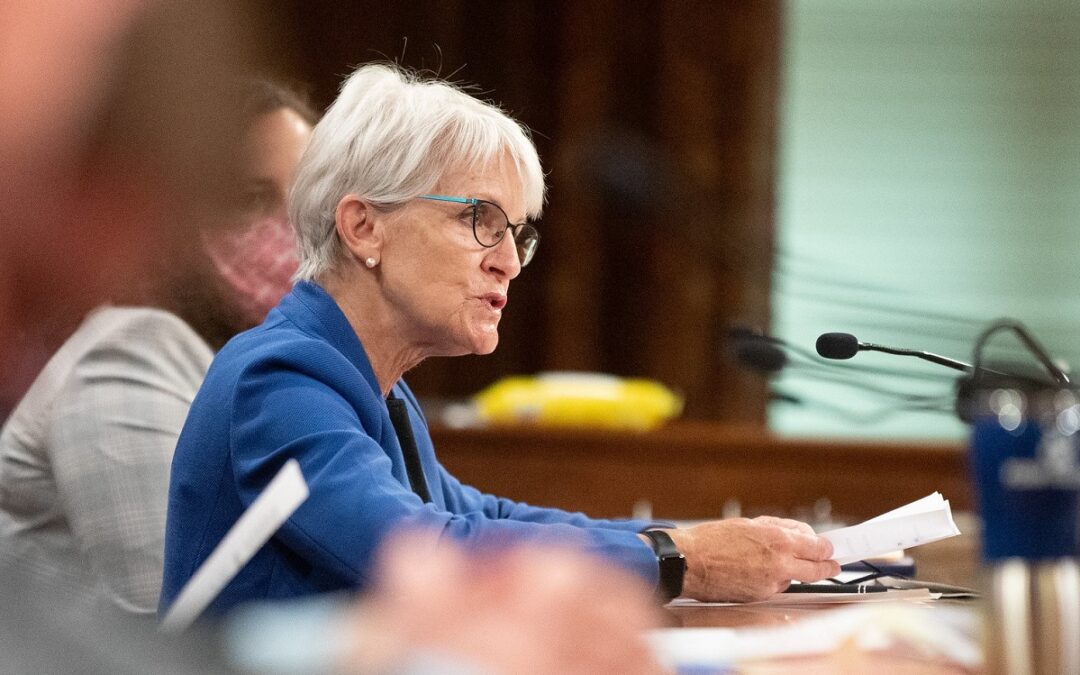
WEST CHESTER (October 5, 2021) – State Senator Carolyn Comitta, Minority Chair of the Senate Environmental Resources and Energy Committee, issued the following statement regarding today’s announcement that Pennsylvania Attorney General Josh Shapiro is filing criminal charges against Energy Transfer Partners for environmental crimes related to the Mariner East pipeline project:
“In light of these serious criminal charges against Energy Transfer Partner, I am calling for an immediate halt to the Mariner East pipeline project and for the Pennsylvania Department of Environmental Protection (DEP) to issue a moratorium on all permits.
These charges allege a pattern of behavior from Energy Transfer that put our environment, our communities, and our very public health and safety at significant risk. Worse yet, according to the charges, Energy Transfer repeatedly and willfully failed to oversee, notify, and report inadvertent returns, spills, and contamination of streams, waterways, wells, and sources of drinking water.
It is now imperative that the project be halted and the investigation continue to determine the complete scope of the impacts of these alleged crimes. I thank Pennsylvania Attorney General Josh Shapiro and Chester County District Attorney Deb Ryan for working to hold Energy Transfer criminally accountable.
And I am committed to working with the Attorney General’s office, DEP, local officials and stakeholders, and my colleagues in the legislature to ensure stronger oversight, tighter regulations, and stiffer penalties.
Pennsylvanians have a constitutional right to ‘clean air, pure water, and to the preservation of the natural, scenic, historic and esthetic values of the environment.’ As Attorney General Shapiro expressed today and as is reflected in these charges and potential penalties, we need better laws, increased oversight, and more resources to protect those rights and to protect our communities, families, and natural resources.”

October 4, 2021
WEST CHESTER (October 4, 2021) – State Senator Carolyn Comitta reminded schools, colleges, nonprofit community and environmental organizations, county conservation districts, and businesses that $750,000 in state grant funding is available for eligible environmental education projects.
“As we continue to face the growing impacts of climate change on our environment, public health, economy, and nearly every aspect of our lives, it’s crucial that the next generation of Pennsylvania leaders is environmentally literate, environmentally informed, and prepared to make environmentally conscious decisions,” said Comitta. “These grants help educate students and young people on the positive actions we can all take to help ensure our natural resources are available for the use and enjoyment for decades to come.”
Comitta, who serves as minority chair of the Senate Environmental Resources and Energy Committee and as a member of the Senate Education Committee, noted that deadline to apply is Friday, December 10, 2021.
Administered through the Pennsylvania Department of Environmental Protection (DEP), the Environmental Education Grants Program provides funds to support a wide range of environmental education projects including meaningful, hands-on programs for students, teacher training workshops, and community conservation projects for adults.
Projects with a local focus may receive up to $3,000 and regional or statewide initiatives may receive up to $20,000. Projects that engage students and teachers at the local, state, and national levels may be awarded up to $85,000.
“This grant opportunity assists educators in their efforts to inform residents and visitors on ways to maintain the health and beauty of Pennsylvania,” said DEP Secretary Patrick McDonnell.
While all education project topics are considered, water quality, climate change, and environmental justice are priority areas. Project examples include tours, demonstrations, and hands-on learning experiences and workshops on stream monitoring, rain gardens, wetlands, green infrastructure, and other watershed stewardship; solar and other renewable energy, alternative transportation, energy conservation, and other approaches to address climate change; and improving air quality and community and municipal partnerships to address local environmental challenges. For more examples, see the grant awardees that received 2021-22 funding.
Applications must be submitted through eGrants (first-time users will need to register.) Instructions are available at Environmental Education Grants.
The Environmental Education Grants program was established by the Environmental Education Act of 1993, which mandates setting aside 5 percent of the pollution fines and penalties DEP collects annually for environmental education in Pennsylvania.
Since the program began, more than 2,020 organizations across the Commonwealth have received more than $11 million in Environmental Education Grants.
September 30, 2021
WEST CHESTER (September 30, 2021) – State Senator Carolyn Comitta reminded colleges, universities, and institutions of higher education that $1 million in total state grant funding is available for programs to prevent and combat sexual assault on campus.
The Pennsylvania Department of Education is currently accepting applications for the It’s On Us PA grant program to support and implement strategies and resources to stop sexual assault on college campuses.
The statewide program, launched by the Wolf administration in 2016, is modeled on the success of the national It’s On Us campaign, an initiative of the Obama-Biden White House. It aims to effectively address and counter the culture of sexual assault on campus by opening a larger conversation about recognizing, identifying, and intervening in situations where consent has not or cannot be given.
“Stopping sexual assault and misconduct on campus starts with sending the message that it is unacceptable and that we all have the responsibility to be part of the solution,” Comitta, who serves on the Senate Education Committee, said. “It’s On US PA grants support campus programs that ensure this message is heard loud and clear – that we all have an important role to play in reframing the conversation on sexual assault, empowering victims, and creating a safe, healthy, and welcoming environment for all.”
The program is accepting applications for grants of up to $30,000 until October 20, 2021. In the past, West Chester University, Cheyney University, Lincoln University, and other postsecondary institutions have received It’s On Us PA grants.
“Pennsylvania’s college and university campuses must be safe places for all students,” said Governor Wolf. “Sexual assault cannot be tolerated, and we all have a responsibility to promote healthy relationships. My administration created the It’s On Us PA grant program to create pathways to tools and training to change campus culture. This year’s grant funding will continue to support this important work on campuses across the commonwealth.”
“Students deserve safe environments where their academic, social, emotional, and professional opportunities can flourish,” said Education Secretary Dr. Noe Ortega. “I am thankful to Governor Wolf for establishing the It’s On Us PA grant program, and proud of our postsecondary partners for building awareness, developing solutions, and working to help keep people safe from sexual assault.”
Since 2016, the Wolf Administration has awarded over 190 It’s On Us PA grants totaling nearly $5 million to more than 75 postsecondary institutions, including public and private two-year and four-year colleges and universities.
It’s on Us is a statewide campaign that invites education leaders and all Pennsylvanians to be part of the solution to protect students from sexual violence. For more information visit the Department of Education’s website, www.education.pa.gov
September 29, 2021
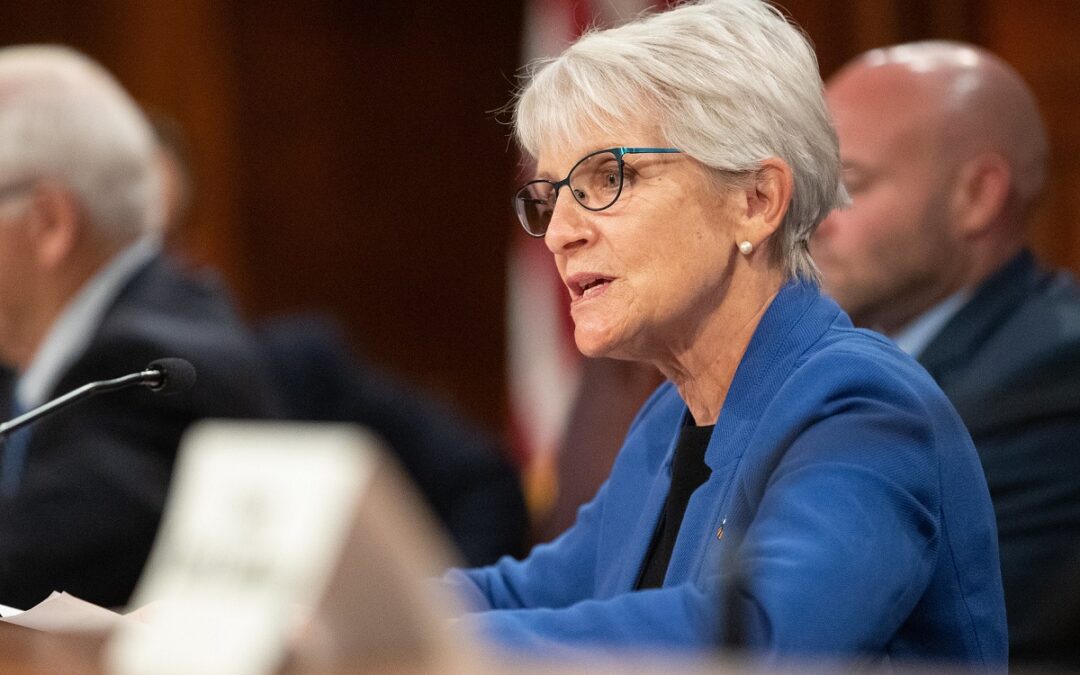
WEST CHESTER (September 29, 2021) – State Senator Carolyn Comitta issued the following statement in response to Tower Health’s plans to close Jennersville Hospital effective January 1, 2022:
“I am very concerned about the impacts of the planned closure of Jennersville Hospital, which provides vital care, including emergency care, to so many residents and families in southern Chester County and the surrounding region.
I am working with Chester County officials and others to bring together state, local, and federal partners to explore our options and identify resources to ensure the availability and accessibility of quality, affordable healthcare options for those currently served by Jennersville Hospital.
In addition, we are working to learn more about the career transition options available to Jennersville employees and providers. Tower Health has indicated that all Jennersville employees will have the opportunity to transition to other positions for which they are qualified within its organization or through priority consideration for open positions at Penn Medicine.
Please know that we continue to learn more about this evolving situation as it develops and that preserving access to convenient, affordable, and quality healthcare options for all residents and families, including those with acute and longer-term needs, is a top priority.”
###

September 28, 2021
WEST CHESTER (September 29, 2021) – In recognition of Childhood Cancer Awareness Month, state Senator Carolyn Comitta highlighted ongoing efforts to combat pediatric cancer and support life-saving research in Pennsylvania.
Earlier this year, as part of the budget process, the legislature enacted a tax credit program for qualifying donations to Pennsylvania pediatric cancer research hospitals. The measure, originally introduced by state Senator Scott Martin, was amended onto House Bill 1348 (Act 24 pf 2021), which Comitta supported. It creates a new funding stream for pediatric cancer research, in the amount of $10 million annually over the next decade, funded by the Tobacco Settlement Act.
“Although rare, cancer remains the leading cause of death by disease among children in the United States,” Comitta, who serves on the Senate Health and Human Services Committee, said. “We must work to direct more funding and resources to vital pediatric cancer research. Through this new tax credit program, we have the opportunity to contribute up to $100 million in total to combatting cancer with the development of life-saving treatments and therapies to benefit children and their families.”
In 2021, it is estimated that 15,590 children and adolescents ages 0 to 19 will be diagnosed with cancer and 1,780 will tragically succumb to the disease in the United States, according to the National Cancer Institute. Currently, the National Cancer Institute spends less than 4 percent of its research dollars on pediatric cancer.

September 27, 2021
WEST CHESTER (September 27, 2021) – $24 million in grant funding to address and prevent community violence is now available through the Pennsylvania Commission on Crime and Delinquency (PCCD), state Senator Carolyn Comitta said today.
The Violence Intervention and Prevention (VIP) program, a new state grant opportunity, supports effective local intervention and preventative measures to stop gun and group violence in regions that are experiencing high rates of violent crime.
“Safe communities are healthy communities. No child or family deserves to live on the frontlines of the epidemic of gun violence, but the reality is far too many face this threat every day in their very own neighborhoods and backyards,” said Senator Comitta, a member of the bicameral Pennsylvania Safe Caucus. “These funds will serve to assist our communities with the tools to increase quality trauma-informed support services, behavioral health care, intervention services, and much more to address high rates of violence.”
Community-based organizations, institutions of higher education, municipalities, district attorneys, and counties are eligible to apply. Awards are tiered toward the applicant’s size and service area and can range from $50,000 to $2,000,000 for project periods of up to two years.
The application period is now open through October 15, 2021.
“Gun violence tears our communities apart, and we have seen far too much of it across the commonwealth over the past year,” said Governor Tom Wolf. “Families and communities across Pennsylvania have experienced far too much loss. This funding will provide necessary resources for effective, community-led programs that work to stop gun violence and group violence. My administration is proud to work with our legislative partners and leadership at PCCD to make this funding available to end the cycle of violence and loss in our communities.”
State Senator Vincent Hughes, minority Chair of the Senate Appropriations Committee, said, “Our caucus fought side by side with the governor to ensure the budget includes a significant investment in community violence intervention programs. The opening of applications for this funding is the next step to getting these funds to our communities. I encourage those grassroots, neighborhood-based organizations, that work day-in and day-out on the front line of the gun violence pandemic plaguing communities, to submit an application for assistance so they can continue to provide these vital services in our communities.”
“We can no longer afford to ignore the very real human and economic costs of gun violence in the Commonwealth. As a legislator and a parent, I am committed to not only reducing these costs but to also creating a safer Pennsylvania for our children,” said state Representative Donna Bullock, Chairwoman of the Pennsylvania Legislative Black Caucus. “This grant is a significant investment in proven violence prevention programs led by trusted partners with boots on the ground.”
Since 2018, PCCD has invested nearly $6.1 million in state and federal funds to support local gun violence reduction efforts.
More information on PCCD grant opportunities and application resources can be found by visiting www.pccd.pa.gov.
September 23, 2021
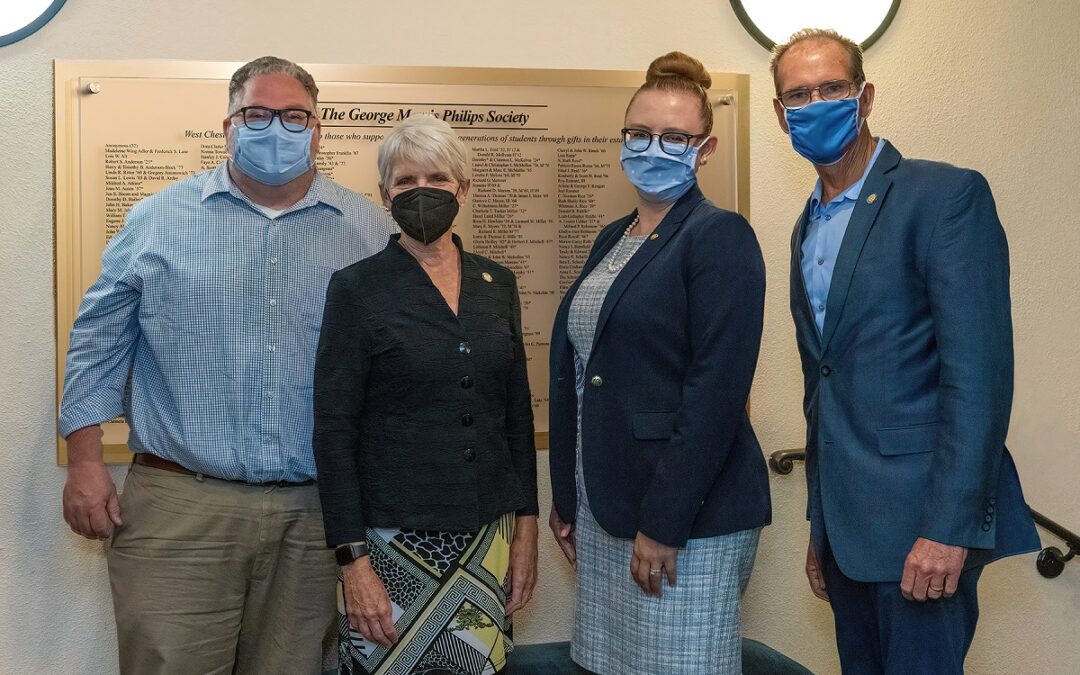
WEST CHESTER (September 23, 2021) – In recognition of Hunger Action Month, state Senator Carolyn Comitta recently brought together fellow lawmakers, university officials, student advocates, and representatives from anti-hunger organizations for a roundtable discussion on food and basic needs insecurity on college campuses.
<<Watch a Video of the Discussion>>
The discussion, hosted by West Chester University, focused on current legislation and ongoing efforts to address what has become a growing challenge for undergraduate and graduate students at institutions across the Commonwealth and the nation.
According to a 2019 survey conducted by the Hope Center for College, Community, and Justice, around one in three students attending four-year colleges in Philadelphia struggled to meet their basic needs. In addition, a 2020 Chegg survey found that nearly a third of student respondents reported experiencing food insecurity – lacking consistent access to nutritious, affordable food – since the beginning of the pandemic. And while the problem has only been exacerbated by the evolving pandemic, additional studies show that food insecurity among college students is associated with poorer academic performance and mental and physical health.
That’s why Comitta organized the discussion at WCU to heard directly from student leaders and officials who were experiencing and working to combat food and basic needs insecurity on campus.
“This is an issue that impacts students and it’s crucial that we hear directly from them about how it impacts their families, their academic careers, their lives, and their futures,” she said. “I want to thank WCU and its staff for their ongoing efforts to address student food and basic needs insecurity on campus. And we appreciate groups like Swipe Out Hunger, Challah for Hunger, Fuel Higher Ed PA, and the growing coalition of dozens of food banks, food pantries, student groups, religious institutions, and community organizations across Pennsylvania supporting the Hunger-Free Campuses Act.”
While students discussed the challenges they face in accessing nutritional food and other needs, legislators like state Rep. Jennifer O’Mara and state Rep. Malcolm Kenyatta reflected on their own experiences with food insecurity as college students.
“Hunger on college campuses is personal to me. I experienced first-hand the reality that tuition does not account for all the expenses that students are met with in seeking higher education. We can solve this problem, and it is critical that Pennsylvania leads on this issue,” Kenyatta said.
Comitta introduced the Hunger-Free College Campuses Act, Senate Bill 719, in the Pennsylvania Senate. The bill, which was also introduced in the House as House Bill 1363 by O’Mara and Kenyatta, calls for providing up to $1 million in grants to higher education institutions to help them tackle food insecurity. It would also direct further study on the issue of food insecurity at Pennsylvania colleges and universities, in order to inform the development of additional long-term solutions.
“Pennsylvania is one of the nation’s leading agricultural producers – and yet we have folks in our communities going hungry,” said state Senator John Kane, a co-sponsor of the bill. “I know what it’s like to survive on hot dogs and ramen, to worry about where your next meal is going to come from. We have college students across the Commonwealth going through that every day, while also trying to learn. That’s not okay with me. I’m proud of the work my colleagues and I are doing to make sure all of our campuses are hunger-free.”
To its credit, WCU has made available a Resource Pantry aimed at supporting student success by minimizing food and basic needs insecurity and preparing students for life after graduation. The Resource Pantry offers non-perishable food, fresh produce from campus gardens, personal care items, school supplies, and winter and career clothing. It is open to all undergraduate and graduate students regardless of need level.
Dr. Ashlie Delshad, a Professor of Political Science at WCU and a founder of the WCU Campus Community Garden, said food insecurity is prevalent on college campuses across the Commonwealth and across the country, and we need policies at the state and federal levels to systematically address it.
“As a college student, I experienced food insecurity firsthand. As a college professor at WCU for the past decade, I have also seen the barriers food insecurity creates for our students,” she said. “I have had the immense pleasure of working with university staff and students to help create programs and resources to alleviate some of these barriers, and there is more we can do as an institution. But the reality is one-quarter to one-third of WCU students experience food insecurity, and this problem is not unique to WCU.”
Following the roundtable discussion, Comitta and others visited and toured the community garden and Resource Pantry, which serves about 200 students a week.
Students also discussed the reality that tuition does not account for all the expenses they are met with in seeking higher education – an aspect that some tend to overlook until they face it firsthand.
In addition, a growing number of nontraditional college students – those who are financially independent, over the age of 25, parents, or full-time workers – are more likely to face financial challenges and food insecurity. The same is true for international students who, despite sometimes being perceived as financially better off than their domestic peers, face obstacles in accessing employment and tend to lack support systems.
Comitta noted that student hunger is not a partisan issue and deserves to be met with innovative and collaborative solutions, like the Hunger-Free Campuses Act.
Kenyatta called the bill “a bold step in the right direction.”
“And with $7.5 billion tucked away, there’s no excuse that we can’t afford to get it done,” he emphasized. “The only thing we can’t afford is to not act.”
###
September 15, 2021
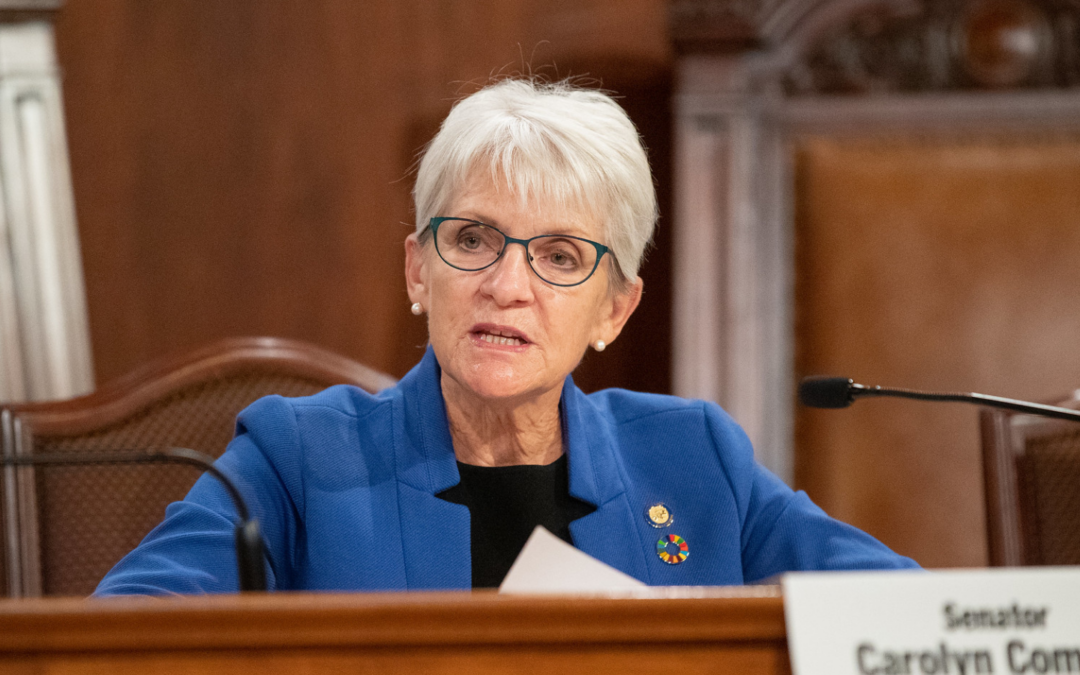
West Chester (September 15, 2021) — State Senator Carolyn Comitta today released the following statement regarding today’s Senate Intergovernmental Operations Committee party-line vote to issue a subpoena for detailed state election records:
“The Senate Republicans’ attack against the freedom to vote continues. Now, confidential voter data is in the crosshairs.
I saw this beginning on my first day in the state Senate, January 5, 2021, when they tried to prevent one of my fairly-elected colleagues from taking his seat on the Senate floor. Of course, then we all saw what happened on January 6 in our nation’s capital as a result of hateful rhetoric and an extensive campaign of lies and misinformation.
After continuing to push voter-suppression measures in the legislature, they’re now pursuing an illegitimate, partisan, anti-voter investigation paid for with your taxpayer dollars.
They want the names, dates of birth, driver’s license numbers, and Social Security information of all registered voters without the consent of the individuals and without explaining who will have access to this personal information and what they plan to do with it.
I stand strong with my Senate Democratic colleagues and support legal action against this gross abuse of power. A lawsuit is being filed in the courts to declare Senate Republican actions in violation of the separation of powers.
The forthcoming lawsuit will ask the courts to confirm that the Senate is not the place to conduct an untimely election contest or to undertake an audit that will force election officials to violate federal law and invade the privacy of each and every Pennsylvania voter. The Senate does not have the authority to perform either of those functions.
This is a dangerous game.
The freedom to vote is sacred.
I have always and will always fight fiercely and tirelessly to protect and preserve the freedom to vote.”
September 10, 2021
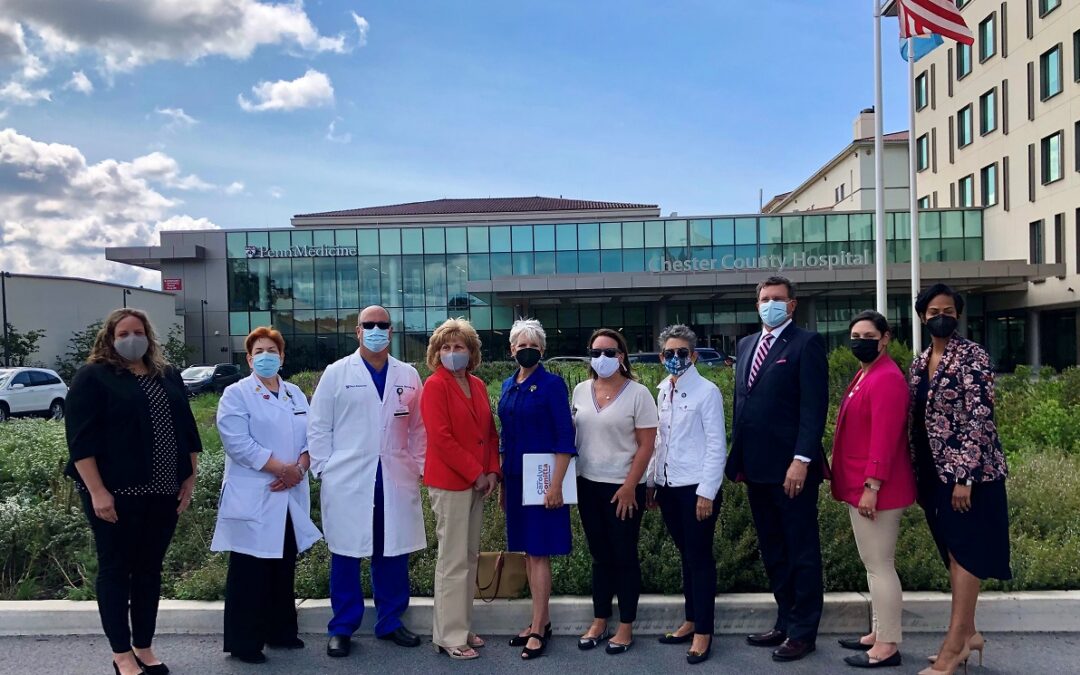
WEST CHESTER (September 10, 2021) – State Senator Carolyn Comitta was joined today at Chester County Hospital by Acting Secretary of the Pennsylvania Department of Human Services Meg Snead, leaders of the Pennsylvania Women’s Health Caucus, and doctors and medical professionals to discuss the importance of the Commonwealth’s plans to extend Medicaid coverage to one year postpartum for all Pennsylvanians.
<<Watch a Video of the Press Conference>>
Under the American Rescue Plan Act, states can expand the Medicaid postpartum coverage period for mothers up to one year following the birth of a baby. Currently, coverage is available for only 60 days.
The extended coverage would go into effect on April 1, 2022.
Senator Comitta, a member of the Women’s Health Caucus, the Pennsylvania Commission for Women, and the Senate Health and Human Services Committee, highlighted the expansion as an opportunity to make a multi-generational impact on the future of postpartum individuals, families, babies, and young people.
“By Pennsylvania taking the step to opt-in to expand Medicaid coverage, we are placing the health and wellbeing of families and children first. This is a significant opportunity to save lives, improve access to quality care, and set new families up for success,” said Comitta. “The first year postpartum is not only a vital period of development for babies, but it’s also a significant time for parents recovering from childbirth and adjusting to new roles and challenges.”
The Pennsylvania Department of Human Services recently announced its intention to implement the extension, a historic investment in the health and well-being of future generations.
“We live in a country that espouses the value of life and opportunity for all people, but we cannot truly value life with a growing maternal mortality rate. We must do better,” said Snead. “The extension of Medicaid coverage to a year following the birth of a baby will help ensure new moms and other parenting people are supported on all levels as they navigate parenthood. We cannot leave mothers alone during such a vulnerable and foundational time for their child’s and their own futures, and this will help give the support they deserve.”
Leaders of the Pennsylvania Women’s Health Caucus in attendance also emphasized the importance of raising awareness and support for the expansion. The bipartisan, bicameral caucus of legislators is leading a statewide #OptInPA campaign aimed to bring awareness to the advantages extended coverage will provide via quality and lifesaving maternal and postpartum services.
“We all want Pennsylvania to be a place where moms and babies thrive. However, right now far too many people across the commonwealth are impacted by postpartum morbidity and mortality. These problems won’t go away unless we take serious steps toward addressing the inequities in our health care system. Postpartum morbidity and mortality are especially prevalent among individuals whose primary source of payment is Medicaid. Pennsylvania’s decision to extend postpartum Medicaid coverage from 60 days to 12 months is not only the morally right thing to do, it will ultimately save lives,” said state Senator Judy Schwank, Co-Chairwoman of the Women’s Health Caucus.
State Senator Amanda M. Cappelletti, Co-Chairwoman of the Women’s Health Caucus, stated, “We must permanently opt-in to expanding Medicaid for postpartum people. This is an evidence-based policy that will save the lives of infants, new parents, and make things easier during an already challenging time. I am glad to be working with strong advocates and allies in fighting for this expansion, as there is real support for this policy moving forward.”
State Representative Mary Jo Daley, Co-Chairwoman of the Women’s Health Caucus, said, “Access to quality healthcare is essential, and throughout the pandemic we have seen maternal mortality rates skyrocket across the country, especially in minority communities. Opting-in is a historical investment in the birthing people, families, and children of our Commonwealth.”
“Birthing people in Pennsylvania are in dire need of access to care to improve maternal and child health outcomes, and this extension is an important step in the right direction,” said State Representative Morgan Cephas, Co-Chairwoman of the Women’s Health Caucus. “I am grateful that the department recognizes the role they play in quelling this crisis and has been intentional in taking action towards solutions. The Wolf Administration in conjunction with the Women’s Health Caucus, medical professionals and activists, together we can implement the necessary measures for life-saving transformational change for all Pennsylvania families.”
Chester County Hospital leaders and health professionals in attendance affirmed that expanded coverage under Medicaid would allow for greater and longer quality healthcare for new mothers and babies. Coverage would be expanded to provide medical care such as screening and treatment for postpartum depression, breastfeeding support, preventative care, substance use disorder treatment, and access to family planning services for a full year postpartum.
Michael Duncan, President and CEO, Chester County Hospital said, “Many of us know the difficulties mothers can face, especially new moms. When given the choice between caring for themselves or caring for their child, the latter will always prevail. Having access to Medical Assistance for 12 months postpartum gives many women in our community the opportunity to not have to choose between the two. This proposed extension could improve health outcomes and increase equity in health care access, which is in line with Chester County Hospital’s mission and values.”
“Prenatal care does not end at delivery, it continues beyond the hospital stay,” said Eduardo Mercurio, MD, FACOG, Co-Chair, Department of OB/GYN, Chester County Hospital. “Our patients from low- or lower- income communities, especially black communities, are disproportionately affected by the lack of access to adequate health care. Extending this aid beyond 60 days is vital for many of our patients and will surely have a positive impact on their overall health.”
Frances Doyle, MSN, RN, CNML, Director, Maternal Child Services, Chester County Hospital added, “The fourth trimester is important to a woman’s lifelong health. There is significant current research that focuses on the importance of continuing care for a new mother and the proposed program would provide significant assistance to enable many disadvantaged women to access the resources and treatment needed for optimal outcomes.”
According to a report of 2018 data, the United States has the highest rate of maternal mortality among 10 similar nations. Maternal mortality data for 2019 released earlier this year shows that the trend is growing – up to 20.1 deaths per 100,000 live births from 17.4 per 100,000 in 2018, and maternal mortality is significantly more common among Black women as compared to White and Latinx women.
More information on DHS’ health equity and health innovation work, the postpartum Medicaid expansion, and maternal-child health programs available across Pennsylvania is available online.
To learn more and apply for Medical Assistance and other assistance programs in Pennsylvania, visit www.compass.state.pa.us.
September 10, 2021
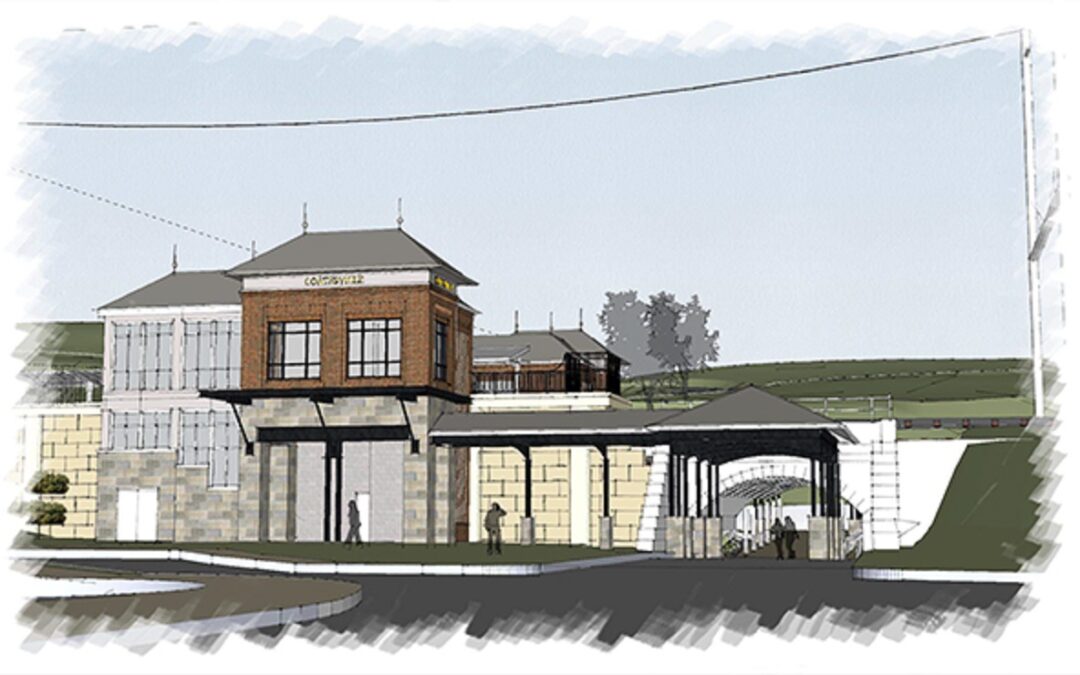
Coatesville, PA – September 7, 2021 – As the September 16th due date quickly approaches for contract bids to build the new Coatesville Train Station, the City is poised to mark another milestone for one of its most anticipated projects.
According to a Pennsylvania Department of Transportation (PennDOT) news advisory, the selected contractor will build the project that will improve connections to the Keystone Corridor and greatly enhance ADA accessibility with level boarding platforms, elevators, ramps, site lighting and security. PennDOT intends to begin construction as early as late 2021 with completion anticipated in 2025. The project is financed from the Federal Transit Administration and state transportation funds.
To view the PennDOT bid package, visit http://www.ecms.penndot.gov/ECMS/.
“This is another major step forward for the new Coatesville Train Station and Coatesville’s ongoing revitalization,” says State Senator Carolyn Comitta. “And it is the product of extensive collaboration among multiple community and economic development partners. I thank PennDOT, the Coatesville Redevelopment Authority (RDA), the City of Coatesville, and all the individuals and organizations who continue to work to make this project a reality. I look forward to seeing ground broken on the new train station soon.”
“The new train station is a critical piece of the City’s economic development efforts and multi-modal transportation plan. The increased frequencies to the station will provide much-needed access for daily commuters, residents and visitors,” says James Logan, Coatesville City Manager. “We appreciate the commitment and collaboration among PennDOT, Amtrak, City and Chester County officials, members of the Coatesville Redevelopment Authority and Coatesville’s development team.”
The new station will be situated on Fourth Avenue, off of Fleetwood, and will include a pedestrian walkway that connects to the eastbound and westbound platforms. Simultaneously, the City is raising capital for an $11-million, two-story commuter parking lot project with space for 320 vehicles, just two short blocks from the downtown business district.
Speaking on behalf of the Chester County Board of Commissioners, Chair Marian Moskowitz said, “It is exciting to be moving even closer to bringing the long-anticipated train station and commuter parking lot to Coatesville, and we are happy to be a contributing partner. A restored regional rail service will go a long way in restoring Coatesville’s strength, boosting economic opportunities within the city, and, importantly, for the people of the city.”
September 8, 2021
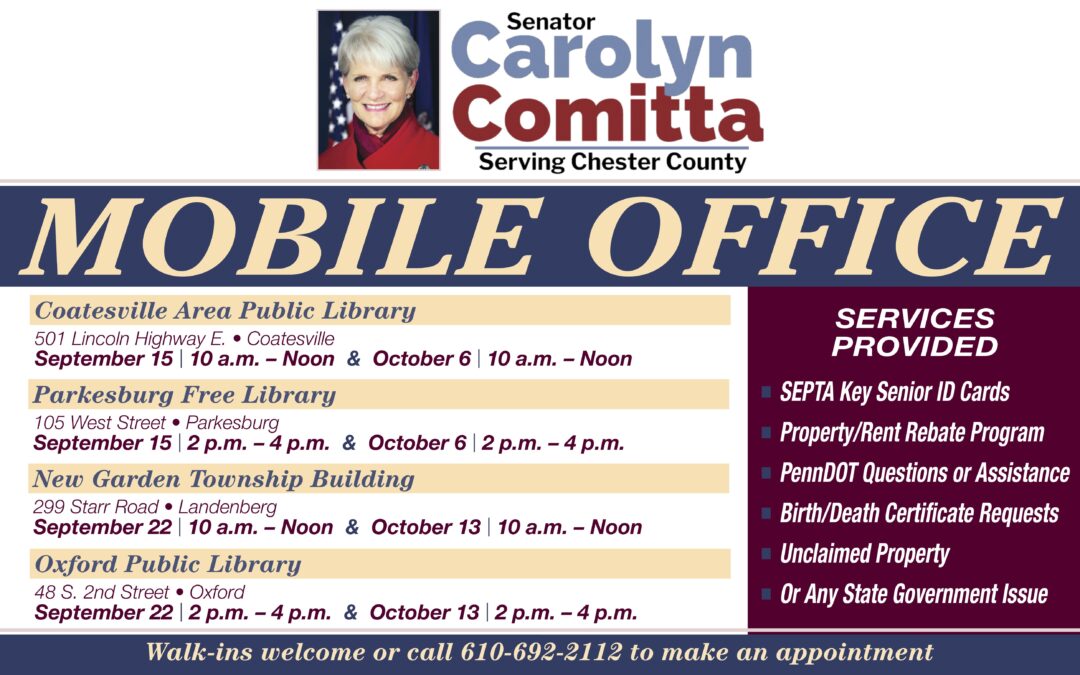
WEST CHESTER (September 8, 2021) – State Senator Carolyn Comitta recently announced that her office will be visiting local libraries, township buildings, and senior centers throughout Chester County to assist residents with states services.
“While our staff continues to assist many constituents remotely or via phone, this is an excellent opportunity to safely visit communities across the 19th District and personally assist residents with any questions, comments, or state government issues that may arise,” Comitta said.
Comitta said that her staff looks forward to meeting with constituents in person and they will be wearing masks, practicing social distancing, and following other established health and safety guidelines in light of the ongoing pandemic.
Staff members are available to assist residents with a number of issues, including applying for the Property Tax and Rent Rebate Program, SEPTA Key Senior ID Cards, Birth Certificates, Unclaimed Property, and more.
The mobile office locations and hours are as follows:
Oxford Area Senior Center
12 East Locust Street, Oxford
– Wednesday, September 15, 10 a.m. – Noon
Coatesville Area Public Library
501 East Lincoln Highway, Coatesville
– Wednesday, September 15, 10 a.m. – Noon
– Wednesday, October 6, 10 a.m. – Noon
Parkesburg Free Library
105 West Street, Parkesburg
– Wednesday, September 15, 2 p.m. – 4 p.m.
– Wednesday, October 6, 2 p.m. – 4 p.m.
Phoenixville Area Senior Center
153 Church Street, Phoenixville
– Monday, September 20, 10 a.m. – noon
*Appointments Required. Call 610-935-1515 ext 29.
New Garden Township Building
299 Starr Road, Landenberg
– Wednesday, September 22, 10 a.m. – Noon
– Wednesday, October 13, 10 a.m. – Noon
Oxford Public Library
48 South 2nd Street, Oxford
– Wednesday, September 22 | 2 p.m. – 4 p.m.
– Wednesday, October 13 | 2 p.m. – 4 p.m.
Walk-ins are welcome at all of the locations, with the exception of the Phoenixville Area Senior Center where participants must register and schedule an appointment with the senior center in advance by calling 610-935-1515 ext. 29.
Appointments can also be scheduled for other mobile locations by contacting Comitta’s office at 610-692-2112 or senatorcomitta@pasenate.com.
In addition, constituents are also welcomed to visit Senator Comitta’s West Chester District Office for assistance through the constituent services window.
The office is located at 17 East Gay Street Suite 301 in West Chester and is open during regular business hours from 9 a.m. to 5 p.m. Appointments are encouraged.


September 7, 2021
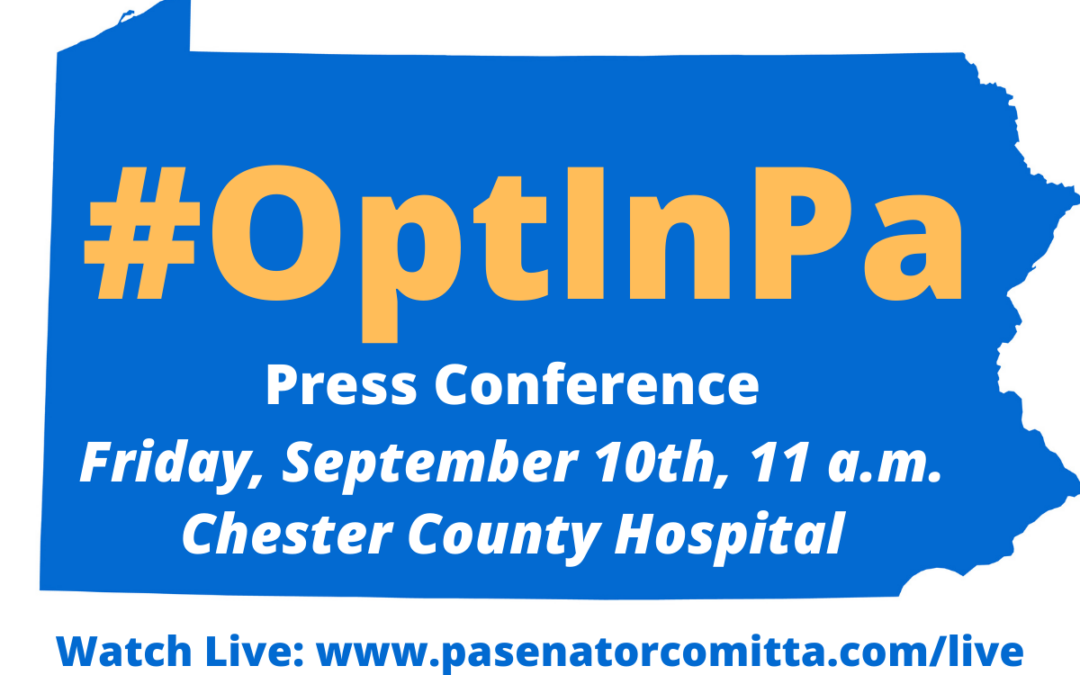
WEST CHESTER (September 7, 2021) – State Senator Carolyn Comitta, Acting Secretary of the Pennsylvania Department of Human Services Meg Snead, and leaders of the Pennsylvania Legislative Women’s Health Caucus will hold a press conference at Chester County Hospital at 11 a.m. on Friday, September 10, to highlight the importance of Pennsylvania’s proposed extension of postpartum coverage to one year for Medicaid recipients.
WHO:
- Senator Comitta, Member of Women’s Health Caucus & Pennsylvania Commission for Women
- Meg Snead, Acting Secretary of the Pennsylvania Department of Human Services
- State Senator Judy Schwank, Co-Chairwoman of the Women’s Health Caucus
- State Rep. Mary Jo Daley, Co-Chairwoman of the Women’s Health Caucus
- State Rep. Morgan Cephas, Co-Chairwoman of the Women’s Health Caucus
- State Senator Amanda Cappelletti, Co-Chairwoman of the Women’s Health Caucus
- Mike Duncan, CEO and President of Chester County Hospital
- Eduardo Mercurio, MD, FACOG, Co-Chair of the Department of OB/GYN Chester County Hospital
- Frances Doyle, Director Maternal Child Services at Chester County Hospital
WHAT: Members of Pennsylvania Legislative Women’s Health Caucus, partners and providers will discuss the importance of the Commonwealth’s plans to extend Medicaid coverage to one year postpartum for all Pennsylvanians.
Federal law requires Medicaid – or Medical Assistance in Pennsylvania – to extend eligibility for pregnant women with incomes up to 138 percent of the federal poverty level for 60 days following the birth of a baby.
Under the American Rescue Plan Act, states can implement a new state plan option beginning April 1, 2022, to expand the Medicaid postpartum coverage period for mothers to one year following the birth of a baby.
The Pennsylvania Department of Human Service recently announced its intention to implement the extension – an opportunity to save lives and improve health outcomes across the Commonwealth, especially in low- and lower-income communities of color disproportionately impacted by the maternal mortality crisis.
Legislators, officials, partners, and providers will offer comments in support of this decision and highlight how holistic, extended postpartum coverage can lead to transformational change in Pennsylvania communities and make a multi-generational impact on the lives of postpartum individuals, babies, families, and young people.
WHEN: Friday, September 10, 2021, 11 a.m. (Rain or Shine)
WHERE: Chester County Hospital (Outside of the Main Entrance)
701 East Marshall Street, West Chester, Pennsylvania 19380
ADDITIONAL DETAILS:
###

September 1, 2021
HARRISBURG (September 1, 2021) – State Senator Carolyn Comitta, Minority Chair of the Senate Environmental Resources and Energy Committee, today issued the following statement upon the Pennsylvania Independent Regulatory Review Commission’s 3-2 vote on final approval of the CO2 Budget Trading Program Regulation, Regulation 7-559:
“This is a victory for Pennsylvania workers, families, and children and our timing could not be more crucial.
Joining the Regional Greenhouse Gas Initiative (RGGI) and cleaning up our power sector will significantly reduce our emissions while bringing substantial public-health, cost-savings, economic, and job-growth benefits to Pennsylvania.
As we continue to face the growing impacts of climate change, joining RGGI is a responsible and effective step – a key step – to stopping the worst impacts of climate change and investing in Pennsylvania’s clean energy future.
Now, as Pennsylvania moves forward with implementing RGGI, we must work to pass the RGGI Investments Act (Senate Bill 15 and House Bill 1565), legislation that would direct RGGI proceeds to support workers and communities affected by energy transition, invest in environmental justice, and strengthen Pennsylvania’s growing clean energy, commercial and industrial sectors.”
August 31, 2021
State Senator Carolyn Comitta and the Pennsylvania Legislative Climate Caucus sent the following letter to the Independent Regulatory Review Commission urging support of the CO2 Budget Trading Program Regulation, Regulation #7-559. The IRRC will consider the final rulemaking during a public meeting at 10 a.m. on Tuesday, September 1. You can watch the hearing live here: https://pacast.com/live/irrc
 Loading...

August 30, 2021
Harrisburg, PA − August 30, 2021 − The Senate Democratic Caucus sent the following letter to the Pennsylvania Supreme Court to encourage the court to take action to halt evictions for tenants who already have pending applications in the Emergency Rental Assistance Program.
Loading...

August 26, 2021
WEST CHESTER (August 26, 2021) – Small businesses and farmers who want to improve their operations through energy efficiency, pollution prevention, and natural resource protection can apply now for up to $5,000 in state grant funding, state Senator Carolyn Comitta said.
Applications are now open for the Pennsylvania Department of Environmental Protection’s Small Business Advantage Grant Program. One million dollars in total grant funding is available for eligible projects like HVAC and boiler upgrades, high-efficiency LED lighting, solvent recovery and waste recycling systems, auxiliary power units that eliminate truck engine idling, and other projects that reduce energy use.
Grant funding also supports streambank buffers, fencing to keep livestock out of streams, and other agricultural stormwater runoff management projects that reduce sediment and nutrient pollution in local waters.
“Small businesses and farmers can take a leading role in the shift to energy efficiency and pollution reduction while streamlining their operations, reducing expenses, and boosting their bottom lines,” Comitta, who serves as minority chair of the Senate Environmental Resources and Energy Committee, said. “These grants can help small businesses pursue projects that enhance both sustainability and profitability in communities across our Commonwealth.”
“Many small business owners with an innovative mindset see the economic opportunity in energy efficiency and sustainability. DEP is committed to assisting small business owners and small farmers in Pennsylvania who want to improve their operations, reduce operating costs, and increase profitability, while helping to improve the natural resources all Pennsylvanians depend on,” said DEP Secretary Patrick McDonnell.
The Small Business Advantage Grant provides 50% matching grants, up to a maximum of $5,000 for Pennsylvania-based businesses with 100 or fewer full-time employees. Eligible applications are considered on a first-come, first-served basis, and must save the small business a minimum of $500 and at least 25% annually in energy consumption or pollution prevention-related expenses (Natural Resource Protection projects are exempt). Extra consideration is given to those in Environmental Justice areas. Information on how to apply is available at www.dep.pa.gov/smallbusinessadvantagegrants.
Last year, 212 small businesses and farms statewide received more than $950,000 in total Small Business Advantage Grant funding. Their projects saved over 6.6 million kilowatt hours of electricity, reduced diesel fuel use by over 20,000 gallons, eliminated almost 73 tons of coal use, prevented over 200,000 pounds of sediment and 7,000 pounds of nitrogen from entering waterways, and had other positive impacts on the environment.
Past recipients in Chester County have utilized the grant funding to upgrade lighting, HVAC systems, replace oil-fired burners with high-efficiency gas-fired burners, and install tankless water heaters.
The Small Business Advantage Grants program is funded through the Hazardous Sites Cleanup Act of 1988.
###

August 24, 2021
WEST CHESTER (August 25, 2021) – Residents, community organizations, and families interested in supporting shelter pets and rescue animals can drop off donations for the Brandywine Valley SPCA at State Senator Carolyn Comitta’s office beginning September 1.
Comitta, in conjunction with the Great Valley Community Organization (GVCO) Caring Hands Program is holding a month-long donation drive to support the shelter and animal health organization.
“This is a small way you can support the good work the Brandywine Valley SPCA does every day in caring for and finding forever homes for adoptable dogs, cats, and other pets,” said Comitta, who serves on the Pennsylvania Senate Animal Protection Caucus. “While adoption soared during the pandemic, intake hasn’t slowed, meaning shelters remain very busy and there is no shortage of animals in need.”
New pet care items can be dropped off at the donation box in the lobby of Senator Comitta’s West Chester District Office, located at 17 E. Gay Street in downtown West Chester. The lobby is open during regular business hours (Monday through Friday from 9 a.m. to 5 p.m.).
The Brandywine Valley SPCA is seeking the following new items for its rescue dogs and cats:
- Wet Cat Food (Pate)
- 6 Foot Leashes
- Gentle Leaders (medium and small)
- Poop Bags
- Kongs
- Dog treats/Soft Training Treats
- Peanut Butter
- Pee Pads
- Cat Litter (clumping & unscented)
- Food Puzzles
In addition, the GVCO is holding three events to support the drive:
Donation Drop Off and Kong Stuffing
September 11th – 9 a.m. to noon.
GVCO Community Center complex
51 N. Bacton Hill Road
Malvern, Pennsylvania
Donation Drop Off
September 18th – 9 a.m. to noon
GVCO Community Center complex
51 N. Bacton Hill Road
Malvern, Pennsylvania
Donation Drop Off and SPCA Adoption Awareness Day
September 25th – 9 a.m. to noon
GVCO Community Center complex
51 N. Bacton Hill Road
Malvern, Pennsylvania
Founded in 1929, the Brandywine Valley SPCA is Pennsylvania’s first no-kill, open admission shelter. In addition to West Chester, the nonprofit organization operates three campuses throughout the region and an animal rescue center in Georgetown, Delaware. Each year, the Brandywine Valley SPCA cares for more than 16,000 animals and finds homes or other placement for at least 96% of the homeless pets that enter its shelters.
The Great Valley Community Organization is a nonprofit organization dedicated to helping build a strong, vibrant and connected community by providing facilities, activities and programs enriching the lives of all local residents. Since its inception in 2001, it has expanded to include tutoring, arts, senior programs, community, and educational events as well as new sports to serve the entire Great Valley community. GVCO Caring Hands is a student-run group that empowers local middle and high school students to support their community by raising funds for those individuals, families, and organizations in need.


 Reload document
  Open in new tab