August 6, 2021
HARRISBURG (August 6, 2021) – Five elementary schools in the Coatesville Area School District will receive more than $146,000 in total funding to offer students fresh fruit and vegetable snacks during the school day, state Senator Carolyn Comitta said.
The grant funds, provided through the U.S. Department of Agriculture’s Fresh Fruit and Vegetable Program (FFVP) and administered through the Pennsylvania Department of Education, are as follows:
- Caln Elementary School will receive $24,895.
- East Fallowfield Elementary School will receive $23,270.
- Kings Highway Elementary School will receive $30,335.
- Rainbow Elementary School will receive $46,150.
- Reeceville Elementary School will receive $22,230.
Comitta, who serves on the Senate Education Committee, said snacking on fresh fruit and vegetables at school may help students continue healthy eating habits later on.
“Creating a safe and healthy environment in schools includes making sure that students are receiving the proper support, resources, and nutrition to excel,” said Comitta. “This funding will ensure that all students have access to healthy food options, fresh fruits and vegetables and overall access to good nutrition. Promoting such choices as part of a nutritious diet early on may help students establish healthier eating habits down the road.”
The funding for the CASD schools comes as part of more than $7 million in FFVP grants awarded to 288 elementary schools across the Commonwealth.
“Healthy, nutritious meals are essential to a child’s growth and success,” said Education Secretary Noe Ortega. “These fresh food grants will help ensure students have access to fresh produce that they may not be introduced to otherwise, while also supporting their physical and academic growth.”
First implemented in Pennsylvania in 2004 and now available in all 50 state, the Fresh Fruit and Vegetable Program aims to create healthier school environments by providing healthier food choices, expand the variety of fruits and vegetables that students experience, increase fruit and vegetable consumption, and positively impact students’ present and future health.
Funding priority is given to the schools with the highest rates of students eligible for free and reduced-price meals. Grantees are required to spend most of their grant on the purchase of fresh fruit and vegetables and must develop a plan to establish partnerships to reduce other costs. Schools are also required to provide nutrition education to students but cannot use FFVP funding to purchase nutrition education materials.
“The fresh fruit and vegetable program provides young students exposure to fresh fruits and vegetables that may otherwise not have the opportunity, and provides them a healthy snack at the same time,” said State Director of Child Nutrition Programs under the Division of Food and Nutrition, Vonda Ramp M.S., R.D. “We are delighted to provide this opportunity to the awarded schools.”
###
August 5, 2021
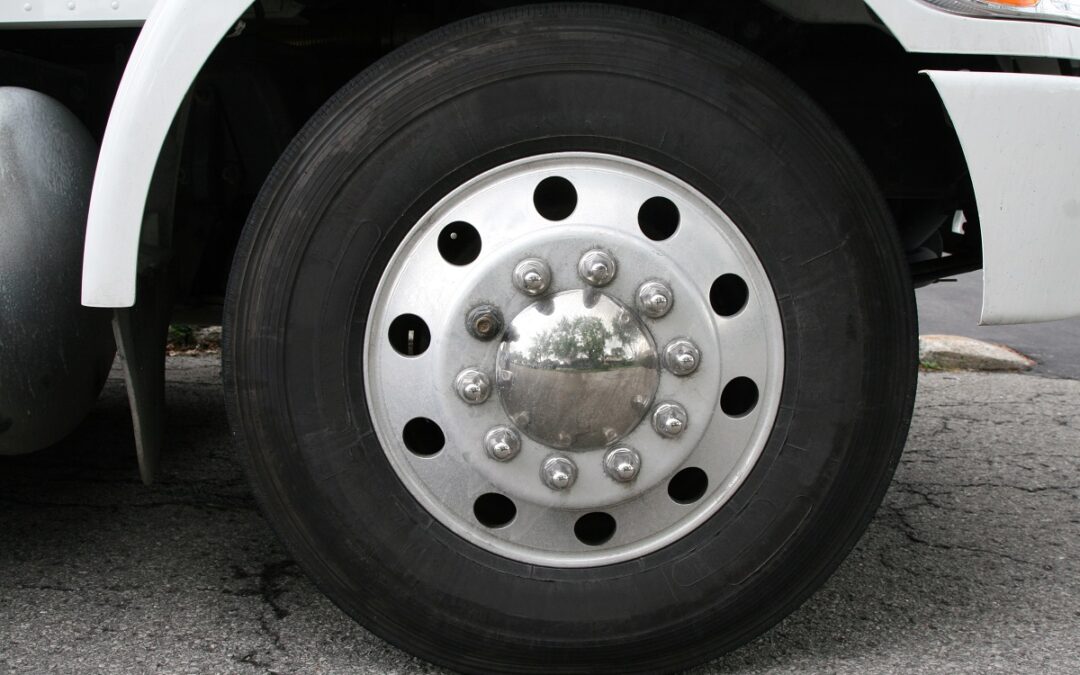
WEST CHESTER (August 5, 2021) – The Borough of Modena is getting a brand new public works truck thanks to the work of state Senator Carolyn Comitta.
Comitta recently secured $41,000 in state funding for the new dump truck, a welcome addition to the borough’s fleet of public works vehicles.
“We’re very appreciative,” said Borough Council President Jennifer Daywalt, who worked with Comitta’s office to obtain the grant. “Without this grant, we wouldn’t be able to afford it. This helps us free up funds that we can use for improvements in additional areas. Instead of worrying about truck repairs, we can budget for other investments in our community.”
The funds will be used to purchase a new 2022 Ford F450 dump truck to be used by the borough’s public works department for various maintenance projects, including snow plowing, salting, street repairs, debris removal, and more.
According to Daywalt, the borough has two additional trucks currently in service, but at 15 to 20 years old, they are in need of regular repairs – repairs that can both be costly and delay project timelines.
Comitta, who earlier this summer toured Modena and the surrounding region to see the impacts of flooding and storm-related damage, said she stands ready to help local municipalities on projects both large and small. She also thanked Daywalt, Mayor Mike Harvey, and the members of Modena Borough Council for their service.
“I’ll always work to support Modena and all of the municipalities across my Chester County district to ensure they have the tools and resources necessary to promote safe and healthy communities and a strong quality of life for residents,” she said.
With a population of under 600 residents, Modena is Chester County’s smallest municipality, and this year celebrated its Centennial Anniversary.

August 3, 2021
WEST CHESTER (August 3, 2021) – Chester County will receive $300,000 in state grant funding to support a program that provides important home accessibility improvements and upgrades for residents with disabilities.
The Home Modification Program, administered by the Housing Partnership of Chester County, was awarded the funding through the Pennsylvania Department of Community and Economic Development’s Keystone Communities Grant program.
The program provides vital assistance to low and moderate-income residents with permanent disabilities to make their current residences more accessible. It allows for a wide range of adaptive modifications which include, but are not limited to, ramps, lifts, door and hallway widening, kitchen and bathroom modifications, visual doorbells, audio phones and visual phone signalers.
“This Keystone grant is a significant boost to Chester County’s Home Modification Program, and is especially welcome for our lower income residents with disabilities, who have been greatly impacted by the pandemic, and who want to remain safe and independent in their homes,” said Chester County Commissioners Marian Moskowitz, Josh Maxwell and Michelle Kichline. “The funds will provide kitchen, bathroom, stairway, doorway and hallway alterations, and just as importantly, the grant will help us to leverage more funding to serve more people through the home modification program.”
State Senator Carolyn Comitta, who serves on the Senate Health and Human Services Committee, said she hopes the funding continues to help people of all ages live healthy, productive, and independent lives in their own homes.
“This grant funding will help ensure that more of our friends and neighbors with disabilities have the opportunity to function effectively, safely, and independently at home,” she said. “I appreciate the efforts of the Chester County Commissioners and the Housing Partnership of Chester County to make these important home modifications available and accessible to those in need.”
The grant funding for Chester County’s Home Modification Program comes as part of $5 million in total Keystone Communities Program funding awarded to 41 revitalization projects in 21 Pennsylvania counties.
“The Keystone Communities Program helps Pennsylvania’s towns and cities enhance their quality of life to the benefit of residents, visitors, and businesses alike,” said Gov. Wolf. “The program is flexible enough to serve the needs of any municipality—whether they’re aiming to improve their downtown, rehabilitate buildings, or create new housing or community gathering spaces.”
In addition to home modifications, other projects supported façade improvements, blight reduction, building renovations, mixed-use facility and accessible housing construction, downtown and storefront enhancements, and playground construction.
“At DCED, we often say that Pennsylvania is the best place to live, work, and play, and the Keystone Communities funding approved today will help ensure that adage holds true for years to come,” said Department of Community and Economic Development (DCED) Secretary Dennis Davin. “Continued investment in our communities is so critical to the health and vibrancy of our commonwealth, and we look forward to seeing these projects come to fruition.”
According to DCED, the Keystone Communities program is designed to encourage the creation of partnerships between the public and private sectors that jointly support local initiatives such as the growth and stability of neighborhoods and communities; social and economic diversity; and a strong and secure quality of life. The program allows communities to tailor assistance to meet the needs of specific revitalization efforts.
August 2, 2021
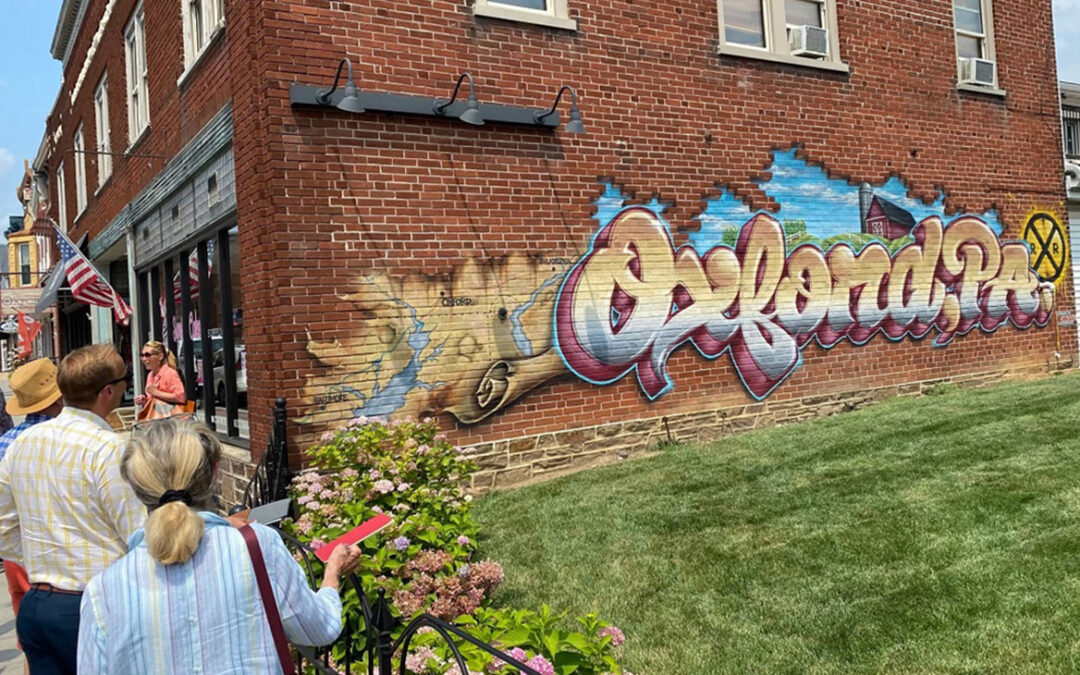
WEST CHESTER (August 2, 2021) – Oxford Mainstreet, Inc. (OMI) will receive $25,000 in state grant funding to support facade improvements in the historic downtown business district.
The funding, made available by the Pennsylvania Department of Community and Economic Development’s Keystone Communities Grant Program, will support ongoing efforts to assist business and property owners in enhancing the aesthetics of downtown Oxford.
“Oxford Mainstreet, Inc. is thrilled to receive this funding for facade improvements so that merchants can restore and revitalize their infrastructure in historic downtown Oxford,” said Christianna Hannum, OMI Executive Director.
State Senator Carolyn Comitta, who supported OMI’s application for the grant funding, said it will be another way to help the small business community continue to recover from the economic impacts of the pandemic.
“Oxford continues to make great progress in attracting new businesses and revitalizing the downtown business district,” she said. “This grant funding is just one more tool to assist and support small, locally owned businesses in fully recovering from the pandemic and promoting downtown Oxford as a destination for shopping, dining, and entertainment in the region.”
The urban center of six growing municipalities in southern Chester County, Oxford Borough is in the midst of a revitalization effort that has attracted investment, preserved and repurposed historic buildings, and created a unique sense of place. In addition to streetscape improvements that have transformed the look of Oxford’s downtown, OMI provides façade grants and guidelines to help businesses and property owners restore and enhance their exteriors in line with the historic and architectural character of the community.
OMI’s grant comes as part of $5 million in total Keystone Communities Program grant funding awarded to 41 revitalization projects in 21 Pennsylvania counties.
“The Keystone Communities Program helps Pennsylvania’s towns and cities enhance their quality of life to the benefit of residents, visitors, and businesses alike,” said Gov. Wolf. “The program is flexible enough to serve the needs of any municipality—whether they’re aiming to improve their downtown, rehabilitate buildings, or create new housing or community gathering spaces.”
In addition to the façade upgrades, other projects supported blight reduction, building renovations, mixed-use facility and accessible housing construction, downtown and storefront enhancements, and playground construction.
“At DCED, we often say that Pennsylvania is the best place to live, work, and play, and the Keystone Communities funding approved today will help ensure that adage holds true for years to come,” said Department of Community and Economic Development (DCED) Secretary Dennis Davin. “Continued investment in our communities is so critical to the health and vibrancy of our commonwealth, and we look forward to seeing these projects come to fruition.”
According to DCED, the Keystone Communities program is designed to encourage the creation of partnerships between public and private sector that jointly support local initiatives such as the growth and stability of neighborhoods and communities; social and economic diversity; and a strong and secure quality of life. The program allows communities to tailor assistance to meet the needs of specific revitalization efforts.
###
July 29, 2021
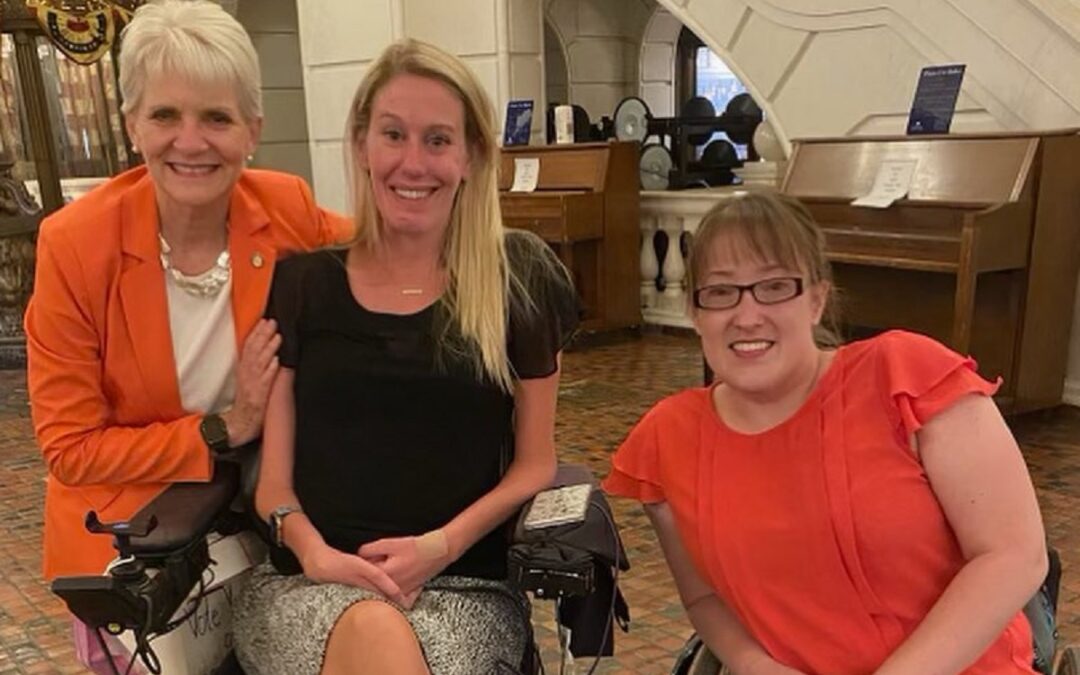
WEST CHESTER (July 28, 2021) – Important legislation to support workers with disabilities in finding jobs and advancing their careers was recently signed into law thanks to the work of state Senator Carolyn Comitta, Chester County-based disability rights activist Jessica Keogh, and many other organizations and advocates across the Commonwealth.
Act 69 of 2021 (Senate Bill 156) increases the earnings allowance for workers with disabilities who rely on the Medical Assistance for Workers with Disabilities (MAWD) program. MAWD pays for vital home and community-based services, like care attendants, which are not covered by private insurance.
Currently, MAWD services are only available to individuals with disabilities with an income of less than 250% of the federal poverty level and less than $10,000 in savings.
Act 69 creates a new category under MAWD called Workers with Job Success, increasing that cap to 600% of the federal poverty level (roughly $75,000 annually) and allowing individuals to accrue more than $10,000 in countable assets since their initial eligibility.
Under the new law, workers with disabilities who quality for MAWD will continue paying a monthly premium for their services. Those earning more than 250% of the federal poverty level will pay 7.5% of their income to cover their health care (a 2.5% increase from the current contribution), rather than losing eligibility altogether.
Comitta, who serves on the Senate Health and Human Services Committee, credited the persistent efforts of Keogh, who runs the nonprofit organization, Faith Above My Ability, and other disability rights advocates for pushing the bill over the finish line.
Senate Bill 156, introduced by Senator Bob Mensch, unanimously passed the Senate in May. It was briefly held up in the House Appropriations Committee before receiving unanimous approval in late June.
“This week we celebrated the 31st Anniversary of the Americans with Disabilities Act, but there is still so much work to do to ensure fairness, equity, and equal opportunities for our friends and neighbors living with disabilities,” Comitta said. “People with disabilities shouldn’t have to choose between the services they need and a raise or a promotion. Everyone should have a right to pursue their career goals to the fullest. Thank you to Jessica and all the advocates and organizations who worked to make it a reality.”
Comitta said she hoped the new law would encourage more individuals to consider job opportunities or return to work without fear of losing vital benefits. In Pennsylvania, only 35% of people with disabilities are working, with only 21% working full time.
Keogh thanked Senator Comitta for her work and reflected on her extensive efforts advocating and lobbying for the new law.
“It has been quite a journey advocating for Senate Bill 156, and as a working professional with a physical disability, I am so grateful for this legislation! Senate Bill156, now Act 69, allows me to continue working as a special education teacher while receiving the home and community support that I need in order to get to work,” she said. “Everyone deserves to work and contribute to society and I’m glad my students will have disability representation. A special thank you to Senator Comitta for her support over the years as we have been educating and advocating for disability rights!”
Act 69 was signed into law by the governor on July 1. It will take effect on December 28, 2021.
Keogh said she hopes to hold an educational event for people with disabilities on Act 69 and changes to MAWD.
July 16, 2021
Important Update: The deadline to submit public comment on the draft hazardous liquids pipeline rules is Wednesday, April 13.
WEST CHESTER (July 16, 2021) – Persistent efforts by state Senator Carolyn Comitta and others to enhance pipeline safety in Pennsylvania took a major step forward as the Pennsylvania Public Utility Commission (PUC) advanced important new draft regulations governing everything from pipeline design and construction to operations and maintenance, accident reporting, testing, personnel qualifications, and more.
“Today is a turning point in our efforts to boost pipeline safety standards in Pennsylvania and ensure that we have stronger rules in place to protect communities, residents, and families,” Comitta said. “This has been the product of years of collaboration and discussion among multiple stakeholders, including input from residents, pipeline safety groups, industry representatives, the PUC, the Pennsylvania Department of Environmental Protection, emergency response officials, the Pennsylvania Emergency Management Agency, state and federal lawmakers, local municipalities, and the Chester County Association of Township Officials. As a result of our determination and hard work, we are now on track to enact stronger pipeline safety rules – rules that better protect the health, safety and well-being of every Pennsylvanian.”
The Commission voted unanimously to adopt a Notice of Proposed Rulemaking regarding regulations related to the pipeline transport of petroleum products and hazardous liquids in intrastate commerce – seeking public comment on proposed amendments to existing regulations along with the addition of new regulations.
The proposed rulemaking would create a new heading within Chapter 59 of the Pennsylvania Public Utility Commission’s regulations (52 Pa. Code) to encompass “Hazardous Liquid Public Utility Safety Standards.”
The new sections for hazardous liquids utilities include the following:
- Accident reporting
- Construction, operation and maintenance, and other reports
- Design requirements
- Construction
- Horizontal directional drilling and trenchless technology
- Pressure testing
- Operation and maintenance
- Qualification of pipeline personnel
- Land agents
- Corrosion control
The proposed rulemaking follows the PUC review and analysis of more than 90 comments, ranging in size from one-page resolutions to submissions that spanned hundreds of pages of documentation. Public input also included comments from community advocates and citizens’ organizations, along with local governments, industry affiliates, members of the Pennsylvania General Assembly and concerned citizens.
Additionally, the proposed rulemaking would revise the existing “Service and Facilities” heading for certain sections of Chapter 59 (59.11 through 59.38) to clarify that those sections apply only to natural gas public utilities – addressing matters related to hazardous liquids public utility service in the newly created sections of the regulations.
Comitta noted that the lack of pipeline safety regulations in Pennsylvania was brought to the forefront by ongoing problems with the Mariner East pipeline project, which has resulted in numerous geological issues and public safety concerns, not to mention dozens of DEP violations and fines, in recent years.
Seeing a need to bring various stakeholders together, she began convening regular multi-stakeholder pipeline safety meetings in the early spring of 2017, just before construction of the Mariner East project began. These meetings are some of the only of their kind taking place in Pennsylvania.
“We saw an opportunity to improve the process,” she said. “We knew we could do better, and we wanted to bring everyone to the table.”
Comitta and other lawmakers have also attempted to advance stronger rules through the legislative process. Currently, she has introduced Senate Bill 494, legislation that calls for establishing a pipeline safety and communication board, very similar to the multi-stakeholder meetings she has established. The board would be responsible for considering the overarching issue of public safety and for implementing and coordinating the timely communication of information regarding pipeline activities.
In addition, she has introduced Senate Bill 518, legislation that better protects residents by providing oversight of the eminent domain process used by public utility corporations for pipeline construction. The bill would prohibit petroleum or petroleum product transportation lines from being located within 100 meters of a residence that is not located within the limits of any street, highway, water, or other public way or place. In addition, it would require public utility corporations to receive approval from the PUC using eminent domain to obtain property to construct a pipeline.
Currently, Pennsylvania lacks regulations governing the siting (placement) of intrastate pipelines. While pipelines that cross state lines must be approved by the Federal Energy Regulatory Commission (FERC), intrastate pipelines in Pennsylvania only face siting regulations when their route crosses a stream or wetland. As a result, unfortunately, many Pennsylvania residents and their families whose homes and land are located in the path of a proposed pipeline, have little or no recourse but to allow a pipeline’s siting and subsequent construction to proceed due to eminent domain.
While pipeline-related bills have historically faced obstacles and challenges in the legislature, Comitta and others continued to work through the PUC to pursue stronger safety rules.
“That’s why it was so important that we kept working through the regulatory process at the same time,” she said. “It’s a lengthy process, but we had to stick with it because in addition to the pipeline projects we’re are dealing with now, more are on the way. The proposed rulemaking helps us plan for and ensure a safer future for our children and grandchildren.”
Interested parties may submit written comments within 60 days from the date the NOPR is published in the Pennsylvania Bulletin, and reply comments should be submitted within 30 days of the initial comment period.
Comments shall be submitted via the PUC’s efiling system, referencing Docket No. L-2019-3010267. All filings are to be made by e-filing or by electronic mail. Information about creating a free PUC efiling account and accessing the efiling system is available on the Commission’s website at: www.puc.pa.gov/filing-resources/efiling/
###

July 7, 2021
WEST CHESTER (July 7, 2021) – State Senator Carolyn Comitta reminds Chester County residents to check with the Pennsylvania Treasury’s Bureau of Unclaimed Property to see if they have property – including military decorations – waiting to be claimed.
Nearly $4 billion in collectibles, dormant bank and retirement accounts, jewelry, military medals, stocks, and uncashed checks in Pennsylvania are waiting to be claimed by their rightful owners. These unclaimed properties may include money from uncashed checks, rebates, or forgotten stocks, as well as items from safe deposit boxes.
One in ten Pennsylvanians have unclaimed property, and the average property claim is worth $2,000.
“Chances are you or someone you know has property waiting to be claimed,” State Senator Carolyn Comitta said. “Searching the online registry is the first step. If you find you are owed property, my staff can help you navigate the process to claim it.”
Residents can search the registry by visiting www.patreasury.gov or calling the Treasury’s Bureau of Unclaimed Property toll-free at 1-800-222-2046.
Recently, the unclaimed property website was upgraded to improve search capability, enhance security features, expedite processing time, and allow for online authentication and real-time approval of some claims.
“One of my top priorities is returning the nearly $4 billion we have in unclaimed property to its rightful owners. These upgrades significantly improve the process by making the system as user-friendly as possible and by getting rid of unnecessary red tape. I encourage every Pennsylvanian to take advantage of these changes and search for unclaimed property that may be owed to them or their family,” Pennsylvania Treasurer Stacy Garrity said.
In addition, veterans and families of service members are encouraged to check for unclaimed property as they may be owed military decorations and medals, including Purple Hearts, Bronze Stars, and more.
To date, the Bureau of Unclaimed Property has returned 370 military decorations to veterans, including at least one Chester County resident. Still, currently 650 military decorations lay unclaimed in Pennsylvania’s Treasury. Veterans, service members, and their families can search a dedicated database of unclaimed Military Decorations at: https://www.patreasury.gov/unclaimed-property/medals/
Unclaimed property is any financial asset that has gone unclaimed for a period of time, usually three years. Under Pennsylvania law, businesses are required to report this to Treasury, which serves as the custodian until it can find and verify its rightful legal owner.
Garrity reminded individuals that they can take some simple steps to prevent their property from ending up at Treasury:
- Keeping financial institutions informed of any address changes.
- Communicating with financial institutions at least once every three years.
- Keeping up-to-date records of financial information including bank accounts, stocks, life insurance policies, safe deposit boxes, etc.
- Letting a family member or trusted advisor know where financial records are kept.
- Depositing or cashing all checks as they are received.

July 6, 2021
WEST CHESTER (July 6, 2021) – More than three tons of food and nearly $7,500 were collected for Chester County families in need in the name of Bianca Roberson, a local teenager whose life was cut tragically short by an act of hate and gun violence in 2017.
The Daisies for Bianca: Spread the Love project, organized by Mom’s Demand Action for Gun Sense in America, the Bianca Nikol Merge with Mercy Foundation, and the Chester County Food Bank, was a resounding success thanks to the generosity of individuals, students, families, organizations, and businesses across the region.
On Monday, June 28, four years to the day that Bianca passed away, organizers and partners joined with Bianca’s mother and grandmother in personally delivering the donations to the Chester County Food Bank.
“This helps me breathe a little easier and stand a little taller today,” Bianca’s mother, Michelle Roberson, said. “Bianca put other people first. That is who she was and how she lived her life. I am so thankful for the community coming together and people remembering. People have not forgotten.”
Lauren Fosbenner, said was driven work with Mom’s Demand Action in the wake of the shooting that claimed Bianca’s life and inspired to help spearhead the Daisies for Bianca effort by the words of the Rev. Dr. Martin Luther King, Jr. – “Darkness cannot drive out darkness, only light can do that. Hate cannot drive out hate, only love can do that.”
With little-to-no experience in fundraising or running a food drive, Daisies for Bianca set out to collect donations that would provide approximately 1,500 meals to our community.
That goal was exceeded nearly tenfold with food and financial donations that will provide meals to more than 10,000 families.
State Senator Carolyn Comitta, who served as Michelle’s state representative at the time of the tragedy and got to know her in the aftermath, said she was grateful to see the outpouring of community support.
Michelle currently works with Comitta’s office as a Constituent Services Specialist and the office hosted a donation box and supported additional outreach efforts.
“I’m grateful to be a part of Daisies for Bianca, grateful to live in a community where we remember each other and we care about each other, and grateful to learn more about Bianca and her life through efforts like this,” she said. “The food drive technically ended in June, but residents are still showing up with donations. My staff members have had friends and neighbors drop off donations at their homes. People remember, they care, and they want to do something to help.”
In addition to Comitta’s office, donation boxes were placed throughout the region, including West Goshen Shopright, West Goshen Police, the three West Chester Area School high schools, the office of state Rep. Christina Sappey and others.
Volunteers also made and distributed more than 1,000 purple pipe cleaner daisies – a symbol of love in Bianca’s favorite color – to each person who made a donation.
“We are truly honored to have a part in remembering Bianca Nikol Roberson, said Andrea Youndt, CEO of the Chester County Food Bank. “Bianca’s spirit of helping others lives on through the gift of service to our community.”
June 25, 2021
State Senator Carolyn Comitta today issued the following statement regarding her vote in opposition to the 2021-22 Pennsylvania budget:
“Across Pennsylvania and the nation, life is appearing to return to normal. Seventy-five percent of adult Pennsylvanians have received at least one dose of the vaccine. Next week, the last of our COVID-19 restrictions – the mask mandate – will be lifted. By all accounts, we are succeeding in beating back this pandemic and recovering from the worst public health crisis in memory.
The economic crisis, however, will take longer.
I voted against this budget because it represents too many missed opportunities.
While I support the funding increases in community services, antiviolence initiatives, public education (including our most struggling schools) infrastructure, and more, the modest investments made in this budget pale in comparison to the resources on hand.
We’re sitting on an estimated $7 billion dollars on the heels of 18-months of suffering. We’re coming up short for Pennsylvania schools, students, families, workers, and communities at the very moment when we should be lifting them up and setting them up for success in the post-pandemic world.
And the most frustrating and disappointing part is, we don’t have to.
I understand the need to put aside some savings for the future. I appreciate the very limited funding increases this budget does make in important programs and services.
But I cannot vote for a budget that doesn’t reflect our responsibility to do the very best we can do for our constituents. This isn’t it. Investing a fraction – a sliver – of what we have is not a compromise, it’s a letdown. We can do better, and we must do better for our Commonwealth, for our constituents, and for our children.
I will work hard to build on some of the initial commitments made in this budget, including further implementing the Fair Funding Formula, supporting programs to reduce community violence and aid crime victims, and investing in vital public health and human services.
And I look forward to working with my legislative colleagues in the future to strategically invest the remaining American Rescue Plan funds to help ensure a safe, prosperous, and equitable future for all Pennsylvanians.”

June 22, 2021
HARRISBURG (June 22, 2021) – A new program in the City of Coatesvillle will support residents and homeowners struggling to maintain or repair their homes thanks to $500,000 in state funding, state Senator Carolyn Comitta and state Representative Dan Williams said today.
The Movement Community Development Corporation (MCDC) was recently awarded the funding through the Pennsylvania Housing Affordability and Rehabilitation Enhancement (PHARE) fund.
The funds will support MCDC’s Coatesville Housing Rehabilitation Program, which aims to provide vital repair and rehabilitation services to vulnerable residents and property owners who may be at risk of losing the ability to live in their homes due to costly repairs.
“This will give us the opportunity to help those in our community whose properties are in need of repair,” said Alphonso Newsuan, MCDC Founder and Executive Director. “During the COVID-19 pandemic, many members of our community have been adversely affected mentally, physically, and financially. It’s our hope that this initiative will bring about much-needed relief in regard to the rehabilitation of their homes
“MCDC wishes to thank all parties involved that helped make the approval of our grant possible,” he added.
The funding for MCDC comes as part of $2.285 million in total PHARE funding awarded to nine organizations supporting housing assistance, affordability, and homelessness prevention throughout Chester County.
“Helping residents stay in their homes, access affordable housing opportunities, and prevent homelessness benefits our entire Chester County community,” Senator Comitta said. “As we continue to recover economically from this pandemic, it’s important that we to move forward together. By investing in local services and organizations, we can help ensure that every individual and family has the opportunity to succeed, grow, and thrive.”
“Repairing homes in our community improves our community’s infrastructure. Improving access to critical home repairs ensures our community will rise and prosper. MCDC is an excellent advocate for improving quality of life in the 74th district, and I’m elated that they will be able to advance their programs with this funding,” Rep. Williams said.
The Chester County Department of Community Development will receive $500,000 in PHARE funding for its Decade to Doorways Street Outreach and Non-Congregate Emergency Housing proposal. It aims to offer a continuum of services to Chester County’s most vulnerable individuals with the intent of making homelessness rare, brief, and non-recurring.
“We are very appreciative of the support that the Chester County Partnership to End Homelessness has received from the Pennsylvania Housing Finance Agency and Pennsylvania Senator Carolyn Comitta. This PHARE grant award in the amount of $500,000 will enable our street outreach team to continue to engage individuals and families experiencing homelessness and find housing solutions for them,” said Pat Bokovitz, Director of the Chester County Department of Community Development.
The Friends Association for the Care and Protection of Children will receive $400,000 in total PHARE funding to support two programs. They are:
- $300,000 to support the NIA House, Chester County’s first diversionary reentry home for women with children returning to the community after incarceration. The home, located in Coatesville, offers a respite for women healing from the trauma of incarceration and a catalyst for family reunification and long-term self-sustainability. PHARE funds will be used to provide operating support for the second year of this innovative project and will include additional programming to enhance the services offered to at least 25 women.
- $100,000 for the Eviction Prevention Court (EPC) and Homelessness Prevention Program, a newly established program that provides support to individuals and families facing eviction through legal representation, financial support, and linkages to social services. The funding will allow the Friends Association to expand the EPC to three additional courts in Chester County and expand its newly established Homelessness Prevention Program, focusing on women with co-occurring diagnoses.
“We are thrilled to be named as a recipient of PHARE funds to support families in Chester County. This investment in Chester County allows us to address vital housing needs in innovative, community-driven ways. Together, we have the resources and creativity we need to make sure that all of our neighbors have access to stable, safe housing,” said Jennifer Lopez, Executive Director of the Friends Association for Care & Protection for Children.
Safe Harbor of Chester County will receive $130,000 in PHARE funding to support its emergency shelter for residents experiencing homelessness.
According to Chief Executive Officer Judy Jeffords-Homitz, the grant award will help Safe Harbor provide much needed emergency shelter and case management services to single men and single women during these unprecedented times our Chester County residents will face in the months ahead.
Safe Harbor is the only shelter available for single women and one of the two largest available for single men in Chester County, providing more than 65 percent of the total emergency beds available for single adults. Through case management services, residents are given full attention to help move them toward self-sustainability and permanent housing placement. Safe Harbor has also recently expanded services to assist former residents after housing placement, Jeffords-Homitz said.
The W.C. Atkinson Memorial Community Service Center in Coatesville will receive $150,000 in PHARE Funding for Housing Rehabilitation and Individualized Intensive Case Management services.
According to Minnie McNeil, who founded the center nearly three decades ago and continues to operate it today, the funding will support staffing for case management and the rehabilitation and upgrade of its five supportive homes and 22-bed emergency men’s shelter. She said the center maintains a safe and empowering environment where staff and volunteers effectively assist homeless men to identify their root cause for homelessness, acquire stable housing, and become self-sufficient with rare recidivism.
“This work could not be accomplished as effectively without the support of this grant award,” McNeil said.
Open Hearth will receive $115,000 in PHARE funding for its Targeted Homelessness Resource Coordination program, a community-wide effort to end homelessness in Chester County.
“Open Hearth is proud to be the recipient of generous funding for our Targeted Homelessness Resource Coordination program,” said Executive Director Kelly Raggazino. “The Targeted Homelessness Resource Coordinator leads the crucial work of facilitating weekly case conferencing attended by the homeless crisis response system providers with other health and human service providers to ensure the highest priority households on the By Name List are being enrolled into housing and supportive services as quickly as possible.”
The Housing Partnership of Chester County (HPCC) will receive $250,000 in PHARE funding to support its First Homes For Stronger Neighborhoods program, which is designed to purchase, renovate and sell homes at below market rates to low-to-moderate income first-time buyers.
According to HPCC, the state support will augment funds already received from the Chester County Department of Community Development, the Wells Fargo Foundation, and others. Since 1988, HPCC has administered a number of successful programs including: The First Time Homebuyers Program, Home Rehabilitation, Senior Citizen Home Maintenance, Home Access Modification, and Budget and Credit Counseling.
The Housing Authority of Chester County will receive $240,000 in PHARE funding to support its Housing Locator Program, which with Chester County residents who are experiencing homelessness and need assistance to find and retain housing. The funds will be used to fund a Housing Locator and Housing Case Manager, as well as expanding the landlord incentive programs.
The PHARE fund, often referred to as the state’s Housing Trust Fund, is administered by the Pennsylvania Housing and Finance Agency (PHFA).
Funding for the PHARE-supported projects in Chester County comes from a portion of the realty transfer tax. Since 2012, PHARE also receives a portion of the impact fees collected from natural gas companies operating in Pennsylvania.
The $2.285 million in PHARE funding awarded to nine Chester County programs and organizations is part of 223 housing and community development initiatives statewide that will share a portion of the total $44.9 million in funding for the 2020-21fiscal year.
“Over the last nine years, the PHARE program has proven to be popular because local organizations and leaders determine how best to spend the funds to address their housing needs,” said Governor Tom Wolf. “The funding may come from Harrisburg, but its application to improve housing is driven locally, which is why it is so effective.”
In total, this round of PHARE funding is expected to impact more than 3,300 Pennsylvania households across the Commonwealth through a variety of efforts funding:
- Rental/utility assistance
- Down payment/closing cost assistance for first-time homebuyers
- Blight remediation initiatives
- Rental housing preservation and rehabilitation, and
- Other innovative projects and programs
“What I find most impressive about PHARE is the wide variety of ways the funding is used to address local housing challenges,” said PHFA Executive Director and CEO Robin Wiessmann. “The recipients of PHARE funding in each county know their housing needs best, so they direct the money to address pressing housing concerns in ways that will do the most good.”
PHFA reports that at least $30.1 million of the $44.9 million allocated today will be used to fund housing projects benefiting households with incomes below 50 percent of the area median income. That represents 67 percent of the awarded funding.
June 16, 2021
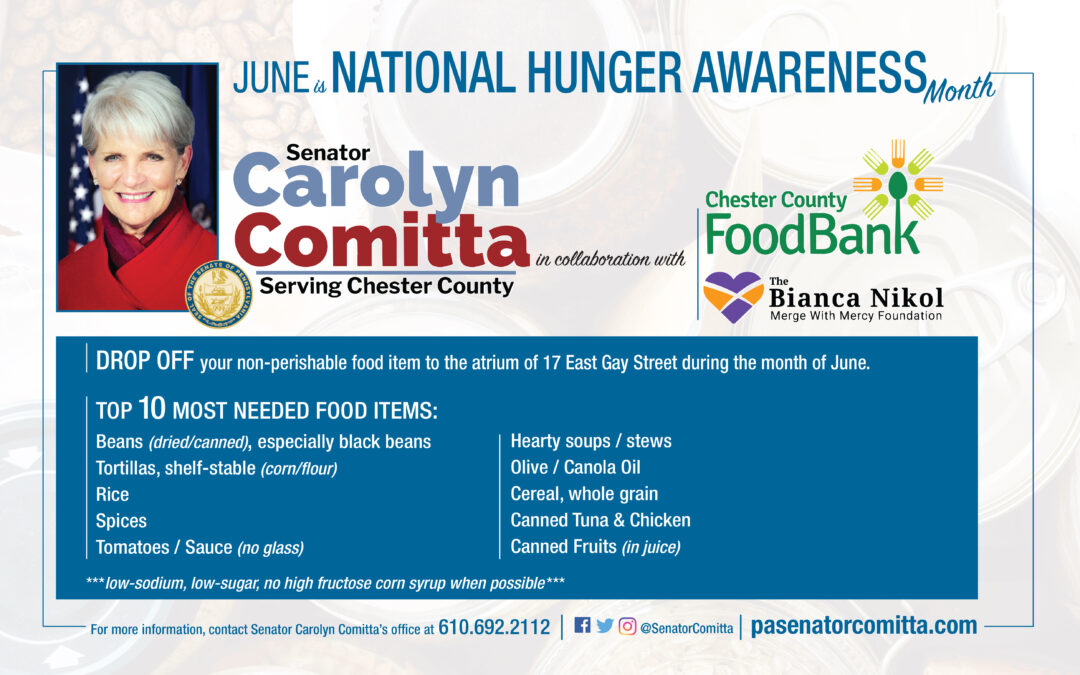
WEST CHESTER (June 16, 2021) – Residents and businesses have just over a week left to participate in the food drive that state Senator Carolyn Comitta is holding in partnership with The Bianca Nikol Merge with Mercy Foundation.
The food drive, benefitting the Chester County Food Bank, is running until Monday, June 28
Nonperishable food items can be dropped off at the donation box in the lobby of Senator Comitta’s West Chester District Office, located at 17 E. Gay Street in downtown West Chester. The lobby is open during regular business hours (Monday through Friday from 9 a.m. to 5 p.m.). After dropping off a donation, please take a purple pipe cleaner daisy found on the donation box and “spread the love.”
For a listing of the most in-demand food items click here.
In addition, residents can participate virtually by donating online at www.daisiesforbianca.org
So, far Senator Comitta’s office and The Bianca Nikol Merge with Mercy Foundation have collected three carloads of food donations through their community outreach efforts.
“The pandemic has exacerbated and expanded the problem of food insecurity in our communities. No family, child, senior citizen, or resident should have to go hungry. No one should have to choose between a meal or paying for medication, utilities or other necessities,” Comitta said. “I am honored that we have partnered with the Merge with Mercy Foundation to support those in need in Bianca’s name. Bianca’s light, love, and compassion for others continues to shine bright and we are proud to share and reflect it through this food drive and future efforts.”
Named for Bianca Nikol Roberson, whose life was tragically cut short by an act of hatred and gun violence, the foundation works to empower the oppressed to overcome societal challenges, educate communities and youth about the impacts of gun violence, and keep Bianca’s story alive by providing support, assistance, advocacy, and ongoing outreach initiatives.
In 2017, 18-year-old Bianca had recently graduated from Bayard Rustin High School and was planning to attend Jacksonville University on a full scholarship when she was shot and killed while driving in West Goshen.
Bianca’s mother, Michelle Roberson, CEO of The Bianca Nikol Merge with Mercy Foundation and a Constituent Services Specialist with Senator Comitta’s office, said the food drive is another way to honor her daughter’s values of selflessness, inclusion, and a commitment to helping others.
She asked community members to donate to the food drive for three very important reasons.
“First, we need to continue to come together as a community and feed the hungry. Second, to honor the memory of my beautiful Bianca Nikol Roberson. This is who Bianca was – she always wanted to save the world and give herself to help anyone and everyone. So please help keep her memory alive and help someone who needs a meal. And third, help heal my broken heart by seeing the love and support that my daughter Bianca would have spread. SPREAD THE LOVE!”
###

June 16, 2021
WEST CHESTER (June 16, 2021) – Chester County will receive $975,965 in state grant funding through two programs to support probation services and provide rehabilitation and alternative sentencing programs.
The grants, approved by the Pennsylvania Commission on Crime and Delinquency (PCCD), are as follows:
- $442,821 for the Intermediate Punishment program to continue probation programs in Chester County by covering staffing costs for caseworkers, increasing resources and services to participants, and supporting treatment costs.
- $533,144 to support adult probation services through Improvement of Adult Probation Services Grant-In-Aid Funds. This funding program was established by Act 114 of 2019, which allows PCCD to review and approve county adult probation and parole grant funding.
Both grant programs work to address the high cost of incarceration, strengthen support for county probation programs, and focus on preventing recidivism through quality rehabilitation.
“These investments help our justice system address the underlying causes and issues related to criminal activity, including substance abuse, mental illness, and behavioral health issues,” state Senator Carolyn Comitta said. “It’s important that we support our county agencies with the necessary resources and funds to continue working to keep our communities safe through crime prevention, rehabilitation, and reducing recidivism.”
Chester County Probation, Parole and Pretrial Services Chief Chris Murphy said, “We are appreciative of the recently awarded grants from PCCD. The Grant in Aid fund helps support Adult Probation Officers salaries, and the Intermediate Punishment grant will help provide alternatives to incarceration, including electronic monitoring and treatment for those suffering from substance use disorders.”
Speaking on behalf of the Chester County Board of Commissioners, Chair Marian Moskowitz said, “The rehabilitative programs provided by Chester County’s court system are effective because of the dedication of the leadership and staff, and because of the many partnerships they have developed to create our treatment courts, our women’s re-entry program, and other services. This funding helps the department to continue the important work of offering options to incarceration that benefit eligible offenders and that often include cost savings too.”
###
June 14, 2021
June 14, 2021
HARRISBURG (June 14, 2021) – As Pennsylvania moves forward towards reducing harmful greenhouse gas emissions by participating in the Regional Greenhouse Gas Initiative (RGGI), Governor Tom Wolf today joined state Senator Carolyn Comitta and state Rep. Dianne Herrin, who are introducing legislation that would target funding from RGGI proceeds to communities impacted by climate change.
<<Watch>>
“Participating in RGGI will further our commonwealth’s climate goals, mitigate ongoing damage from climate change and invest in our workforce. Funds brought in through RGGI will allow us to make targeted investments to support workers and communities affected by energy transition, invest in environmental justice, and strengthen Pennsylvania’s clean energy, commercial and industrial sectors,” Gov. Wolf said. “I want to thank Senator Comitta and Representative Herrin for introducing legislation to make those investments a reality.”
The Pennsylvania Department of Environmental Protection (DEP), at the direction of the governor, is currently taking steps through the regulatory process to participate in RGGI, a market-based collaboration among nearly a dozen Northeast and Mid-Atlantic states to reduce greenhouse gas emissions and combat climate change while generating economic growth.
Participating states implement RGGI through a regional cap-and-invest program involving CO2 emitting electric power plants. In order to show compliance with the cap, power plants must purchase a credit or “allowance,” for each ton of CO2 they emit.
These purchases are made at quarterly auctions conducted by RGGI. The proceeds from the auctions are allocated back to the participating states in proportion to the amount of carbon subject to regulation in each state.
Senate Bill 15 and House Bill 1565 would create funds to disperse proceeds that would be generated for Pennsylvania through RGGI auctions. Specifically, it would make targeted investments to support workers and communities affected by energy transition, invest in environmental justice communities, and further strengthen Pennsylvania’s growing clean energy, commercial, and industrial sectors.
“RGGI and Senate Bill15, the RGGI Investments Act, will set us on a path towards a clean energy future in Pennsylvania,” said Comitta. “This legislation will ensure that our communities can transition to clean and renewable jobs, invest in energy efficient programs, and uplift the health and wellbeing of all Pennsylvanians. With the threat of the climate crisis, the time to act is now. It is our duty to create a safe and healthy future for all generations.”
“Just last week, we have seen a coal mine close and a coal-fired electric generating plant close in Western Pennsylvania, and it’s clearer than ever the energy industry is changing forever – not due to government regulation, but to simple economic realities,” said Rep. Herrin. “With this RGGI plan, mechanisms would be in place to support these hard workers and communities with worker training programs and economic development opportunities. Pennsylvania has always been a leader in energy, and it’s time we truly embrace the future and start doing the right thing for the health of our families, for job growth, and for protecting our air and water. Joining the Regional Greenhouse Gas Initiative is our best path forward with other mid-Atlantic states, while still putting our people and communities first.”
“RGGI participation will undoubtedly have tangible health, environmental and economic benefits for all of Pennsylvania overall,” said DEP Secretary Patrick McDonnell. “One highly anticipated benefit, though, is how this program will elevate and uplift our state’s most distressed communities by investing funding from RGGI proceeds into them.”
The RGGI states have reduced power sector CO2 pollution by 45 percent since 2005, while the region’s per-capita GDP has continued to grow.
Through its first six years of existence, RGGI investments were found to return $2.31 billion in lifetime energy bill savings to more than 161,000 households and 6,000 businesses that participated in programs funded by RGGI proceeds, and to 1.5 million households and over 37,000 businesses that received direct bill assistance.
June 11, 2021
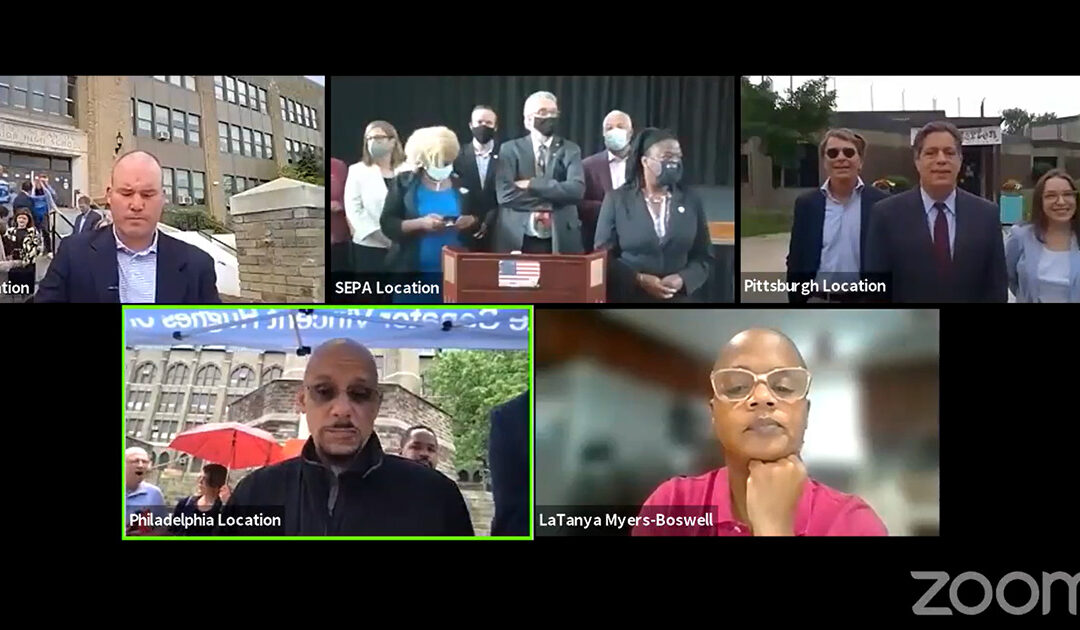
Statewide, PA − June 11, 2021 — As the projected state budget surplus surged to $3 billion and more than $7 billion in federal aid remains idled by inaction, Senate & House Democrats gathered in front of local schools across Pennsylvania on Friday to call for immediate release of funds to end the scourge of toxic and dilapidated school buildings in Pennsylvania.
Elected officials and local leaders in four different regions of the commonwealth talked about how widespread health and safety concerns affect school districts large and small across the commonwealth, where school infrastructure has caused illness and even death to those who are forced to occupy them every day.
“We are here to put an end to the excuses,” state Sen. Vincent Hughes, D-Philadelphia, Montgomery said outside the century-old Overbrook High School where students go without water in science labs and duck pieces falling from the auditorium ceiling. “It’s budget season and the annual excuses that have kept our children trapped in toxic schools are as old and worn as the schools themselves. Enough. We have the resources to end this embarrassment right now.”
Democrats are seeking immediate investment in schools across the Pennsylvania, one of only 22 states that has failed to remove lead from school drinking water and where infrastructure has been rated C- by the American Society of Civil Engineers.
Senate Democratic Leader Jay Costa, who spoke from Kelly Primary School in Wilkinsburg, said indiscriminate boundaries should not play a role in school quality.
“Something as simple and arbitrary as a zip code determines the quality of buildings and facilities a student will have to learn in,” he said. “This isn’t right and it’s not equitable, but this year we have the opportunity to level the playing field. With $7 billion in federal funding and a $3 billion surplus, we can address aging infrastructure in every district in this state that needs it.”
Senate Democrats and Gov. Tom Wolf have been urging the General Assembly for years to protect students, teachers and staff with investments in our schools that would also create thousands of jobs. Still, news outlets continue to report lead in drinking water, asbestos pollution, and even carbon monoxide dangers in Pennsylvania schools.
Sen. Carolyn Comitta, a member of the Senate Education Committee who spoke said investment of surplus and American Rescue Plan funding would be benefit both students and local economies.
“Every child deserves the opportunity to attend school in a classroom that is a safe, healthy, and productive environment for learning,” she said. “With significant ARP funding, we now have a golden opportunity to upgrade Pennsylvania’s school facilities and address problems like mold, asbestos, and lead that are hazardous to the health of students, young people, and teachers. We can fix our educational facilities, create jobs, and prioritize the recovery of both our economy and our schools in the process.”
Under the state constitution, Pennsylvania’s annual budget must be passed by June 30.
“The renovation of schools has been deferred for far too long,” said Sen. Art Haywood, who represents schools in both Philadelphia and Montgomery counties. Now is the time to clear the asbestos, mold, lead, and water. We must fix poor ventilation and other hazardous conditions.”
Sen. Tim Kearney gathered community leaders outside Penn Wood High School in Lansdowne.
“We cannot send our children into schools with overcrowded classrooms and broken heating, and expect them to thrive,” he said. “How can students succeed when their schools are failing? Thanks to a historic investment from the American Rescue Plan, we have a real opportunity to deliver on our promise to Pennsylvania’s children by giving schools the resources they need.”
Sen. Anthony Hardy Williams, who represents Southwest Philadelphia and parts of Delaware County, said students exposed to the neglect of their schools can have that reflected in their performance.
“We must invest money that is readily into school buildings across Pennsylvania. It is appalling that we continue to allow students to sit in classrooms, walk hallways, and drink from water fountains that may be contaminated with lead, asbestos, and numerous other dangerous toxins,” he said. “How can we expect students to care about their education if they don’t feel like we are committing and investing to them and their learning environment? We need to fund our facilities and invest now in the students of Pennsylvania.”
Sen. John Kane, who spent decades as a union plumber, said he has seen first-hand the materials once used routinely on large building projects.
“I’m from the construction industry – I spent four decades there,” he said. “There are materials in these buildings that we have learned are dangerous and need to be replaced. And the longer we go without doing that, the more we’re putting our students, our teachers, and our school administrators at risk. It’s that simple. It’s time we all do our jobs to right this wrong.”
Sen. Sharif Street, whose North Philadelphia district is one of the least wealthy in Pennsylvania, said education funding is at the root of economic disparity.
“There has never been a better opportunity to fully and equally fund education in Pennsylvania. With $3 Billion in unprecedented budget surpluses, there is no greater priority than making sure our kids have the resources they need to succeed in rural and urban districts,” he said. “Property taxes, new business and even where people choose to start a family are all linked to education funding. Investing in our students will allow us to grow our economy, population and the next the next generation of Pennsylvania.”
Sen. Nikil Saval, also representing portions of Philadelphia, highlighted the opportunity presented by this year’s budget.
“Healthy communities, in which people of all ages have what they need to thrive, do not exist without healthy schools,” said Saval. “COVID has laid bare the dire conditions of school buildings throughout the state, but organizers, teachers, school administrators, parents, and children have fought long and hard to call attention to the urgent need to repair and update the crumbling infrastructure. We have an incredible opportunity, right now, to respond to their calls.”
The newest member of the Pennsylvania Senate Democratic Caucus, Senator Marty Flynn, joined the press event from Scranton and represents portions of Lackawanna, Luzerne and Monroe counties.
“Now, more than ever, COVID-19 has shown the need for removing all known health hazards from our classrooms as well as providing proper ventilation systems. An unhealthy learning environment leads to overcrowded classrooms and long-term health issues for students and educators. Our six neighboring states all have existing programs to deal with health and safety hazards in their public school buildings. There is no reason Pennsylvanians can’t move to protect our students in the same way,” said Senator Marty Flynn. “In the past, opponents of fair funding have claimed that more money for broken schools means less money for other schools. The ARP funding eliminates that excuse. The money is there. We have an opportunity to do the right thing now.”
###
June 1, 2021
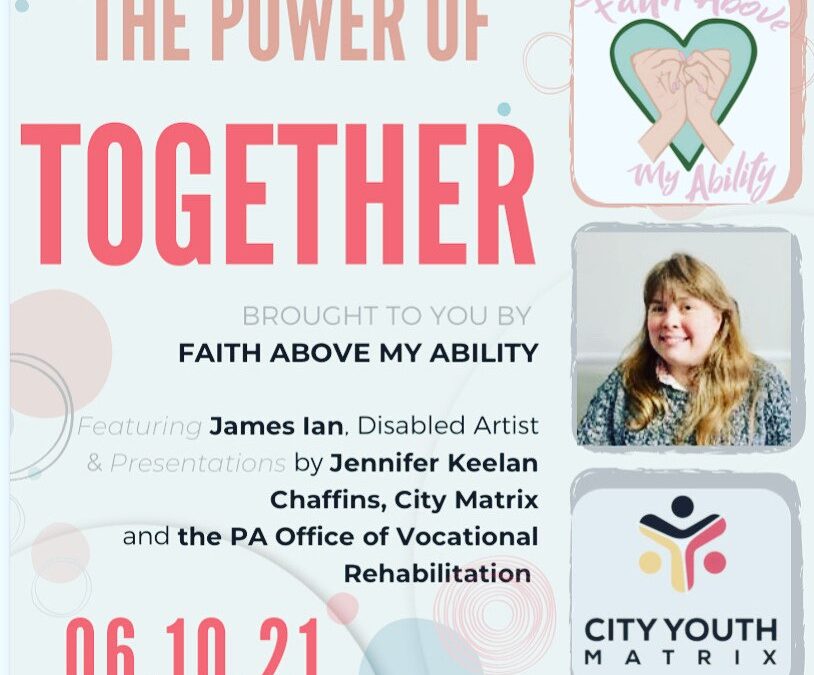
WEST CHESTER (June 2, 2021) –State Senator Carolyn Comitta is partnering with a local nonprofit organization to hold “The Power of Together,” an upcoming all abilities expo focused on improving access and equality for people living with or affected by disabilities.
In partnership with Faith Above My Ability, the virtual event is set for Thursday, June 10 from 6 to 8 p.m. The event, being held via Zoom, is free and open to the public. Participants should register in advance at https://linktr.ee/Faithabovemyability
In addition to remarks from Senator Comitta, the event will feature presentations by:
- James Ian, a singer, songwriter, and multi-instrumental musical artist who is living with Spinal Muscular Atrophy type 3.
- Jennifer Keelan Chaffins, a nationally recognized educator, speaker, and advocate for children and people living with disabilities.
- City Youth Matrix, a nonprofit organization that helps families with limited resources extracurricular activities that provide enrichment experiences for children and young people.
- The Pennsylvania Office of Vocational Rehabilitation, which provides vocational rehabilitation services to help people with disabilities prepare for, obtain, or maintain employment.
All are welcome to join in learning about and discussing the issues facing and resources available to people and community members living with disabilities.
“We all face different challenges and struggles. We all have different gifts, talents, and skills to offer.” Comitta said. “I hope this event helps us continue to work to ensure that our communities are welcoming and inclusive places where those of all abilities can celebrate their strengths and have access to the necessary resources and tools to live healthy, productive, and independent lives.”
“Disability is the largest minority group and one in which anyone can become a part of at a moment’s notice. It’s time we start talking about disability, having those difficult conversations, and bringing people together to create a more inclusive society,” said Jessica Keogh, M.Ed., founder and president of Faith Above My Ability.
To learn more about Faith Above My Ability, visit www.faithabovemyability.org.
May 25, 2021
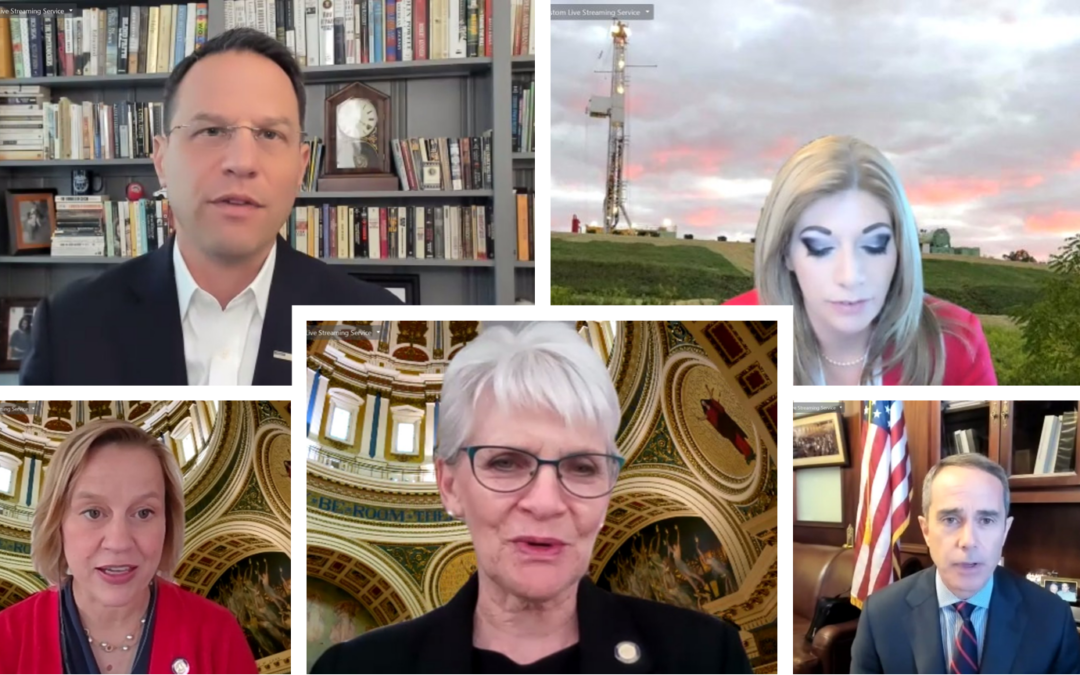
Harrisburg, PA − May 25, 2021 – Today, Pennsylvania Attorney General Josh Shapiro and members of the Senate Democratic Caucus led in this effort by State Senator Steve Santarsiero held a virtual press conference to discuss a package of bills aimed at increasing transparency, oversight and the overall safe management of gas drilling operations in the fracking industry.
The package of legislation addresses recommendations made in Pennsylvania’s 43rd Statewide Investigating Grand Jury report on the unconventional oil and gas industry. The report was a result of a two-year investigation that included personal testimony from 70 households across the Commonwealth and dozens of current and former state employees. Findings detailed disturbing health impacts of Pennsylvania fracking operations on children, homeowners and livestock that live within proximity of drilling sites. Multiple families close to wells or other industrial sites described unexplained rashes, sudden nosebleeds, and respiratory issues.
“Last year, the Grand Jurors called on Pennsylvania to make concrete changes to reduce the health and safety risks on a fracking industry left unchecked by regulators impacting families across Pennsylvania. It is common sense to ensure fracking isn’t happening next to a school or too close to someone’s home. It is common sense for companies to be transparent about the chemicals they are using near the water supplies of homes,” said Attorney General Josh Shapiro. “I want to thank Senators Santarsiero, Collett, Muth, Sabatina and Comitta for their work on these reforms—my office is committed to making sure Pennsylvanians are protected against powerful interests.”
The package of bills sponsored by Senate Democrats aim to usher in reforms that were specifically recommended by the Grand Jury report. The eight recommendations included:
- Expanding no-drill zones in Pennsylvania from the required 500 feet to 2,500 feet;
- Requiring fracking companies to publicly disclose all chemicals used in drilling and hydraulic fracturing before they are used on-site;
- Requiring the regulation of gathering lines, used to transport unconventional gas hundreds of miles;
- Adding up all sources of air pollution in a given area to accurately assess air quality;
- Requiring safer transport of the contaminated waste created from fracking sites;
- Conducting a comprehensive health response to the effects of living near unconventional drilling sites;
- Limiting the ability of Pennsylvania Department of Environmental Protection employees to be employed in the private sector immediately after leaving the Department;
- Allowing the Pennsylvania Office of Attorney General original criminal jurisdiction over unconventional oil and gas companies.
Senators Santarsiero, Collett, Muth, Sabatina and Comitta will sponsor and co-sponsor bills that directly respond to the recommendations and the urgent need for action.
“Under this package of bills, citizens and others could report potential environmental crimes directly to the Attorney General’s office for investigation without having to go through other agencies first,” said Sen. Santarsiero, adding “This would speed up the process for investigations and convictions for environmental crimes and make it clear to potential polluters that damaging our land and water will be met with real consequences. Pennsylvanians have a constitutional right to clean air, pure water and the protection of the Commonwealth’s natural resources. As a former Chief Deputy Attorney General for Environmental Protection in Pennsylvania, I have firsthand experience in how cumbersome, time consuming, and counter-productive the current process can be. It is time we ensure accurate resources exist to protect the constitutional right of all Pennsylvanians to clean air and pure water.”
“SB653 is a worker and public safety issue,” Senator Sabatina said. “When first responders show up to an accident scene, they need to quickly identify the substance in a spill. We have to keep truck drivers, first responders and drivers in Pennsylvania safe.”
“This package of bills should’ve been enacted before a single permit was approved by the DEP,” said Senator Muth. “For over ten years, Pennsylvanians have been left in the dark about the cumulative health impacts of the extraction industry and often have no idea what kind of harmful chemicals are being used right in their backyard or leaching into their water supplies. The recommendations included in report one of the 43rd Statewide Investigative Grand Jury Report are commonsense, proactive measures that will increase transparency about the hydraulic fracturing process. It’s time for state government to protect the people and our natural resources instead of protecting corporate polluters who only care about profits, even if it means harming people and the planet.”
According to data from the U.S. Energy Information Administration, Pennsylvania is the second largest producer of natural gas, following Texas. The industry has boomed in Pennsylvania with very little legal or regulatory accountability. Proposed legislation will address negligence, a lack of transparency and gaps in oversight that have allowed drillers to operate largely on their own accord, with profit often prioritized over children, families and animals that suffer because of exposure to dangerous chemicals, contaminated water and air pollution.
“In my district, where PFAS contamination levels have been among the highest in the nation, water quality is not something we take for granted,” said Senator Collett. “This urgent legislation will allow the Attorney General to take action against polluters and allow us to stop using state dollars – your dollars – to remediate hazards like these across the Commonwealth.”
“The health effects from industry activity are “magnified by proximity”, a fact that is highlighted in Attorney General Josh Shapiro’s Grand Jury report,” said Senator Santarsiero. “We must protect our communities and keep families safe in their homes by increasing the distance unconventional gas drilling operations must be from buildings and water supplies.”
“The Attorney General’s report showed that natural gas drilling operations can have serious impacts on our health, safety, and well-being and those impacts are amplified by proximity. Drilling operations don’t belong in the middle of our neighborhoods or near schools, hospitals, or our water resources,” Senator Comitta said. “It’s time to enact safer setbacks to better protect Pennsylvania families, children, and communities from the potential for the significant, negative health impacts associated with fracking.”
###

May 24, 2021
WEST CHESTER (May 24, 2021) – Residents and families concerned about properly disposing of personal information should consider taking advantage of an upcoming free shredding event organized by state Senator Carolyn Comitta.
The shredding event, set for Saturday, June 12 from 1 p.m. to 4 p.m. at Burke Park in Malvern, is open to individuals and families to safely dispose of financial statements, tax forms, medical records, and other confidential information.
Wiggins Shredding will destroy the documents onsite and the shredded paper will later be recycled.
“Many of us have amassed a lot of documents, including financial statements, tax information, and medical records, over the past year. This is a free service to help you securely dispose of sensitive information to protect your privacy and prevent the potential for identity theft and fraud,” Comitta said.
Some examples of unneeded documents that should be shredded include: credit card statements and applications, bank records, canceled checks, income tax forms, insurance records, medical and retirement or pension fund information, and any documents that contain personal information like Social Security, credit card, or bank account numbers.
The event is free and open to the public. However, please note the following:
- This event is for individuals only, not businesses.
- There is a three (3) box limit per car.
- Only paper will be accepted. Please do not bring binders, binder clips, or books.
In addition, at the shredding event, food items will be collected to benefit the Chester County Food Bank. While donations are welcomed and encouraged, they are not required to access the free shredding services. Those interested in donating can view a list of the most-needed food items here: www.pasenatorcomitta.com/food-drive/
May 19, 2021
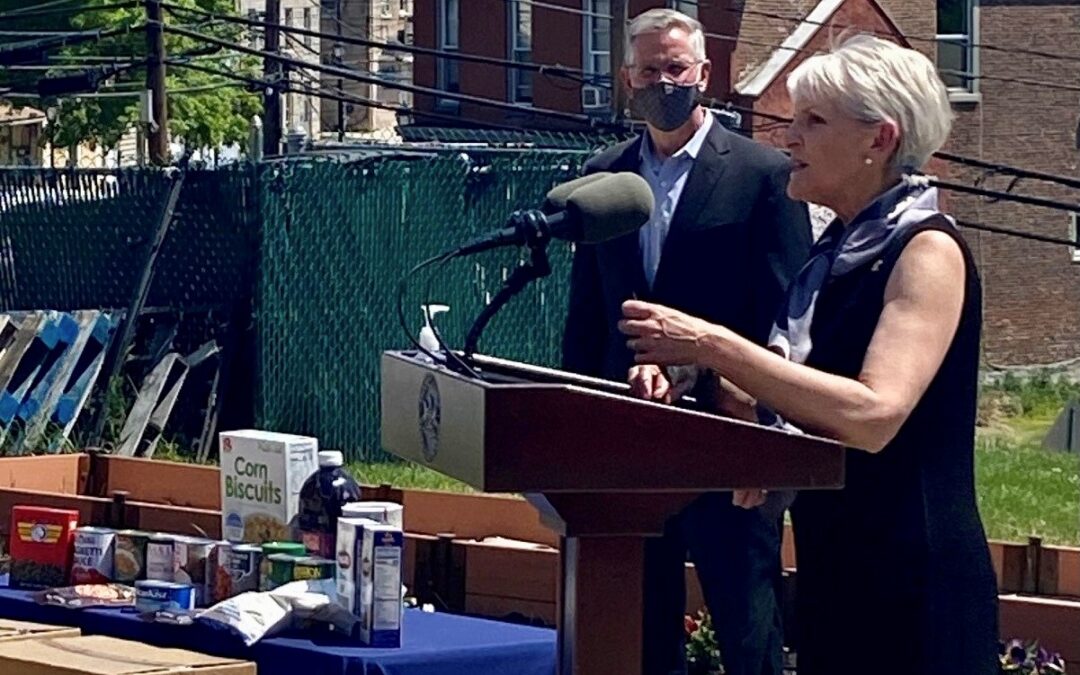
Phoenixville, PA – Agriculture Secretary Russell Redding and Aging Secretary Robert Torres today joined seniors at Kings Terrace to announce steps to increase access to Pennsylvania’s Senior Food Boxes, a supplemental food program available free to lower income seniors. Giving the program a new name and removing proof of income requirements are among the barriers to participation the state is removing, with the goal of encouraging seniors to take advantage of the program.
Formally known as Commodity Supplemental Food Program, the program previously required seniors to provide documented proof of their income when they applied to receive a food box. The new procedure requires only a statement of income.
“We want to take hunger off the table for Pennsylvania’s seniors. They shouldn’t be worrying about whether to eat or pay for utilities and prescriptions,” said Redding. “They’ve supported their families or communities for a lifetime, and we want to support them now.
“This is why we’ve removed income verification as a requirement for the Senior Food Box, we want it to be as easy as possible to receive. So now, just indicate on the application form that you are eligible for help and you’ll receive it,” added Redding.
The Pennsylvania Senior Food Box is a product of the federally funded Commodity Supplemental Food Program. It works to improve the health of low-income seniors by providing a supplement to groceries of a variety of nutritious, shelf-stable products including shelf-stable fluid milk, juice, ready-to-eat cereal, rice, pasta, dry beans, peanut butter, canned meat, poultry, or fish, and canned fruits and vegetables. The Senior Food Box is a perfect supplement to other food assistance programs in Pennsylvania such as the Supplemental Nutrition Assistance Program (SNAP) and the Pennsylvania Senior Farmers Market Nutrition Program, which provides seniors with fresh, Pennsylvania-grown fruits and vegetables from summer through fall.
More than 300,000 Pennsylvania seniors are eligible for the Pennsylvania Senior Food Box, but only about 35,000 are enrolled to receive it this year. Seniors often face barriers to access for food assistance programs such as mobility, technology, and stigma. This food box program aims to overcome those barriers by being available for drop off or drive through in addition to pick up and, now, by reducing stigma and red tape with the removal of income verification requirements.
“Supporting older adults with the nutritious foods they need requires us to understand the challenges they face in their daily lives and provide options to overcome these challenges. We want seniors to have sufficient food and a stable meal routine that enables good health, independence and a positive quality of life,” said Aging Secretary Robert Torres. “I am pleased to support the Department of Agriculture’s efforts to make this important food assistance program more accessible, and I urge eligible seniors to take advantage of it through the many options available.”
Food insecurity and hunger can have harmful impacts on the health and well-being of older adults. Poor food intake can cause nutrition deficiencies that increase disease risk or worsen existing conditions. Consuming fewer calories and nutrients can also decrease independence and the ability to remain home without assistance.
State Senator Carolyn Comitta, member of the Senate Agriculture and Rural Affairs Committee and supporter of the Chester County Food Bank, joined Redding and Torres at Kings Terrace.
“It’s vital that senior citizens can easily access nutritious food to help ensure their health, well-being, independence, and happiness,” said Comitta. “This program is another tool we have to combat hunger among seniors. Seniors should know that food boxes are readily available and safely accessible in their communities.”
Pennsylvania’s Senior Food Box Program is administered on behalf of the Department of Agriculture by Hunger-Free Pennsylvania through their network of 17 food banks serving all 67 counties. Once signed up, eligible seniors can choose to receive their monthly box via pick up, drive-through, or delivery from a program partner including senior apartment complexes, senior community centers, and food pantries.
“Seniors are the greatest generation. They survived the Great Depression of the ’30’s, World War II, and the Korean War,” said executive director of Hunger-Free Pennsylvania Sheila Christopher. “Now, hundreds of thousands find themselves without enough food on their table. The PA Senior Food Box is available to help. Help us help them.”
The Senior Food Box is available for anyone age 60 or above whose household income is at or below 150 percent of the U.S. poverty level. That totals $16,744 annually for a household of one, or $22,646 for a household of two.
To apply, seniors may call 800-468-2433 to be directed to the regional food bank distributing the Senior Food Box in their county. Or go online at agriculture.pa.gov/seniorfoodbox and fill out the Senior Food Box Application Form.
May 14, 2021
 Chester County Foodbank Top 10 Most Needed Items:
- Beans (dried / canned), especially black beans
- Tortillas, shelf stable (corn / flour)
- Rice
- Spices
- Tomatoes / Sauce (no glass)
- Hearty soups/stews
- Olive/Canola Oil
- Cereal, whole grain
- Canned Tuna & Chicken
- Canned Fruits (in juice)
***low-sodium, low-sugar, no high fructose corn syrup when possible***