Comitta, Herrin Introduce RGGI Investments Act to Benefit the Environment and Economy
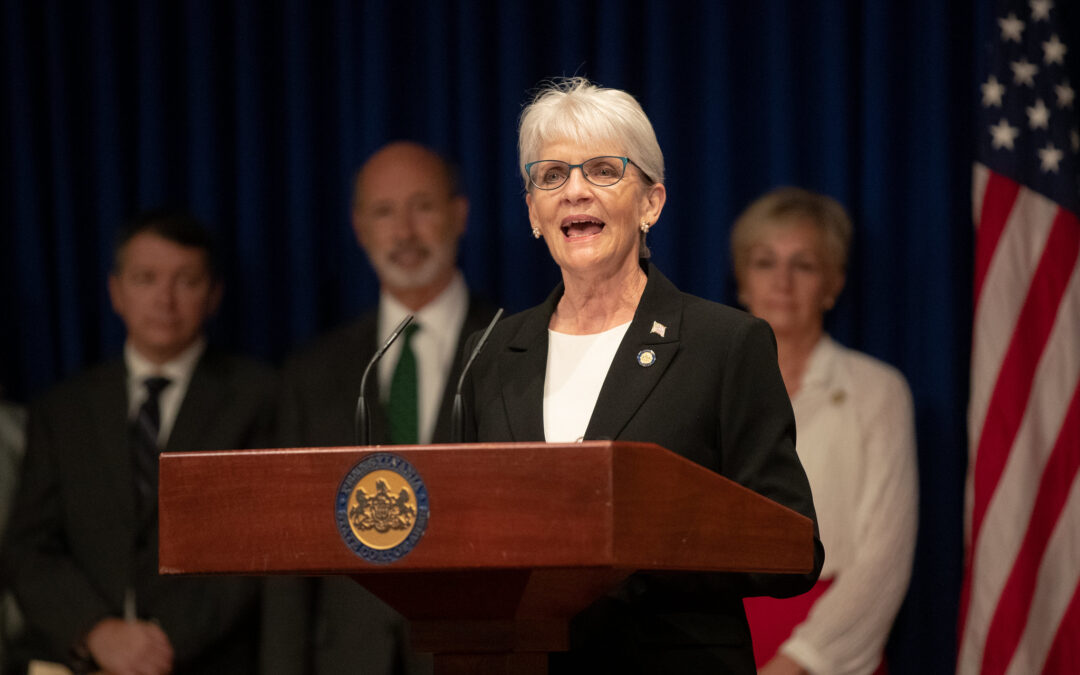
HARRISBURG (June 14, 2021) – As Pennsylvania moves forward towards reducing harmful greenhouse gas emissions by participating in the Regional Greenhouse Gas Initiative (RGGI), Governor Tom Wolf today joined state Senator Carolyn Comitta and state Rep. Dianne Herrin, who are introducing legislation that would target funding from RGGI proceeds to communities impacted by climate change.
“Participating in RGGI will further our commonwealth’s climate goals, mitigate ongoing damage from climate change and invest in our workforce. Funds brought in through RGGI will allow us to make targeted investments to support workers and communities affected by energy transition, invest in environmental justice, and strengthen Pennsylvania’s clean energy, commercial and industrial sectors,” Gov. Wolf said. “I want to thank Senator Comitta and Representative Herrin for introducing legislation to make those investments a reality.”
The Pennsylvania Department of Environmental Protection (DEP), at the direction of the governor, is currently taking steps through the regulatory process to participate in RGGI, a market-based collaboration among nearly a dozen Northeast and Mid-Atlantic states to reduce greenhouse gas emissions and combat climate change while generating economic growth.
Participating states implement RGGI through a regional cap-and-invest program involving CO2 emitting electric power plants. In order to show compliance with the cap, power plants must purchase a credit or “allowance,” for each ton of CO2 they emit.
These purchases are made at quarterly auctions conducted by RGGI. The proceeds from the auctions are allocated back to the participating states in proportion to the amount of carbon subject to regulation in each state.
Senate Bill 15 and House Bill 1565 would create funds to disperse proceeds that would be generated for Pennsylvania through RGGI auctions. Specifically, it would make targeted investments to support workers and communities affected by energy transition, invest in environmental justice communities, and further strengthen Pennsylvania’s growing clean energy, commercial, and industrial sectors.
“RGGI and Senate Bill15, the RGGI Investments Act, will set us on a path towards a clean energy future in Pennsylvania,” said Comitta. “This legislation will ensure that our communities can transition to clean and renewable jobs, invest in energy efficient programs, and uplift the health and wellbeing of all Pennsylvanians. With the threat of the climate crisis, the time to act is now. It is our duty to create a safe and healthy future for all generations.”
“Just last week, we have seen a coal mine close and a coal-fired electric generating plant close in Western Pennsylvania, and it’s clearer than ever the energy industry is changing forever – not due to government regulation, but to simple economic realities,” said Rep. Herrin. “With this RGGI plan, mechanisms would be in place to support these hard workers and communities with worker training programs and economic development opportunities. Pennsylvania has always been a leader in energy, and it’s time we truly embrace the future and start doing the right thing for the health of our families, for job growth, and for protecting our air and water. Joining the Regional Greenhouse Gas Initiative is our best path forward with other mid-Atlantic states, while still putting our people and communities first.”
“RGGI participation will undoubtedly have tangible health, environmental and economic benefits for all of Pennsylvania overall,” said DEP Secretary Patrick McDonnell. “One highly anticipated benefit, though, is how this program will elevate and uplift our state’s most distressed communities by investing funding from RGGI proceeds into them.”
The RGGI states have reduced power sector CO2 pollution by 45 percent since 2005, while the region’s per-capita GDP has continued to grow.
Through its first six years of existence, RGGI investments were found to return $2.31 billion in lifetime energy bill savings to more than 161,000 households and 6,000 businesses that participated in programs funded by RGGI proceeds, and to 1.5 million households and over 37,000 businesses that received direct bill assistance.
General Assembly Democrats, Local Leaders Across PA Call for Immediate Action on Toxic and Unsafe School Infrastructure
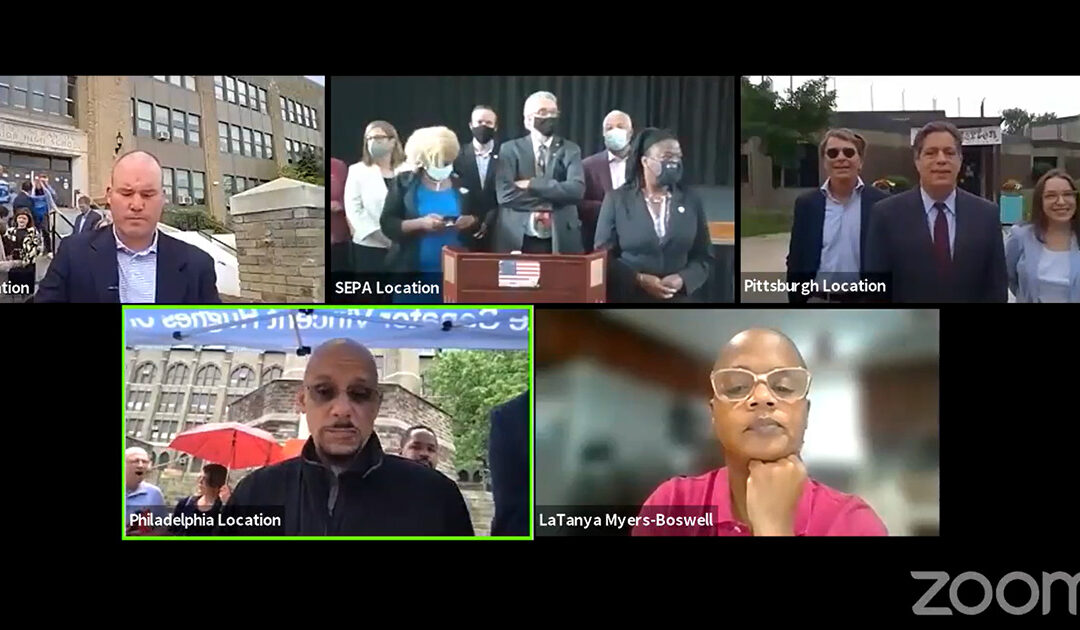
Statewide, PA − June 11, 2021 — As the projected state budget surplus surged to $3 billion and more than $7 billion in federal aid remains idled by inaction, Senate & House Democrats gathered in front of local schools across Pennsylvania on Friday to call for immediate release of funds to end the scourge of toxic and dilapidated school buildings in Pennsylvania.
Elected officials and local leaders in four different regions of the commonwealth talked about how widespread health and safety concerns affect school districts large and small across the commonwealth, where school infrastructure has caused illness and even death to those who are forced to occupy them every day.
“We are here to put an end to the excuses,” state Sen. Vincent Hughes, D-Philadelphia, Montgomery said outside the century-old Overbrook High School where students go without water in science labs and duck pieces falling from the auditorium ceiling. “It’s budget season and the annual excuses that have kept our children trapped in toxic schools are as old and worn as the schools themselves. Enough. We have the resources to end this embarrassment right now.”
Democrats are seeking immediate investment in schools across the Pennsylvania, one of only 22 states that has failed to remove lead from school drinking water and where infrastructure has been rated C- by the American Society of Civil Engineers.
Senate Democratic Leader Jay Costa, who spoke from Kelly Primary School in Wilkinsburg, said indiscriminate boundaries should not play a role in school quality.
“Something as simple and arbitrary as a zip code determines the quality of buildings and facilities a student will have to learn in,” he said. “This isn’t right and it’s not equitable, but this year we have the opportunity to level the playing field. With $7 billion in federal funding and a $3 billion surplus, we can address aging infrastructure in every district in this state that needs it.”
Senate Democrats and Gov. Tom Wolf have been urging the General Assembly for years to protect students, teachers and staff with investments in our schools that would also create thousands of jobs. Still, news outlets continue to report lead in drinking water, asbestos pollution, and even carbon monoxide dangers in Pennsylvania schools.
Sen. Carolyn Comitta, a member of the Senate Education Committee who spoke said investment of surplus and American Rescue Plan funding would be benefit both students and local economies.
“Every child deserves the opportunity to attend school in a classroom that is a safe, healthy, and productive environment for learning,” she said. “With significant ARP funding, we now have a golden opportunity to upgrade Pennsylvania’s school facilities and address problems like mold, asbestos, and lead that are hazardous to the health of students, young people, and teachers. We can fix our educational facilities, create jobs, and prioritize the recovery of both our economy and our schools in the process.”
Under the state constitution, Pennsylvania’s annual budget must be passed by June 30.
“The renovation of schools has been deferred for far too long,” said Sen. Art Haywood, who represents schools in both Philadelphia and Montgomery counties. Now is the time to clear the asbestos, mold, lead, and water. We must fix poor ventilation and other hazardous conditions.”
Sen. Tim Kearney gathered community leaders outside Penn Wood High School in Lansdowne.
“We cannot send our children into schools with overcrowded classrooms and broken heating, and expect them to thrive,” he said. “How can students succeed when their schools are failing? Thanks to a historic investment from the American Rescue Plan, we have a real opportunity to deliver on our promise to Pennsylvania’s children by giving schools the resources they need.”
Sen. Anthony Hardy Williams, who represents Southwest Philadelphia and parts of Delaware County, said students exposed to the neglect of their schools can have that reflected in their performance.
“We must invest money that is readily into school buildings across Pennsylvania. It is appalling that we continue to allow students to sit in classrooms, walk hallways, and drink from water fountains that may be contaminated with lead, asbestos, and numerous other dangerous toxins,” he said. “How can we expect students to care about their education if they don’t feel like we are committing and investing to them and their learning environment? We need to fund our facilities and invest now in the students of Pennsylvania.”
Sen. John Kane, who spent decades as a union plumber, said he has seen first-hand the materials once used routinely on large building projects.
“I’m from the construction industry – I spent four decades there,” he said. “There are materials in these buildings that we have learned are dangerous and need to be replaced. And the longer we go without doing that, the more we’re putting our students, our teachers, and our school administrators at risk. It’s that simple. It’s time we all do our jobs to right this wrong.”
Sen. Sharif Street, whose North Philadelphia district is one of the least wealthy in Pennsylvania, said education funding is at the root of economic disparity.
“There has never been a better opportunity to fully and equally fund education in Pennsylvania. With $3 Billion in unprecedented budget surpluses, there is no greater priority than making sure our kids have the resources they need to succeed in rural and urban districts,” he said. “Property taxes, new business and even where people choose to start a family are all linked to education funding. Investing in our students will allow us to grow our economy, population and the next the next generation of Pennsylvania.”
Sen. Nikil Saval, also representing portions of Philadelphia, highlighted the opportunity presented by this year’s budget.
“Healthy communities, in which people of all ages have what they need to thrive, do not exist without healthy schools,” said Saval. “COVID has laid bare the dire conditions of school buildings throughout the state, but organizers, teachers, school administrators, parents, and children have fought long and hard to call attention to the urgent need to repair and update the crumbling infrastructure. We have an incredible opportunity, right now, to respond to their calls.”
The newest member of the Pennsylvania Senate Democratic Caucus, Senator Marty Flynn, joined the press event from Scranton and represents portions of Lackawanna, Luzerne and Monroe counties.
“Now, more than ever, COVID-19 has shown the need for removing all known health hazards from our classrooms as well as providing proper ventilation systems. An unhealthy learning environment leads to overcrowded classrooms and long-term health issues for students and educators. Our six neighboring states all have existing programs to deal with health and safety hazards in their public school buildings. There is no reason Pennsylvanians can’t move to protect our students in the same way,” said Senator Marty Flynn. “In the past, opponents of fair funding have claimed that more money for broken schools means less money for other schools. The ARP funding eliminates that excuse. The money is there. We have an opportunity to do the right thing now.”
###
Virtual All Abilities Expo Set for June 10
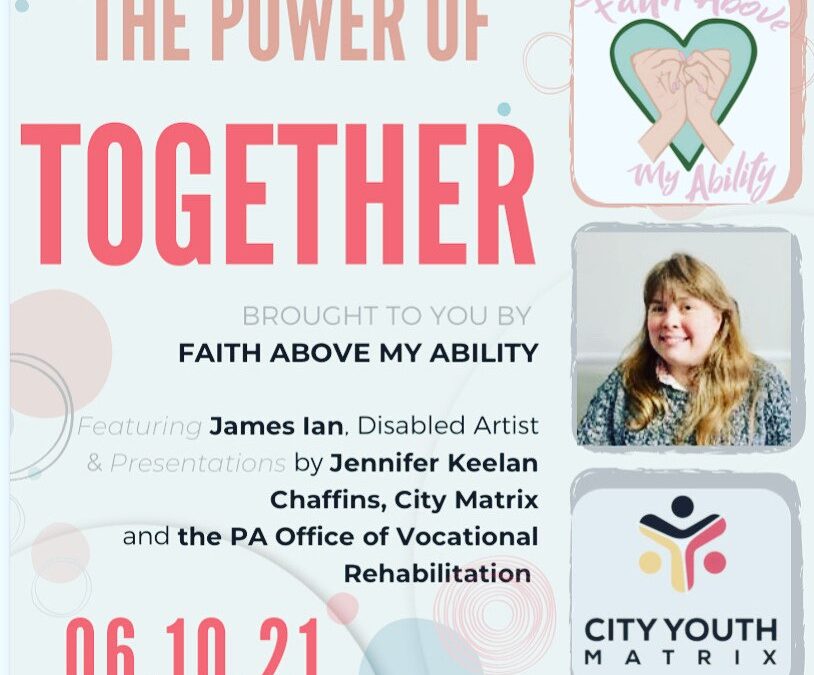
WEST CHESTER (June 2, 2021) –State Senator Carolyn Comitta is partnering with a local nonprofit organization to hold “The Power of Together,” an upcoming all abilities expo focused on improving access and equality for people living with or affected by disabilities.
In partnership with Faith Above My Ability, the virtual event is set for Thursday, June 10 from 6 to 8 p.m. The event, being held via Zoom, is free and open to the public. Participants should register in advance at https://linktr.ee/Faithabovemyability
In addition to remarks from Senator Comitta, the event will feature presentations by:
- James Ian, a singer, songwriter, and multi-instrumental musical artist who is living with Spinal Muscular Atrophy type 3.
- Jennifer Keelan Chaffins, a nationally recognized educator, speaker, and advocate for children and people living with disabilities.
- City Youth Matrix, a nonprofit organization that helps families with limited resources extracurricular activities that provide enrichment experiences for children and young people.
- The Pennsylvania Office of Vocational Rehabilitation, which provides vocational rehabilitation services to help people with disabilities prepare for, obtain, or maintain employment.
All are welcome to join in learning about and discussing the issues facing and resources available to people and community members living with disabilities.
“We all face different challenges and struggles. We all have different gifts, talents, and skills to offer.” Comitta said. “I hope this event helps us continue to work to ensure that our communities are welcoming and inclusive places where those of all abilities can celebrate their strengths and have access to the necessary resources and tools to live healthy, productive, and independent lives.”
“Disability is the largest minority group and one in which anyone can become a part of at a moment’s notice. It’s time we start talking about disability, having those difficult conversations, and bringing people together to create a more inclusive society,” said Jessica Keogh, M.Ed., founder and president of Faith Above My Ability.
To learn more about Faith Above My Ability, visit www.faithabovemyability.org.
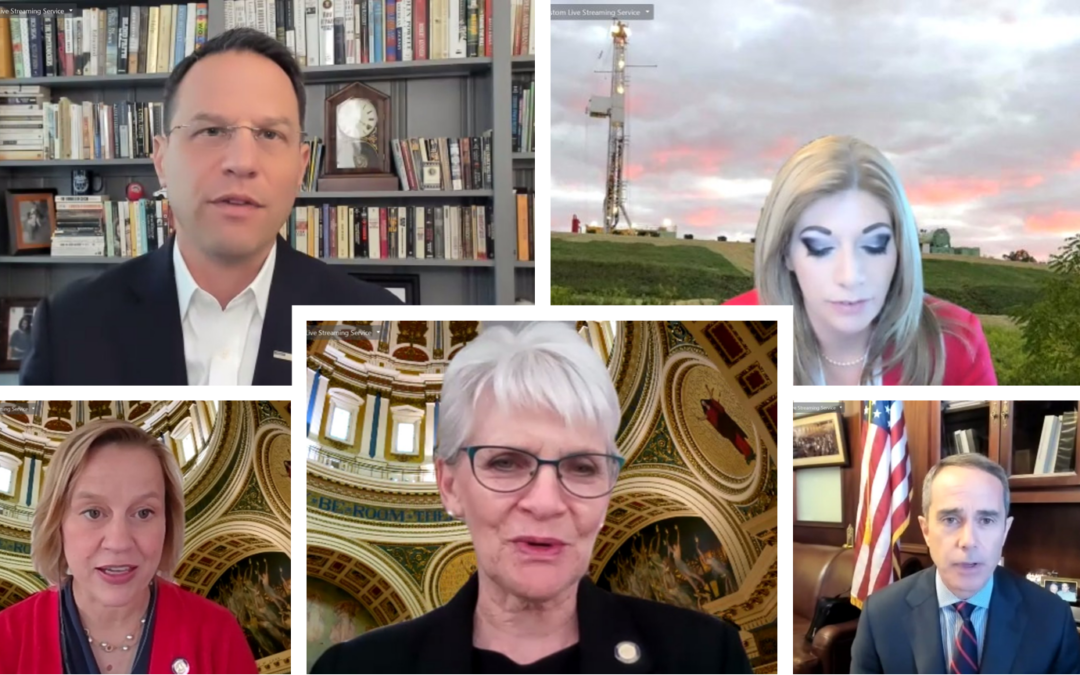
AG Shapiro and Senate Democrats Discuss Action Against Fracking Negligence
Harrisburg, PA − May 25, 2021 – Today, Pennsylvania Attorney General Josh Shapiro and members of the Senate Democratic Caucus led in this effort by State Senator Steve Santarsiero held a virtual press conference to discuss a package of bills aimed at increasing transparency, oversight and the overall safe management of gas drilling operations in the fracking industry.
The package of legislation addresses recommendations made in Pennsylvania’s 43rd Statewide Investigating Grand Jury report on the unconventional oil and gas industry. The report was a result of a two-year investigation that included personal testimony from 70 households across the Commonwealth and dozens of current and former state employees. Findings detailed disturbing health impacts of Pennsylvania fracking operations on children, homeowners and livestock that live within proximity of drilling sites. Multiple families close to wells or other industrial sites described unexplained rashes, sudden nosebleeds, and respiratory issues.
“Last year, the Grand Jurors called on Pennsylvania to make concrete changes to reduce the health and safety risks on a fracking industry left unchecked by regulators impacting families across Pennsylvania. It is common sense to ensure fracking isn’t happening next to a school or too close to someone’s home. It is common sense for companies to be transparent about the chemicals they are using near the water supplies of homes,” said Attorney General Josh Shapiro. “I want to thank Senators Santarsiero, Collett, Muth, Sabatina and Comitta for their work on these reforms—my office is committed to making sure Pennsylvanians are protected against powerful interests.”
The package of bills sponsored by Senate Democrats aim to usher in reforms that were specifically recommended by the Grand Jury report. The eight recommendations included:
- Expanding no-drill zones in Pennsylvania from the required 500 feet to 2,500 feet;
- Requiring fracking companies to publicly disclose all chemicals used in drilling and hydraulic fracturing before they are used on-site;
- Requiring the regulation of gathering lines, used to transport unconventional gas hundreds of miles;
- Adding up all sources of air pollution in a given area to accurately assess air quality;
- Requiring safer transport of the contaminated waste created from fracking sites;
- Conducting a comprehensive health response to the effects of living near unconventional drilling sites;
- Limiting the ability of Pennsylvania Department of Environmental Protection employees to be employed in the private sector immediately after leaving the Department;
- Allowing the Pennsylvania Office of Attorney General original criminal jurisdiction over unconventional oil and gas companies.
Senators Santarsiero, Collett, Muth, Sabatina and Comitta will sponsor and co-sponsor bills that directly respond to the recommendations and the urgent need for action.
“Under this package of bills, citizens and others could report potential environmental crimes directly to the Attorney General’s office for investigation without having to go through other agencies first,” said Sen. Santarsiero, adding “This would speed up the process for investigations and convictions for environmental crimes and make it clear to potential polluters that damaging our land and water will be met with real consequences. Pennsylvanians have a constitutional right to clean air, pure water and the protection of the Commonwealth’s natural resources. As a former Chief Deputy Attorney General for Environmental Protection in Pennsylvania, I have firsthand experience in how cumbersome, time consuming, and counter-productive the current process can be. It is time we ensure accurate resources exist to protect the constitutional right of all Pennsylvanians to clean air and pure water.”
“SB653 is a worker and public safety issue,” Senator Sabatina said. “When first responders show up to an accident scene, they need to quickly identify the substance in a spill. We have to keep truck drivers, first responders and drivers in Pennsylvania safe.”
“This package of bills should’ve been enacted before a single permit was approved by the DEP,” said Senator Muth. “For over ten years, Pennsylvanians have been left in the dark about the cumulative health impacts of the extraction industry and often have no idea what kind of harmful chemicals are being used right in their backyard or leaching into their water supplies. The recommendations included in report one of the 43rd Statewide Investigative Grand Jury Report are commonsense, proactive measures that will increase transparency about the hydraulic fracturing process. It’s time for state government to protect the people and our natural resources instead of protecting corporate polluters who only care about profits, even if it means harming people and the planet.”
According to data from the U.S. Energy Information Administration, Pennsylvania is the second largest producer of natural gas, following Texas. The industry has boomed in Pennsylvania with very little legal or regulatory accountability. Proposed legislation will address negligence, a lack of transparency and gaps in oversight that have allowed drillers to operate largely on their own accord, with profit often prioritized over children, families and animals that suffer because of exposure to dangerous chemicals, contaminated water and air pollution.
“In my district, where PFAS contamination levels have been among the highest in the nation, water quality is not something we take for granted,” said Senator Collett. “This urgent legislation will allow the Attorney General to take action against polluters and allow us to stop using state dollars – your dollars – to remediate hazards like these across the Commonwealth.”
“The health effects from industry activity are “magnified by proximity”, a fact that is highlighted in Attorney General Josh Shapiro’s Grand Jury report,” said Senator Santarsiero. “We must protect our communities and keep families safe in their homes by increasing the distance unconventional gas drilling operations must be from buildings and water supplies.”
“The Attorney General’s report showed that natural gas drilling operations can have serious impacts on our health, safety, and well-being and those impacts are amplified by proximity. Drilling operations don’t belong in the middle of our neighborhoods or near schools, hospitals, or our water resources,” Senator Comitta said. “It’s time to enact safer setbacks to better protect Pennsylvania families, children, and communities from the potential for the significant, negative health impacts associated with fracking.”
###

Sen. Comitta to Hold Free Shredding Event June 12 in Malvern
WEST CHESTER (May 24, 2021) – Residents and families concerned about properly disposing of personal information should consider taking advantage of an upcoming free shredding event organized by state Senator Carolyn Comitta.
The shredding event, set for Saturday, June 12 from 1 p.m. to 4 p.m. at Burke Park in Malvern, is open to individuals and families to safely dispose of financial statements, tax forms, medical records, and other confidential information.
Wiggins Shredding will destroy the documents onsite and the shredded paper will later be recycled.
“Many of us have amassed a lot of documents, including financial statements, tax information, and medical records, over the past year. This is a free service to help you securely dispose of sensitive information to protect your privacy and prevent the potential for identity theft and fraud,” Comitta said.
Some examples of unneeded documents that should be shredded include: credit card statements and applications, bank records, canceled checks, income tax forms, insurance records, medical and retirement or pension fund information, and any documents that contain personal information like Social Security, credit card, or bank account numbers.
The event is free and open to the public. However, please note the following:
- This event is for individuals only, not businesses.
- There is a three (3) box limit per car.
- Only paper will be accepted. Please do not bring binders, binder clips, or books.
In addition, at the shredding event, food items will be collected to benefit the Chester County Food Bank. While donations are welcomed and encouraged, they are not required to access the free shredding services. Those interested in donating can view a list of the most-needed food items here: www.pasenatorcomitta.com/food-drive/
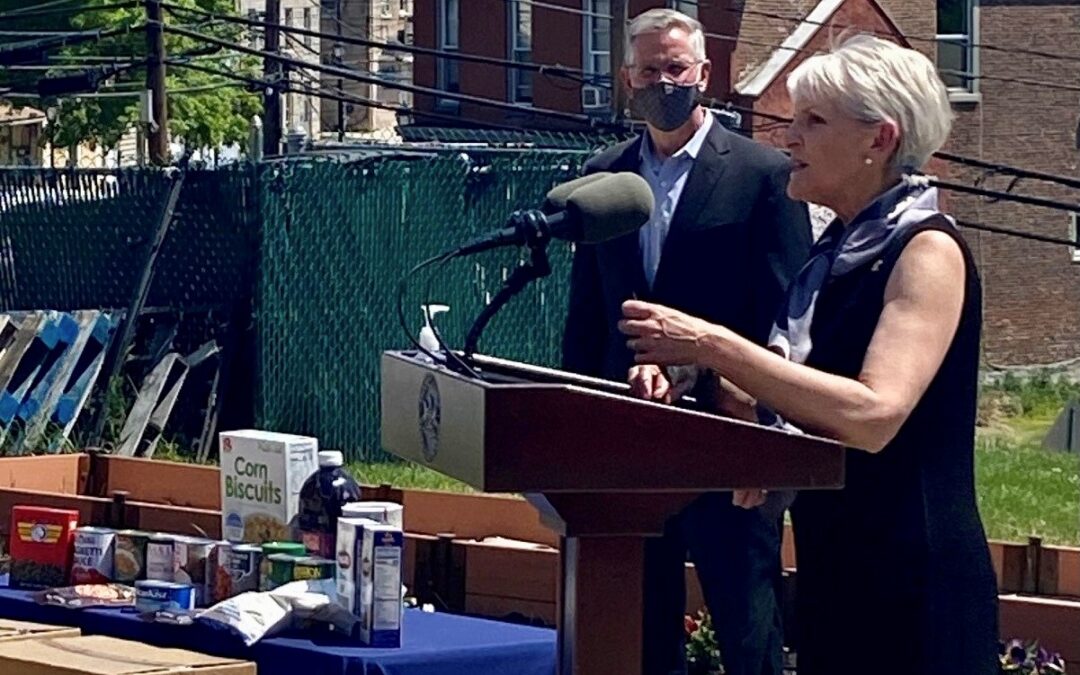
Wolf Administration Improves Access To Pennsylvania Senior Food Box Program, Encourages Enrollment
Phoenixville, PA – Agriculture Secretary Russell Redding and Aging Secretary Robert Torres today joined seniors at Kings Terrace to announce steps to increase access to Pennsylvania’s Senior Food Boxes, a supplemental food program available free to lower income seniors. Giving the program a new name and removing proof of income requirements are among the barriers to participation the state is removing, with the goal of encouraging seniors to take advantage of the program.
Formally known as Commodity Supplemental Food Program, the program previously required seniors to provide documented proof of their income when they applied to receive a food box. The new procedure requires only a statement of income.
“We want to take hunger off the table for Pennsylvania’s seniors. They shouldn’t be worrying about whether to eat or pay for utilities and prescriptions,” said Redding. “They’ve supported their families or communities for a lifetime, and we want to support them now.
“This is why we’ve removed income verification as a requirement for the Senior Food Box, we want it to be as easy as possible to receive. So now, just indicate on the application form that you are eligible for help and you’ll receive it,” added Redding.
The Pennsylvania Senior Food Box is a product of the federally funded Commodity Supplemental Food Program. It works to improve the health of low-income seniors by providing a supplement to groceries of a variety of nutritious, shelf-stable products including shelf-stable fluid milk, juice, ready-to-eat cereal, rice, pasta, dry beans, peanut butter, canned meat, poultry, or fish, and canned fruits and vegetables. The Senior Food Box is a perfect supplement to other food assistance programs in Pennsylvania such as the Supplemental Nutrition Assistance Program (SNAP) and the Pennsylvania Senior Farmers Market Nutrition Program, which provides seniors with fresh, Pennsylvania-grown fruits and vegetables from summer through fall.
More than 300,000 Pennsylvania seniors are eligible for the Pennsylvania Senior Food Box, but only about 35,000 are enrolled to receive it this year. Seniors often face barriers to access for food assistance programs such as mobility, technology, and stigma. This food box program aims to overcome those barriers by being available for drop off or drive through in addition to pick up and, now, by reducing stigma and red tape with the removal of income verification requirements.
“Supporting older adults with the nutritious foods they need requires us to understand the challenges they face in their daily lives and provide options to overcome these challenges. We want seniors to have sufficient food and a stable meal routine that enables good health, independence and a positive quality of life,” said Aging Secretary Robert Torres. “I am pleased to support the Department of Agriculture’s efforts to make this important food assistance program more accessible, and I urge eligible seniors to take advantage of it through the many options available.”
Food insecurity and hunger can have harmful impacts on the health and well-being of older adults. Poor food intake can cause nutrition deficiencies that increase disease risk or worsen existing conditions. Consuming fewer calories and nutrients can also decrease independence and the ability to remain home without assistance.
State Senator Carolyn Comitta, member of the Senate Agriculture and Rural Affairs Committee and supporter of the Chester County Food Bank, joined Redding and Torres at Kings Terrace.
“It’s vital that senior citizens can easily access nutritious food to help ensure their health, well-being, independence, and happiness,” said Comitta. “This program is another tool we have to combat hunger among seniors. Seniors should know that food boxes are readily available and safely accessible in their communities.”
Pennsylvania’s Senior Food Box Program is administered on behalf of the Department of Agriculture by Hunger-Free Pennsylvania through their network of 17 food banks serving all 67 counties. Once signed up, eligible seniors can choose to receive their monthly box via pick up, drive-through, or delivery from a program partner including senior apartment complexes, senior community centers, and food pantries.
“Seniors are the greatest generation. They survived the Great Depression of the ’30’s, World War II, and the Korean War,” said executive director of Hunger-Free Pennsylvania Sheila Christopher. “Now, hundreds of thousands find themselves without enough food on their table. The PA Senior Food Box is available to help. Help us help them.”
The Senior Food Box is available for anyone age 60 or above whose household income is at or below 150 percent of the U.S. poverty level. That totals $16,744 annually for a household of one, or $22,646 for a household of two.
To apply, seniors may call 800-468-2433 to be directed to the regional food bank distributing the Senior Food Box in their county. Or go online at agriculture.pa.gov/seniorfoodbox and fill out the Senior Food Box Application Form.
Food Drive
 Chester County Foodbank Top 10 Most Needed Items:
- Beans (dried / canned), especially black beans
- Tortillas, shelf stable (corn / flour)
- Rice
- Spices
- Tomatoes / Sauce (no glass)
- Hearty soups/stews
- Olive/Canola Oil
- Cereal, whole grain
- Canned Tuna & Chicken
- Canned Fruits (in juice)
***low-sodium, low-sugar, no high fructose corn syrup when possible***

Exton-Based Company Awarded $45,000 in State Funding to Provide Computer Training for Job Seekers
WEST CHESTER (April 30, 2021) – A local program that provides computer skills training to help residents prepare for and connect with new jobs will receive $45,000 in state funding.
Full Circle Computing, an Exton-based company that provides computer and career training, will use the funds to teach digital literacy skills to job-seekers, particularly those without home access to computers or the Internet.
“In today’s economy, digital skills and digital literacy can literally make or break a candidate’s job search, not to mention their long-term career success. From finding prospective opportunities to crafting strong online applications, job seekers must be prepared to navigate the online job market,” state Senator Carolyn Comitta said. “Ongoing investments, like this, will help bridge the digital divide and provide enhanced access to employment opportunities across Chester County and Pennsylvania.”
The program, developed in conjunction with the Chester County Workforce Development Board, will focus on preparing Chester County’s most affected populations for success in job searches, finding employment opportunities, digital citizenship, and digital navigation. It will also offer basic technology and PC skills, including Microsoft Office training.
“Ensuring everyone is digitally literate is important not only in rebuilding our economy, but in improving the lives of everyone in Chester County and beyond. This funding is a boon to the community,” said state Rep. Kristine Howard.
The funds come through the Pennsylvania Department of Labor and Industry’s Digital Literacy and Workforce Development Grant program, which supports programs to promote digital literacy skills for people looking for work, including the ability to search and apply for online jobs, upload and submit a résumé via email, and the ability to develop and maintain a professional profile on networking sites.
Denean Williams, Managing Director, Chief Financial Officer of Full Circle Computing, thanked the Chester County Workforce Development Board and the Pennsylvania Department of Labor and Industry for supporting the program.
“Our role here is to provide a one-stop-shop for training solutions that improve business processes and career readiness,” Williams said. “To deliver those services, we work closely with local workforce development professionals and state agency partners to ensure that the customized, hands-on computer programs we provide help meet local employer’s needs.”
Pat Bokovitz, Director, Chester County Workforce Development Board said, “I am very appreciative of the support from the PA Department of Labor and Industry’s Deputy Secretary for Workforce, Sheila Ireland. Full Circle Computing will make a big difference with this Digital Literacy funding.”
The grant awarded to Full Circle Computing comes as part of more than $1.3 million in state funding awarded to 32 organizations statewide to support digital literacy.
“Pennsylvania employers need workers with the skills to navigate the new economy emerging in the wake of the global COVID-19 pandemic,” said Labor & Industry (L&I) Acting Secretary Jennifer Berrier. “The Digital Literacy and Workforce Development Grants will help ensure that workers develop the basic digital skills they need to succeed when applying for jobs and performing essential job duties that will be required of them in their new careers.”
L&I Deputy Secretary for Workforce Development Sheila Ireland visited Full Circle Computer in Exton to announce the funding.
“As Pennsylvania deals with the increased demand for employees to be able to telework, we must ensure that employees can effectively navigate the technology platforms used in the workplace,” Ireland said. “These grants support the Wolf Administration’s goal to prepare individuals for job searching and emerging employment opportunities, particularly in communities with limited broadband access, and to help job seekers obtain employment with family-sustaining wages.”
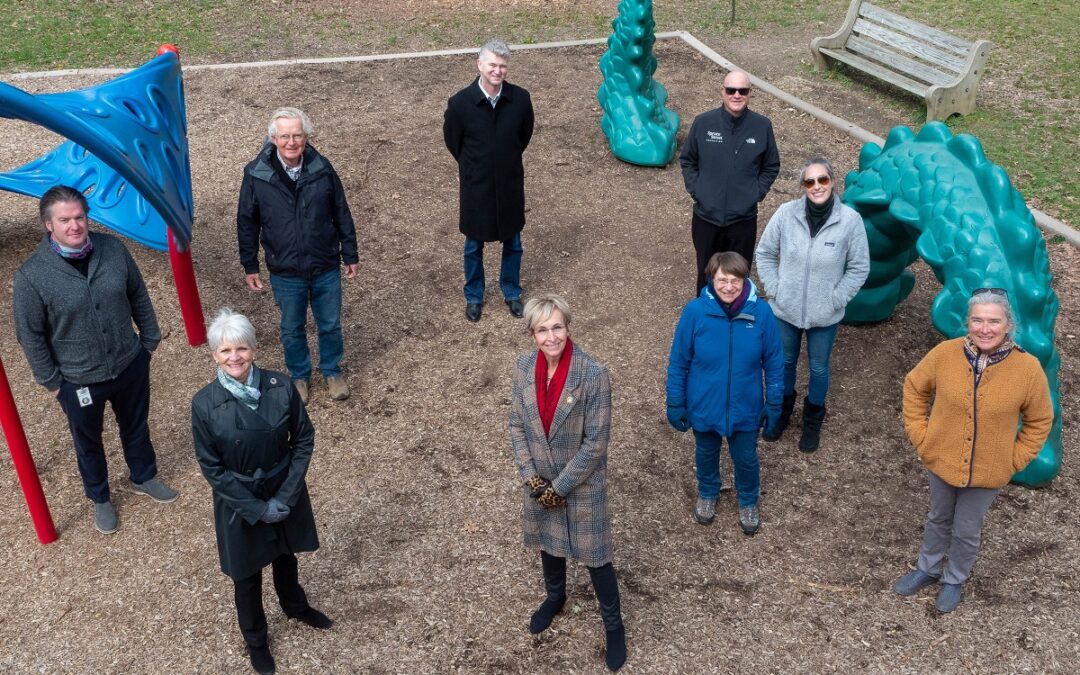
Comitta, Herrin Announce $175K in CFA Act 13 Funds for Inclusive, ADA-Compliant Playground in Everhart Park
WEST CHESTER, April 22 – State Senator Carolyn Comitta and state Representative Dianne Herrin today announced that West Chester Borough will be the recipient of a total of $175,000 in Commonwealth Financial Authority (CFA) Act 13 funds. The funds will be used to upgrade the park’s playground.
Hillsdale Elementary School students designed this new playground for their peers during a workshop conceived by Friends of Everhart Park and facilitated by Play by Design, a playground design firm. “These young designers have ensured every child will feel welcome,” said Rep. Herrin. “A public park should be a place for inclusion, community, and togetherness, and this project really hits the mark. It promises to be a magical place where all children can unleash their imaginations, and families can come together to simply celebrate life. We are grateful for this generous award.”
This project includes the purchase and installation of new ADA-compliant equipment so all children can access the new playground – including a treehouse and six slides, a double-wide ramp and transfer stations for access, a ninja challenge course with ADA-accessible bars and rings, a wheelchair-accessible merry-go-round and swings, a braille activity panel, an accessible pirate ship, storefront panels, and natural materials for a nature play area. In addition, ADA-compliant wood fiber and safety surfaces will be installed for better wheelchair mobility.
“Everhart Park’s new playground is a project that is truly by, of, and for all children. I am grateful to all of those who are working together to make it a reality, including the Friends of Everhart Park, West Chester Borough Parks and Recreation, and the many professionals who have volunteered their time, support, and expertise,” Comitta said. “This park holds a special place in my heart. With these improvements, I have no doubt it will do the same for many children and families for years to come.”
The CFA was established in 2004 as an independent agency of the Department of Community and Economic Development to administer Pennsylvania’s economic stimulus packages. The CFA holds fiduciary responsibility over the funding of programs and investments in Pennsylvania’s economic growth. Unique among state agencies in structure and scope, the CFA consists of seven board members: four legislative appointees and the secretaries of DCED, the Office of the Budget and Department of Banking and Securities.
Act 13 of 2012 establishes the Marcellus Legacy Fund and allocates funds to the CFA for planning, acquisition, development, rehabilitation and repair of greenways, recreational trails, open space, parks and beautification projects using the Greenways, Trails and Recreation Program.

Comitta, Williams Announce $650,000 for Coatesville Train Station Parking Facility
WEST CHESTER (April 21, 2021) – Plans to build a parking and transportation facility adjacent to the new Coatesville train station received another boost in state funding today, state Senator Carolyn Comitta and state Rep. Dan Williams announced.
The Redevelopment Authority (RDA) of the City of Coatesville was awarded $650,000 in state funding to support the project, which calls for constructing a multimodal commuter parking facility on Fleetwood Street to serve rail riders others at the new train station.
“Investments in Coatesville’s transportation infrastructure will pay dividends in the economic success of the city and economic opportunities for its residents,” Comitta said. “Pairing the new train station with this parking and transportation facility will make Coatesville a true multi-modal transit hub. With more commuters, more rail riders, and more visitors come more customers, more jobs, and more investment dollars.”
“This grant will provide much needed funding for a safe, well-lit parking garage that is a key component of the new Amtrak/Septa station project here in Coatesville,” Williams said. “This new station will provide the Coatesville area with the transportation needs it has long deserved, and I’m honored to do whatever I can to help move this project forward so that Coatesville truly rises.”
The multi-level 175,000 square foot parking facility is key to the success of the train station, which currently offers Amtrak service but is expected to provide SEPTA Regional Rail service in the future.
The facility will also feature bus transportation integration, covered waiting shelters, bike racks, ample lighting, wayfinding signage, and nearly 500 parking spaces to support SEPTA, Amtrak, and Link and Kraft Bus transportation services
The Coatesville RDA is now working with the City to construct the facility to support the train station, widely considered a lynchpin of the city’s ongoing revitalization plans and strategic economic development vision.
The funding, approved today by the Commonwealth Finance Authority, comes through Act 89 of 2013, Pennsylvania’s Comprehensive Transportation Funding Plan, which increased transit funding and established dedicated multimodal funding for aviation, passenger rail, rail freight, port, and bicycle-pedestrian projects.
Earlier this year, Comitta and Williams announced a $1 million Pennsylvania Redevelopment Assistance Capital Program (RACP) to support the parking facility, which comes with a total estimated price tag of more than $10 million. In addition, the Chester County Revitalization Program has committed $1 million and significant funds are also pending from the Coatesville RDA.

Senators Santarsiero, Haywood, Comitta Announce Legislation to Expand Pennsylvanian’s Alternative Energy Portfolio Ahead of Earth Day
BUCKS COUNTY – April 21, 2021 – State Senators Steve Santarsiero (D-10), Art Haywood (D-4) and Carolyn Comitta (D-19) announced today during a virtual press conference that they will be introducing SB 300, a bill to expand the state’s Alternative Energy Portfolio Standards (AEPS) Tier I requirement from 8% to 30% by 2030. Highlighting the benefits of job creation and curbing the devastating effects of climate change, the senators shared a vision for a sustainable energy future in Pennsylvania.
“Global climate change is one of the greatest challenges facing our generation. It has already had significant impacts on the environment, from rising sea levels to more extreme weather events, costing businesses, governments and taxpayers billions of dollars,” said Sen. Santarsiero. “It is long overdue that we implement stronger renewable energy goals to create good jobs, cut pollution and ensure a sustainable and prosperous Pennsylvania for future generations. With the AEPS percentage requirements set to plateau in 2021, and dire consequences for inaction to reverse the effects of climate change, it is time we tap into the enormous benefits from increasing our renewable energy goals and re-establish Pennsylvania as a clean energy leader.”
“Renewable energy creates jobs, saves farmers, and can help us to save the planet. We believe strongly that this proposal could be one of the largest economic development and job stimulus bills in decades,” added Sen. Haywood.
A forward-thinking policy when enacted in 2004, the AEPS percentage requirements are set to plateau in 2021, setting the stage for modernizing the standards. In the years since the legislation was enacted, neighboring states have set more aggressive standards that has left Pennsylvania trailing behind. SB 300 seeks to bring Pennsylvania back into the forefront as a clean energy leader by:
- Expands the AEPS Tier I requirement from 8% to 30% by 2030, including 7.5% for in-state grid-scale solar and 2.5% for in-state distributed generation solar;
- Directs the PUC to study the benefits of a renewable energy storage program;
- Provides for several protections that control costs for electricity customers, including long-term contracting, fixed ACP payments, and a 15-year lifetime limit for generating eligible SRECs for solar projects.
Sen. Comitta, Democratic Chair of the Senate Environmental Resources and Energy Committee added, “The climate crisis is not stopping. Neither can we. Pennsylvania must recommit itself to realistic and achievable renewable energy requirements. Thirty percent by 2030 is just that – a job-creating, emissions-reducing, cost-saving, economy-building, forward-thinking goal. As we look ahead to the 51st Anniversary of Earth Day, let’s work to restore our planet through competitive renewable energy standards that support the health of our economy, the health of our environment, and the health of all people.”
The trio of lawmakers were joined by Democratic colleagues in support, many calling attention to the economic benefits of renewable energy, specifically job creation for generations to come.
Senate Minority Leader Jay Costa (D-41) said, “Forward-thinking policies like updated AEPS standards can curb the disastrous impacts of climate change while also fostering a stronger clean energy economy in the Commonwealth. This is a job-creating, planet-sustaining piece of legislation I am proud to support.”
“Modernizing Pennsylvania’s emissions standards and prioritizing renewable energy are not only key to securing a sustainable future for our kids, they are key to rebuilding our economy, creating new jobs, and putting Pennsylvanians in many trades and professions back to work,” said Senator Maria Collett (D-12). “It’s time for our Commonwealth to fulfill its potential as a clean energy leader and bring new jobs and new businesses to the state when we need them most.”
Sen. Nikil Saval (D-1) said, “The importance of this expansion cannot be understated. AEPS is one of the few Pennsylvania programs pushing renewable energy forward, and this push will mean that we are lowering emissions, while simultaneously preparing our economy, our built infrastructure, and our workforce for the future. The people of Pennsylvania deserve this investment.”
Several colleagues also voiced support for the local impact clean energy would have on their districts, particularly for farmers and those in low income neighborhoods.
“Incorporating more solar and wind energy into our everyday lives is going to be one of the best ways to secure our future, and that includes the agriculture sector,” said Sen. Judy Schwank (D-11). “For example, farmers in my district are already learning about and using solar energy as a way to cut energy costs and make additional income on the farm. We all must make a personal commitment to preserving our natural resources, not just on Earth Day but every day.”
Sen. Anthony Williams (D-8) echoed the local impact modernizing AEPS would have on his district, saying “Clean energy production is vital to environmental justice, improving air and water quality especially in low-income neighborhoods throughout the Commonwealth. This is an issue that ripples across Pennsylvania, in rural, suburban and urban communities that have been devastated by toxic pollution.”
With Earth Day right around the corner, the message was clear—if we want to curb the devastating effects of climate change and create a more sustainable future, we must act quickly.
“We have heard for years that we must act now to avoid the most dire impacts of climate change and for years the political courage has been absent to accomplish what needed to be done in order to save our planet,” said Senator Katie Muth (D-44). “Now we have reached a point where we are realizing the impacts of our inaction – extreme weather events, growing climate based global instability, and increased disease and viruses. We are now in a moment where discussion needs to turn into action and implement solutions to stop further harm from occurring. Our constituents and scientific experts know that this matter is real and we are far behind schedule.”
“I’m glad to see our caucus invested in pushing Pennsylvania towards a sustainable future,” said Sen. Amanda Cappelletti (D-17). “It is a necessary step in the right direction, which will create countless job opportunities in green energy. This is why I support moving to 100% renewable energy by 2050. We cannot be held back by pessimism and fear, we don’t have time.”
###

Comitta, Shusterman Announce $337,500 in State Funding for Phoenixville Walking Bridge and Road Improvements
WEST CHESTER (April 21, 2021) –Two projects that will enhance access to the Schuylkill River Trail in Phoenixville will receive $337,5000 in total state funding, state Senator Carolyn Comitta and state Rep. Melissa Shusterman announced today.
The funding, approved today by the Commonwealth Finance Authority, will support two projects:
- $250,000 for the Mowere Road Realignment and Reconstruction Project – The Borough of Phoenixville plans to repair and rebuild Mowere Road (locally known as West High Street) from St. Mary’s Street to Northridge Drive. This project will provide a safer alternative primary route in Phoenixville’s northside area and a safer street crossing and pedestrian connection to the Schuylkill River Trail and the borough’s downtown. The realignment of the travel lanes will result in safer road conditions for vehicular traffic allowing for better line-of-sight for oncoming traffic, as well as for trail users at the trail crossing. The improvements also call for addressing the impacts of stormwater runoff on the road through the installation of a new stormwater management system. In addition, plans call for new guide rails, fencing, striping, and trail crossing signs, constructing a new subbase, base course and wearing course, curbs, sidewalks, speed table, and ADA curb ramps to be added.
- $87,500 for the French Creek Walking Bridge –The Borough of Phoenixville plans to install a new 213-foot span pedestrian walking bridge over the French Creek to expand and improve access to the existing Schuylkill River Trail. The project will create a more convenient and safer pathway for pedestrians and cyclists to connect to both sides of the Schuylkill River Trail. The walking bridge will be constructed to include ADA-compliant decking, protective fence, and handrails. The fabricated bridge will be delivered in 5 sections and then assembled at the project site.
“One of the reasons why Phoenixville’s revitalization is a national success story is because the borough has done such a great job of incorporating trails and natural spaces into its historic downtown business district,” Comitta said. “These investments will build on that success while providing more safe, convenient, and easily accessible opportunities to enjoy the outdoors and everything Phoenixville and the Schuylkill River Trail has to offer.”
Funding for the projects comes through two state grant programs.
The Mowere Road Project grant comes through PennDOT’s Multimodal Transportation Fund, a program intended to provide financial assistance to municipalities, councils of governments, businesses, economic development organizations, and others to improve transportation assets that enhance communities, pedestrian safety, and transit revitalization. The fund was created by Act 89 of 2013, Pennsylvania’s Comprehensive Transportation Funding Plan, which increased transit funding and established dedicated multimodal funding for aviation, passenger rail, rail freight, port, and bicycle-pedestrian projects. The estimated total cost for the Mowere Road project is $1,039,001 with the borough committing $311,701.
“The Multimodal Transportation Fund allows communities to rehabilitate and fortify their existing infrastructure systems. Whether you depend on sidewalks and adequate lighting for safe travel on foot, or you catch the train every morning, reliable methods of transportation are often the key to success in our everyday lives. I am pleased to see this funding awarded to our communities,” Shusterman said.
The French Creek Walking Bridge grant comes through the Pennsylvania Department of Community and Economic Development’s Greenways, Trails, and Recreation Program (GTRP). It is funded by the Marcellus Legacy Fund, created by Act 13 of 2012, to provide for planning, acquisition, development, rehabilitation and repair of greenways, recreational trails, open space, parks, and beautification projects. The estimated total project cost for the French Creek Walking Bridge is $502,7675 with the borough committing $252,675.
“Many of our constituents count on our parks and green spaces for exercise, leisure, and a safe place to gather with friends and loved ones, especially during this pandemic. It is critical that we uphold the beauty and functionality of these spaces in order to serve our communities. I believe funding from GTRP program will go a long way toward preserving and further developing our beloved outdoor spaces,” Shusterman said.
Comitta said she looks forward to the completion of both projects.
“As we’ve learned during the pandemic, outdoor spaces are key to the health and well-being of our communities,” she added. “Places to exercise, enjoy a walk, or simply take in the natural scenery add to our innate quality of life in Phoenixville and Chester County.”
More information on DCED and state grants can be found online: https://dced.pa.gov/
###
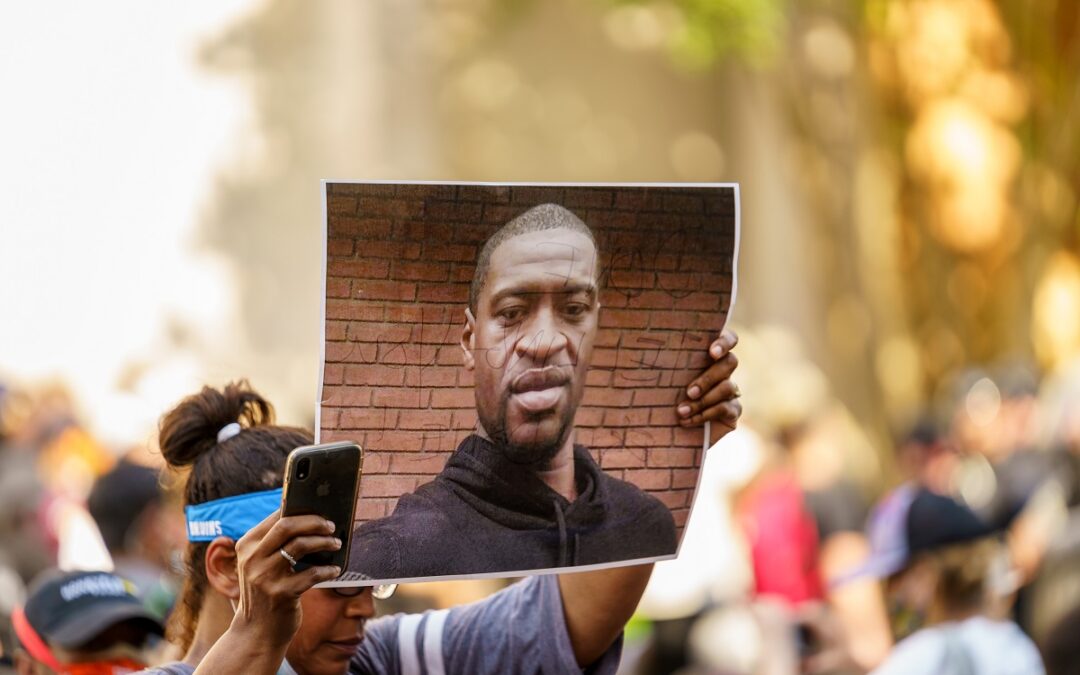
Comitta Releases Statement on Conviction in Murder of George Floyd
State Senator Carolyn Comitta today released the following statement upon the conviction of former Minneapolis Police Officer Derek Chauvin in the murder of George Floyd:
“My thoughts continue to be with the family and friends of George Floyd. I hope that this verdict brings some sense of peace to them, but we know it won’t bring back George Floyd.
While our court system may have worked in holding former Officer Derek Chauvin accountable, our criminal justice system did not – it failed George Floyd in the most egregious and brutal way possible. It failed him as it failed and continues to fail people of color in communities across our nation.
While this portion of the trial may be over, the struggle against systemic racism in our public institutions continues. It continues in every community across America as we work to root out racism, discrimination, bigotry, and hate-based violence.
George Floyd’s murder pushed many people to reflect more deeply on racism and the role it continues to play in our society and our public institutions. I hope that trend continues to grow. I hope we remain engaged, involved, and informed in the ongoing struggle for equality. And I hope voters continue to turn out in record numbers in every election.
Speak your mind. Vote your conscience. Your vote is your voice. The path to positive change – equality, justice, and opportunity – for all Americans begins at the ballot box.”

Comitta, Williams Announce $1.5 Million to Repair, Reopen Wagontown Road
WEST CHESTER (April 16, 2021) – Valley Township will receive $1.5 million in state funding to repair and reopen Wagontown Road, state Senator Carolyn Comitta and state Representative Dan Williams announced today.
The project, funded through PennDOT’s Multimodal Transportation Fund, calls for reconstructing a collapsed portion of Wagontown Road, including an approximate 400-foot concrete retaining wall and associated drainage and paving improvements.
The project, which is estimated to cost $2.1 million in total, will result in reopening Wagontown Road to safely restore vehicular connectivity.
“This is an important investment to reopen the road, reduce traffic congestion, and help drive economic growth in Valley and the surrounding region,” Comitta said. “I look forward to continuing to work with local municipalities and my legislative colleagues to support the transportation infrastructure needs of communities like Valley Township and others across Chester County.
“This $1.5 million infrastructure grant will help rebuild a portion of Wagontown Road, making it possible to reopen the road to motorists,” Williams said. “This investment will help improve the local economy by making travel more accessible in the area, increasing motorist and pedestrian safety, and decreasing environmental impacts on the road. I’m very glad that this project can now move forward to completion thanks to this grant.”
PennDOT’s Multimodal Transportation Fund provides grants to ensure that a safe and reliable system of transportation is available to the residents of this commonwealth. The program is intended to provide financial assistance to municipalities, councils of governments, businesses, economic development organizations, public transportation agencies, rail freight, passenger rail, and ports in order to improve transportation assets that enhance communities, pedestrian safety, and transit revitalization.
PennDOT evaluated the applications and made selections based on criteria such as safety benefits, regional economic conditions, the technical and financial feasibility, job creation, energy efficiency, and operational sustainability.
“Investing in our communities continues to be critical to moving the economy forward in 2021,” PennDOT Secretary Yassmin Gramian said. “Making roadways more accessible for all modes of travel assures that we are making continued business connections for the future and keeps transportation an integral part of daily living.”
The Wagontown Road project comes as part of four transportation projects in Chester County set to receive more than $6.2 million in support through PennDOT’s Multimodal Transportation Fund.
Funding for these projects comes through Act 89 of 2013, Pennsylvania’s Comprehensive Transportation Funding Plan, which increased transit funding and established dedicated multimodal funding for aviation, passenger rail, rail freight, port, and bicycle-pedestrian projects.
Additional multimodal funds awarded to highway and bridge projects in Chester County were $2.19 million to Kennett Township, $1.69 million for West Brandywine Township, and $824,500 for West Nottingham Township.
Statewide, 43 highway, bridge, rail, and bike and pedestrian projects in 21 counties were selected for $45.9 million in total grant awards in this round of funding.
The next round of Multimodal grant applications will open in September 2021. For more information about the program, visit www.penndot.gov and click on “Multimodal Program” under the “Projects & Programs” button.

Comitta, Lawrence Announce $842,000 in Funding for Nottingham Intersection Improvements
WEST CHESTER (April 16, 2021) – West Nottingham Township will receive $842,000 in state funding to support important improvements at the intersection of Pennsylvania Route 272 and Baltimore Pike, state Senator Carolyn Comitta and state Representative John Lawrence announced today.
The project, which is funded through PennDOT’s Multimodal Transportation Fund, calls for upgrading the main signalized intersection of Route 272 (Christine Road) and Baltimore Pike in Nottingham, including adding a left-turn lane for eastbound Route 272 and a right-turn lane for southbound Baltimore Pike.
“Investments in our transportation infrastructure and key intersections, like this one, are important to both enhancing safety on our roadways and driving economic growth in our region,” Comitta said. “I look forward to continuing to work with local municipalities and my legislative colleagues to support the needs of communities like West Nottingham and others across Chester County.”
“This intersection is a crossroads of Southwestern Chester County, and it hasn’t seen major improvement for decades,” said Lawrence. “For the last few years, I’ve worked with the township supervisors, local property owners, and other elected officials to help make the Nottingham village intersection project a reality, and today’s announcement is a culmination of this team-based approach. Once completed, the improved intersection will serve the community for many years to come.”
“West Nottingham Township is grateful for the continued support of our elected officials in helping to move this project forward,” said Tiffany Bell, Chair of the West Nottingham Township Board of Supervisors. “Improvements in Nottingham village have been a priority for many years, and this significant funding will help take the intersection project from the drawing board to reality for our community.”
The nearly $1.2 million West Nottingham intersection project comes as part of four transportation projects in Chester County set to receive more than $6.2 million in support through PennDOT’s Multimodal Transportation Fund grant program.
The program is intended to provide financial assistance to municipalities, councils of governments, businesses, economic development organizations, public transportation agencies, rail freight, passenger rail, and ports in order to improve transportation assets that enhance communities, pedestrian safety, and transit revitalization.
PennDOT evaluated the applications and made selections based on criteria such as safety benefits, regional economic conditions, the technical and financial feasibility, job creation, energy efficiency, and operational sustainability.
“Investing in our communities continues to be critical to moving the economy forward in 2021,” PennDOT Secretary Yassmin Gramian said. “Making roadways more accessible for all modes of travel assures that we are making continued business connections for the future and keeps transportation an integral part of daily living.”
Additional multimodal funds awarded to highway and bridge projects in Chester County were $2.19 million to Kennett Township, $1.69 million for West Brandywine Township and $1.5 million for Valley Township.
Funding for these projects comes through Act 89 of 2013, Pennsylvania’s Comprehensive Transportation Funding Plan, which increased transit funding and established dedicated multimodal funding for aviation, passenger rail, rail freight, port, and bicycle-pedestrian projects.
The next round of Multimodal grant applications will open in September 2021. For more information about the program, visit www.penndot.gov.
###

American Mushroom Institute Awarded $40,000 in State Grant Funding
WEST CHESTER (April 15, 2021) – An important program to promote the nutritional, culinary, and health benefits of Pennsylvania-grown mushrooms will receive $40,000 in state grant funding through the Pennsylvania Department of Agriculture, state Senator Carolyn Comitta and state Representative Christina Sappey announced today.
The American Mushroom Institute (AMI), the leading national trade association representing the growers, processors, and marketers of cultivated mushrooms in the United States, will receive the matching funds for the Mushroom Farmers of Pennsylvania’s “Eating Better to Build Back Better” program.
This program focuses on mushroom culinary properties and health benefits, including naturally occurring vitamin D. It will also promote contributions to soil health and carbon sequestration.
“Local farms are an important part of our economy and locally grown agricultural products, like fresh mushrooms, can be the best part of any meal,” Comitta, who serves on the Senate Agriculture and Rural Affairs Committee, said. “As we continue to work to advance our economic recovery, these funds will support efforts to promote the value of local farming and homegrown crops.”
“The mushroom industry is one of Pennsylvania’s largest, with an economic impact of about $1.1 billion,” said Sappey, who serves on the House Agriculture and Rural Affairs Committee. “We want to highlight these family-owned and operated farms and all of the ways this healthy and valuable crop can be used in food.”
The funding comes through the Pennsylvania Agricultural Product Promotion, Education and Export Promotion Matching Grant, a program within the 2020-21 state budget. The department’s Bureau of Market Development offers the grant to encourage and maximize the promotion of Pennsylvania-produced agricultural products.
The AMI grant project was one of 16 across the Commonwealth to be awarded $300,000 in total state matching funds to increase consumer awareness of Pennsylvania agriculture products and market opportunities for agriculture producers.
“With so many appealing products produced in Pennsylvania, consumers don’t have to look far to find fresh, healthy choices close to home,” Agriculture Secretary Russell Redding said. “When aware of the options, consumers are more likely to choose local products. Promoting the story behind the food is a compelling way to attract consumers to Pennsylvania products. Once they make that first purchase, it is natural for them to become repeat customers.”
Non-profit organizations based in 11 counties received matching funds for projects, many of which have a regional or statewide focus. The department prioritized projects aligned to COVID-19 recovery.
Southeastern Pennsylvania is known as the Mushroom Capital of the World. Mushroom farms, many of them family-owned, have been growing mushrooms here for more than 120 years.
Pennsylvania continues to lead the country in mushroom growing. Today, more than 60 percent of all mushrooms produced in the U.S. are grown in Kennett Square, southern Chester County, and the surrounding region, according to the American Mushroom Institute, headquartered in Avondale. In 2020, Agaricus mushroom volume of sales totaled 796 million pounds, with Pennsylvania accounting for 66 percent of the total.
###

West Chester BID, Oxford Main Street Awarded More than $60K in Total State Funding
WEST CHESTER (April 14, 2021) – Organizations supporting two of Chester County’s historic downtown and commercial districts will receive more than $60,000 in total state COVID-19 relief.
Under Pennsylvania’s COVID-19 Relief – Supporting Elm and Main (SEAM) Program, the West Chester Business Improvement District (BID) will receive $12,381 in grant funding and Oxford Mainstreet will receive $50,000 in grant funding.
As a former mayor, state Senator Carolyn Comitta said she fully understands the importance of supporting the local business community and the economic vitality of downtown business districts and main street organizations.
“The pandemic continues to have a significant impact on our local businesses, downtown business districts, and the organizations dedicated to their success and growth,” Comitta said. “As we begin our economic recovery, business districts and main street organizations will continue to play a key role in West Chester, Oxford, and towns across Chester County and Pennsylvania.”
The West Chester BID and Oxford Mainstreet grants come as part of nearly $2 million in funding approved for 43 projects statewide through SEAM.
The program assists community revitalization organizations dedicated to community and economic development in older and historic downtowns, commercial districts, and neighborhoods that have been economically impacted by COVID-19.
Administered by the Pennsylvania Department of Community and Economic Development and supported by the Keystone Communities funding, SEAM provides financial assistance according to the principles of the Elm Street and Main Street approaches.
“Over the past year, communities across the commonwealth have faced devastating impacts from the COVID-19 pandemic, during which Pennsylvania’s network of community development organizations never ceased answering the call for help,” said Governor Tom Wolf. “Our Elm Street and Main Street programs work tirelessly year in and year out—even in the best of times—to improve their communities, and this funding will provide them with the support they need to overcome the challenges they’ve recently faced.”
Eligible applicants for the program included designated Keystone Main Street, Keystone Elm Street, or Keystone Communities organizations, 2020 Nationally Accredited Main Street programs, and community development organizations. Applicants were required to employ, and continue to employ for at least the next year, a paid professional manager or coordinator responsible for the administration of the revitalization strategy/program.

Comitta Introduces Marriage Equality Legislation
WEST CHESTER (April 13, 2021) – State Senator Carolyn Comitta is introducing legislation to update Pennsylvania law to reflect marriage equality and the right of same-sex couples to marry.
Though the U.S. Supreme Court’s landmark ruling in Obergefell v. Hodges on June 26, 2015, made it clear that marriage should be available to all, Pennsylvania retains outdated and unnecessary sections of law that prohibit marriage equality.
“During my tenure as Mayor of West Chester, I presided over numerous weddings of loving same-sex couples,” Comitta said. “Our laws should reflect our values. In Chester County and Pennsylvania, we value compassionate, welcoming, inclusive, and diverse communities that recognize the rights and contributions of every individual, including same-sex couples and LGBTQ+ individuals and families.”
Comitta, who serves on the Pennsylvania General Assembly’s LGBTQ+ Equality Caucus, said the change is not only a matter of upholding our constitution, but it’s also a matter of recognizing and reinforcing the rights of same-sex couples at a time when members of the LGBTQ+ community continue to face discrimination, bigotry, and hateful rhetoric.
“Nearly 6 years ago, our nation enshrined the right to marry and all of its privileges and responsibilities for same-sex couples. It is past time that we update our state laws to follow suit and reflect the modern, legal, and widely-accepted definition and view of marriage,” she said.
Comitta’s bill, Senate Bill 558, is a companion of House Bill 824, introduced by state Representatives Malcolm Kenyatta and Danilo Burgos.
“The promise of America has to include every single one of us – and because of generations of activists and LGBTQ+ leaders, marriage equality is the law of the land. However, outdated and discriminatory language still exists in commonwealth statute, and that must change. This bill will ensure that our laws reflect who we are and further clarify that in Pennsylvania, who you are and who you love is seen and valued,” Kenyatta said.
Specifically, the bill would repeal Section 1704 (Marriage Between Persons of the Same Sex) of Title 23 (Domestic Relations) of the Pennsylvania Consolidated Statutes, which currently only recognizes marriage between a man and woman.
Senate Bill 558 is co-sponsored by state Senators John Kane, Wayne Fontana, Katie Muth, Vincent Hughes, Judy Schwank, Tim Kearney, and Senate Democratic Leader Jay Costa.
House Bill 824 is co-sponsored by several Chester County lawmakers, including state Representatives Christina Sappey, Danielle Friel-Otten, Kristine Howard, Dianne Herrin, Dan Williams, and Melissa Shusterman.

Pennsylvania Property Tax / Rent Rebate Program Accepting Applications
WEST CHESTER (April 12, 2021) – Chester County senior citizens and those with disabilities can apply now through June 30 for the Pennsylvania Property Tax/Rent Rebate Program.
The rebate program benefits eligible Pennsylvanians age 65 and older, widows and widowers age 50 and older, and people with disabilities age 18 and older. The maximum standard rebate is $650, but supplemental rebates for qualifying homeowners can boost rebates to $975.
Additional eligibility requirements include, an income limit of $35,000 a year for homeowners and $15,000 annually for renters, and half of Social Security income is excluded.
“While we work to recover from this pandemic, the Property Tax and Rent Rebate Program continues to assist senior citizens and others, many of whom are on fixed or limited incomes. I encourage all eligible residents to apply,” said Senator Comitta. “Please know that my office is available to assist you with applications or questions for this and other important state programs.”
Eligible applicants can contact Senator Comitta’s office at (610) 692-2112 or senatorcomitta@pasenate.com with questions, for application assistance, or to request an application via mail.
The rebate program is for rent or taxes paid in 2020. Applying is free, however, applicants must provide proof of income (1099 form), age, disability, and taxes paid (for homeowners) or rent paid (for renters).
In addition, this year applicants can apply online through the Pennsylvania Department of Revenue’s myPATH system. Filing online leads to fast processing, easy direct deposit options and automatic calculators that will help you apply for your rebate. Visit mypath.pa.gov to file your application.
“Offering an online filing option gives us a new, user-friendly tool that helps us ensure everyone who is eligible for the Property Tax/Rent Rebate Program has a simple way to submit their applications,” Revenue Secretary Dan Hassell said. “This online option will be especially helpful this year during the COVID-19 pandemic because it will provide applicants with a way to file their applications from the comfort of their homes. This will help us deliver needed support to more than half a million Pennsylvanians who benefit from this program each year.”
If you’ve already submitted your application, you can also track the status of your rebate, using the Where’s my PA Property Tax/Rent Rebate feature at mypath.pa.gov
In addition, applications are also available to print online or by calling toll-free (888) 222-9190. Free assistance is available through the Department of Revenue district offices, local Area Agencies on Aging, senior centers and state legislators’ offices. Please be sure to call ahead and schedule an appointment if required.
The Property Tax/Rent Rebate Program is one of five programs supported by the Pennsylvania Lottery.
More than $255 million in property tax and rent rebates were sent to almost 532,000 homeowners and renters across the state for property taxes and rent paid in 2017. This is the most recent data available for a full calendar year.
Since the program’s inception in 1971, older and disabled adults have received more than $6.9 billion in property tax and rent relief. The rebate program also receives funding from slots gaming.
###