
June 15, 2022
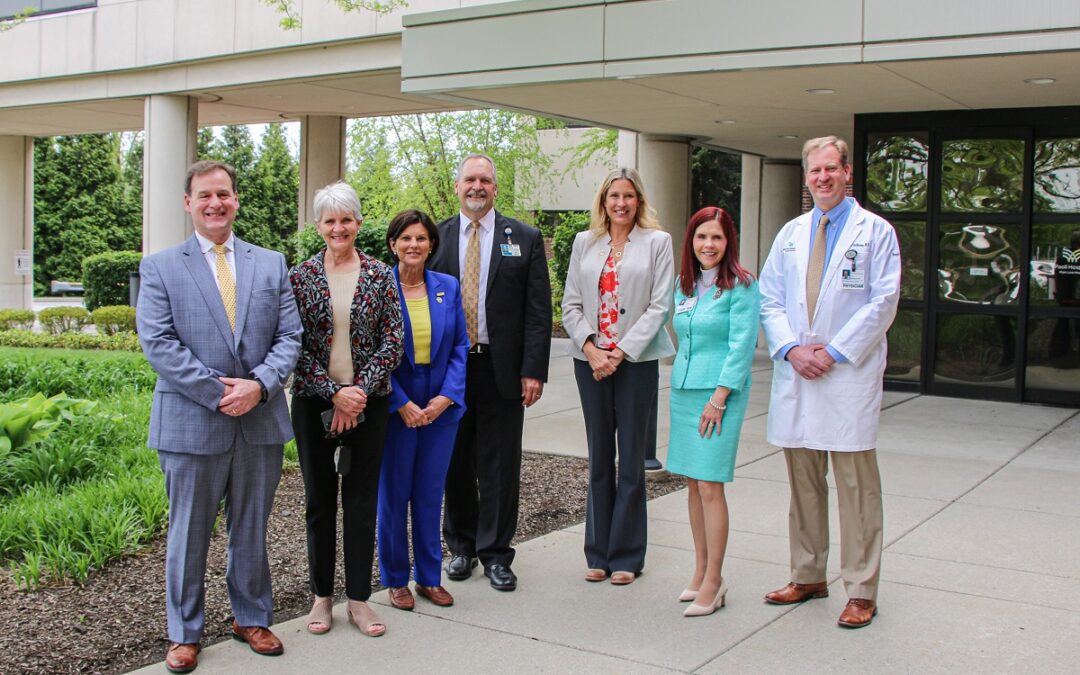
West Chester, Pa (June 15, 2022) – State Senator Carolyn Comitta, State Rep. John Lawrence, Chester County Commissioners Marian Moskowitz, Josh Maxwell, and Michelle Kichline, and Penn Township Supervisor Victor Mantegna today announced that ChristianaCare has entered into an agreement to acquire Jennersville Hospital in West Grove. The transaction is anticipated to close in the third quarter.
“Today’s announcement comes after a great deal of hard work by many people, and is a true game-changer for high-quality medical care in our community,” said Representative John Lawrence. “It has been a pleasure working with ChristianaCare over the past few months, and I look forward to building on this foundation in the days ahead to meet the growing health care needs of southern Chester County.”
“ChristianaCare’s acquisition of Jennersville Hospital is great news for southern Chester County and the surrounding region, but it’s important to note that this positive development did not occur by chance. I want to thank the bipartisan group of leaders and stakeholders who worked diligently to make it happen,” said state Senator Carolyn Comitta. “We always prioritized finding a trusted partner that was committed to the community, our values of diversity and inclusion, and providing affordable, accessible care to all residents. While there is still much work ahead, I look forward to the reopening of the facility.”
“There is one word we have in response to the purchase of Jennersville Hospital, and that word is fantastic!,” said Chester County Commissioners Marian Moskowitz, Josh Maxwell and Michelle Kichline. “We thank the ChristianaCare leadership for their commitment to bringing much-needed services back to the southern Chester County region, and we recognize the efforts of Representative Lawrence, Senator Comitta, and all who worked together to help facilitate this purchase. Reopening will not happen overnight, but we are moving in the right direction.”
“Jennersville Hospital faithfully provided for the health, safety and welfare of southern Chester County residents for decades,” said Victor Mantegna, Chairman of the Penn Township Board of Supervisors. “News of its imminent closure was both devastating and constituted a substantial threat to our community. Today’s news answers more than a few prayers. We look forward to supporting our new community partner, ChristianaCare, as they reopen the facility. Our community will reap the benefits of this purchase for years to come.”
The roots of modern medical care in the community go back to the early 1900’s, when Dr. Robert Ewing established a five-bed clinic on Evergreen Street in West Grove. In the 1950s, realizing the need for improved medical facilities, community leaders came together to finance a replacement for the old West Grove Hospital that could serve the area for generations to come. Their vision and determination led to the construction of Jennersville Hospital, which opened in 1959 and underwent several expansions in the ensuing decades. ChristianaCare’s acquisition of the facility will establish a new chapter in the history of health care in the southern end of Chester County.
Lawrence, Comitta, the Chester County Commissioners, Penn Township supervisors, and officials from the Wolf administration met for months with a goal of finding a path forward for Jennersville Hospital after Tower Health’s abrupt closure announcement last year. A particular focus developed around emergency medicine, with the closest alternate facilities over 45 minutes away.
“Over the last few months, our local EMS providers, including Medic 94 and our local volunteer ambulance services, have done remarkable work in the face of tremendous challenges,” said Lawrence. “Today’s announcement is welcome news and will greatly improve response times and patient outcomes for those facing medical emergencies.”
Based in Wilmington, ChristianaCare is Delaware’s largest health care provider, operating three hospitals with 1,299 beds, a freestanding emergency department, a Level I trauma center, a Level III neonatal intensive care unit, a comprehensive stroke center, and regional centers of excellence in heart and vascular care, cancer care, and women’s health. ChristianaCare includes an extensive network of primary care and outpatient services, home health care, and urgent care centers.
Today’s announcement builds on ChristianaCare’s recent acquisition of several primary care practices in Chester County. The Jennersville facility is anticipated to reopen under the name “ChristianaCare West Grove Campus.”

June 11, 2022
Note: The following guest column appeared in the Daily Local News online on June 2, 2022.
Summer means spending more time outside. Whether you’re camping, hiking, boating, fishing, or just enjoying a picnic or backyard barbecue, idyllic summer days are an important reminder of what is precisely at stake in the fight against climate change. And they’re also a reminder of our obligation to act now to protect and preserve our environment and natural resources for our children and grandchildren.
Fortunately, Pennsylvania is on the cusp of a major victory in cutting greenhouse gas emissions and investing in our clean energy future. Earlier this spring, the Commonwealth finalized the regulation to participate in the Regional Greenhouse Gas Initiative (RGGI), a market-based cap and invest program currently made up of eleven Northeast and Mid-Atlantic states.
RGGI, which is supported by more than 70 percent of Pennsylvania voters and a growing contingent of business leaders and organizations, is a proven way to cut emissions while generating proceeds that can be invested in strengthening Pennsylvania’s growing clean energy, commercial, and industrial sectors.
 Here’s how it works: RGGI states set regional limits on emissions for fossil-fuel-fired electric power plants. Plants can then purchase permits to emit up to that limit through quarterly auctions. Those limits decline each year, leading to decreased emissions. According to the Pennsylvania Department of Environmental Protection, linking with RGGI would reduce air pollution by hundreds of millions of tons.
At the same time, Pennsylvania would realize an estimated hundreds of millions of dollars per year in proceeds generated from the permit auctions. These funds can then be directed to investing in renewables, assisting workers and communities affected by the transition from fossil fuels, supporting environmental justice communities, and lowering utility costs.
As we consider our options to invest RGGI proceeds, there is no shortage of priorities. Right now, almost every Pennsylvania family is experiencing the impacts of fossil fuel price volatility both at the gas pump and the utility meter, as well as in the form of rising consumer costs. RGGI states, including our neighbors in Maryland, have invested heavily in energy efficiency and customer bill assistance programs that continue to save ratepayers money. By investing in energy efficiency now, we can lower overall usage and significantly reduce costs in the future. In fact, the average residential electricity bill in RGGI states will be 35 percent lower in 2031 than it was in 2017, according to modeling by the Analysis Group.
In addition, RGGI will help better protect Pennsylvania electric ratepayers and families by reducing our over-reliance on fossil fuels. As we have seen with the spike in oil prices related to Russia’s invasion of Ukraine, true energy independence means independence from finite fossil fuels. Renewable energy sources like wind, solar, and other innovative home-grown technologies can reduce our over-reliance on fossil fuels and bring more stability to ratepayers currently grappling with market forces beyond our control.
When it comes to jobs, DEP estimates show linking with RGGI is anticipated to create 27,000 jobs, while RGGI states report that training thousands of workers in clean energy and compliance has led to overall job gains. In Pennsylvania, we’re paying special attention to assisting coal workers and communities that are already facing the impacts of the decline of coal due to the availability of natural gas. My Senate Bill 15, the RGGI Investments Act, will assist coal workers to transition to jobs in clean energy, while requiring that nearly a third of the program’s annual proceeds be invested back into communities that have been dealing with coal power plant closures for the last two decades. Other RGGI states, like New York and Massachusetts, have already deployed RGGI funds to replace local tax revenues as well as prepare coal plant sites for reuse.
The bottom line: RGGI works. As it is in nearly a dozen states, RGGI results in reduced emissions, cleaner air, family-sustaining jobs, economic growth, and more. Ongoing legal maneuvers aimed at delaying or hindering our entrance into RGGI are not only shortsighted, but they also threaten to undermine the most consequential and promising step to address climate change that the Commonwealth has ever undertaken.
So, as you enjoy the outdoors with friends and family this summer, remember we not only have a responsibility to protect and safeguard our environment, it is our Constitutional duty to do so. After all, Article 1, Section 27, of the Pennsylvania Constitution states, “The people have a right to clean air, pure water, and to the preservation of the natural, scenic, historic and esthetic values of the environment. Pennsylvania’s public natural resources are the common property of all the people, including generations yet to come.”
It’s time to live up to our Constitutional duty and embrace the promise of a safe, healthy, prosperous clean energy future. It’s time for Pennsylvania to join RGGI.
June 10, 2022

June 6, 2022
Note: The following guest column appeared in the Daily Local News online on June 2, 2022.
Summer means spending more time outside. Whether you’re camping, hiking, boating, fishing, or just enjoying a picnic or backyard barbecue, idyllic summer days are an important reminder of what is precisely at stake in the fight against climate change. And they’re also a reminder of our obligation to act now to protect and preserve our environment and natural resources for our children and grandchildren.
Fortunately, Pennsylvania is on the cusp of a major victory in cutting greenhouse gas emissions and investing in our clean energy future. Earlier this spring, the Commonwealth finalized the regulation to participate in the Regional Greenhouse Gas Initiative (RGGI), a market-based cap and invest program currently made up of eleven Northeast and Mid-Atlantic states.
RGGI, which is supported by more than 70 percent of Pennsylvania voters and a growing contingent of business leaders and organizations, is a proven way to cut emissions while generating proceeds that can be invested in strengthening Pennsylvania’s growing clean energy, commercial, and industrial sectors.
Here’s how it works: RGGI states set regional limits on emissions for fossil-fuel-fired electric power plants. Plants can then purchase permits to emit up to that limit through quarterly auctions. Those limits decline each year, leading to decreased emissions. According to the Pennsylvania Department of Environmental Protection, linking with RGGI would reduce air pollution by hundreds of millions of tons.
At the same time, Pennsylvania would realize an estimated hundreds of millions of dollars per year in proceeds generated from the permit auctions. These funds can then be directed to investing in renewables, assisting workers and communities affected by the transition from fossil fuels, supporting environmental justice communities, and lowering utility costs.
As we consider our options to invest RGGI proceeds, there is no shortage of priorities. Right now, almost every Pennsylvania family is experiencing the impacts of fossil fuel price volatility both at the gas pump and the utility meter, as well as in the form of rising consumer costs. RGGI states, including our neighbors in Maryland, have invested heavily in energy efficiency and customer bill assistance programs that continue to save ratepayers money. By investing in energy efficiency now, we can lower overall usage and significantly reduce costs in the future. In fact, the average residential electricity bill in RGGI states will be 35 percent lower in 2031 than it was in 2017, according to modeling by the Analysis Group.
In addition, RGGI will help better protect Pennsylvania electric ratepayers and families by reducing our over-reliance on fossil fuels. As we have seen with the spike in oil prices related to Russia’s invasion of Ukraine, true energy independence means independence from finite fossil fuels. Renewable energy sources like wind, solar, and other innovative home-grown technologies can reduce our over-reliance on fossil fuels and bring more stability to ratepayers currently grappling with market forces beyond our control.
When it comes to jobs, DEP estimates show linking with RGGI is anticipated to create 27,000 jobs, while RGGI states report that training thousands of workers in clean energy and compliance has led to overall job gains. In Pennsylvania, we’re paying special attention to assisting coal workers and communities that are already facing the impacts of the decline of coal due to the availability of natural gas. My Senate Bill 15, the RGGI Investments Act, will assist coal workers to transition to jobs in clean energy, while requiring that nearly a third of the program’s annual proceeds be invested back into communities that have been dealing with coal power plant closures for the last two decades. Other RGGI states, like New York and Massachusetts, have already deployed RGGI funds to replace local tax revenues as well as prepare coal plant sites for reuse.
The bottom line: RGGI works. As it is in nearly a dozen states, RGGI results in reduced emissions, cleaner air, family-sustaining jobs, economic growth, and more. Ongoing legal maneuvers aimed at delaying or hindering our entrance into RGGI are not only shortsighted, but they also threaten to undermine the most consequential and promising step to address climate change that the Commonwealth has ever undertaken.
So, as you enjoy the outdoors with friends and family this summer, remember we not only have a responsibility to protect and safeguard our environment, it is our Constitutional duty to do so. After all, Article 1, Section 27, of the Pennsylvania Constitution states, “The people have a right to clean air, pure water, and to the preservation of the natural, scenic, historic and esthetic values of the environment. Pennsylvania’s public natural resources are the common property of all the people, including generations yet to come.”
It’s time to live up to our Constitutional duty and embrace the promise of a safe, healthy, prosperous clean energy future. It’s time for Pennsylvania to join RGGI.
May 25, 2022
Malvern, Pa. (May 25, 2022) – State Senator Carolyn Comitta, State Rep. Melissa Shusterman, and Chester County Commission Chair Marian Moskowitz recently visited Paoli Hospital, part of Main Line Health, to tour its campus and discuss the ongoing challenges facing hospitals and healthcare systems in the region.
Paoli Hospital, the only acute-care level II trauma center in Chester County, continues to provide services to residents in the region. Both the COVID-19 pandemic and an influx of patients resulting from Tower Health’s closures of Brandywine and Jennersville hospitals have continued to drive up patient volume in addition to other factors.
After touring the hospital, Comitta, Shusterman, and Moskowitz sat down with Jim Paradis, President of Paoli Hospital; Jon Stallkamp, MD, Chief Medical Officer of Main Line Health; Barbara Wadsworth, DNP, RN, Chief Operating Officer of Main Line Health; and other officials for a roundtable discussion.
The discussion covered a wide range of topics including:
- Paoli’s plans to expand its emergency department to meet the needs of an influx of patients.
- The hospital’s longer-term vision for the future of healthcare in the face of an aging population and regional growth.
- The importance of patient communication, education, and other strategies to better utilize emergency room visits.
- How the hospital continues to manage pandemic-related logistical issues and supply chain delays and shortages.
- Main Line Health’s commitment to charity care for patients in need and its recent investment in expanded inpatient behavioral health services at Bryn Mawr Hospital.
Comitta, who serves on the Senate Health and Human Services Committee, said she has already secured important investments in Chester County’s hospital and health care infrastructure and is working with Shusterman and legislative leaders in Harrisburg to secure additional, much-needed support.
“Thanks to federal American Rescue Plan funds and strong revenues, Pennsylvania is sitting on a multi-billion-dollar budget surplus,” she said. “There is no reason to wait. These funds should be invested where they are most needed now and that is in saving lives, providing for the health of our communities, and ensuring access to quality, affordable healthcare for all. I also want to thank all of the doctors, nurses, and staff at Paoli Hospital for their service throughout the pandemic and in the face of these ongoing challenges.”
“We deeply appreciate State Senator Comitta, State Representative Shusterman, and Chester County Commission Chair Moskowitz’s interest and support of Main Line Health and their recognition of the vitally important care we provide here in the region. As the healthcare landscape takes new twists and turns, we will continue to step up and champion the need for funding as a key component to ensuring the health of all residents,” Jim Paradis, President, Paoli Hospital.
Main Line Health will be expanding world-class stroke and heart care at Paoli Hospital with the forthcoming opening later this year of a new, state-of-the-art interventional vascular suite. The suite will have rapid access to advanced diagnostics and treatment options for stroke care. The new facility will include five dedicated, state-of-the-art labs for neuro-interventional, cardiac catheterization, and electrophysiology procedures.
“The healthcare professionals at Paoli Hospital do an exceptional job and I am grateful for their tireless efforts, especially on the frontlines of the pandemic. The Hospital has been operating over-capacity for far too long and needs to expand its facilities to provide patients with the quality care they deserve,” Shusterman said. “Legislators need to alleviate some of this burden because Paoli Hospital is critical to our community. I look forward to working with Senator Comitta and Commissioner Moskowitz to ensure Paoli Hospital receives the support it needs to keep our families healthy and safe.”
Moskowitz said, “Discussions about how our county, and our region, can continue to provide the best healthcare for residents is vitally important, especially in light of the challenges of the past year. I thank the leadership at Main Line Health and Paoli Hospital for including the County in these discussions, so that together through public, private, and community partnerships we can work to resolve and improve upon all emergent care, acute care, and behavioral health needs.”
Founded in 1985, Main Line Health is a not-for-profit health system serving Philadelphia and its western suburbs. Main Line Health’s commitment—to deliver advanced medicine for treating and curing disease, playing an important role in prevention and disease management as well as training physicians and other health care providers—reflects our intent to be the region’s premier choice for clinical care, research, and education. A team of more than 10,000 employees, 3,000 nurses and 2,000 physicians care for patients throughout the Main Line Health System.
At Main Line Health’s core are four of the region’s most respected acute care hospitals—Lankenau Medical Center, Bryn Mawr Hospital, Paoli Hospital, and Riddle Hospital—as well as one of the nation’s premier facilities for rehabilitative medicine, Bryn Mawr Rehabilitation Hospital.
Main Line Health also includes Mirmont Treatment Center for drug and alcohol recovery; Main Line Health HomeCare & Hospice, which includes skilled home health care, hospice and home infusion services; Main Line Health Centers, primary and specialty care, lab and radiology, and other outpatient services located in Broomall, Collegeville, Concordville, Exton, King of Prussia and Newtown Square; Lankenau Institute for Medical Research, a biomedical research organization; and Main Line HealthCare, one of the region’s largest multispecialty physician networks.
Main Line Health is the recipient of numerous awards for quality care and service, including U.S. News & World Report’s Best Hospitals, System Magnet® designation; the nation’s highest distinction for nursing excellence; and the Mid-Atlantic Alliance for Performance Excellence (MAAPE) Excellence Award. Main Line Health is committed to creating an environment of diversity, respect, equity, and inclusion, has proudly received awards in this area, and has embraced the American Hospital Association’s #123forEquity Pledge to Act to eliminate disparities in care. We are dedicated to advancing patient-centered care, education, and research to help patients stay healthy and live their best lives.

May 25, 2022
HARRISBURG – May 25, 2022 – Today, Pennsylvania Senate Democrats wrote the following letter to Republican leaders in response to rampant gun violence and mass shootings that have become too common in the United States. Just this year, 215 mass shootings have taken place in the country, with the devastating shooting that occurred at Robb Elementary School in Uvalde, Texas on May 24, 2022, being the 215th.
In the letter, the caucus calls on the Republican majority to act on “reasonable and responsible legislation and appropriations” that does not infringe on Second Amendment rights but will help keep guns away from bad actors and support gun violence prevention. Senate Democrats list seven bills that have been introduced to mitigate gun violence but have sat in committee with no discussion or votes. They also highlight how American Rescue Plan dollars and Pennsylvania’s current budget surplus can be used to help communities prevent horrific violence.
 Loading...

May 25, 2022
Harrisburg, Pa. (May 25, 2022) — State Senator Carolyn Comitta issued the following statement regarding the mass shooting at Robb Elementary School in Uvalde, Texas, where 19 students and two teachers were killed:
“I am heartbroken and horrified that yet another mass school shooting has claimed the lives of more young people in this country. This time, at Robb Elementary School in Uvalde, Texas, where 19 students and two teachers were mercilessly gunned down.
We are facing a crisis of gun violence in America – a crisis that incomprehensibly has been allowed to spiral out of control year after year. Tragically, after years of inaction at the state and federal levels, these types of devastating mass shootings are practically seen as the norm.
Unfortunately, change won’t come until we elect leaders who have the courage to take up and pass meaningful reform, like widely supported gun safety laws. That includes universal background checks, safe storage, lost and stolen reporting requirements, and extreme risk protection order or “red flag” laws to keep guns out of the hands of those who present a risk to themselves or others.
The majority of Americans, including responsible firearms owners, support commonsense gun safety measures. According to a 2021 poll, 84 percent of voters, including 77 percent of Republicans, support requiring all gun purchasers to go through a background check. It is passed time to make meaningful gun reform a reality in our Commonwealth and our country. I encourage the majority to act on these gun safety bills. And I urge everyone to vote — exercise your democratic rights and make your voice heard at the ballot box in November.”
April 28, 2022
BLUE BELL, April 28, 2022 – State Senator Katie Muth (D- Berks/Chester/Montgomery), chair of the Senate Democratic Policy Committee today joined Senator Maria Collett, Senator Amanda Cappelletti, Senator Carolyn Comitta and Senator Judy Schwank to host a public hearing on the challenges faced by college students and staff in regard to childcare.
“Our hearing today highlighted the frustrating reality that affordable, accessible, and quality childcare is an unmet need for families across the Commonwealth,” Muth said. “We need to support the parents and the single mothers who are trying to fight their way out of poverty and economic struggle, trying to make ends meet, further their education, and trying to make a better life for their children. It is time for Harrisburg and Washington to step up and invest in childcare services.”
The Senate Democratic Policy Committee hearing, hosted in the Health Sciences Center at Montgomery County Community College, featured three panels of testimony from students, educators, advocates, and public policy experts who will discuss the lack of affordable and accessible childcare at institutions of higher education.
“Parents who want to further their education deserve the opportunity to do so,” Cappelletti said. “By building in resources for parents to have access to affordable, quality childcare when continuing their education, we can open up more economic opportunities for families in Pennsylvania to be successful.”
According to a study by the Institute for Women’s Policy Research, nearly four million U.S. undergraduate students—or 22 percent of all undergraduate students—are raising children while attending a postsecondary education program. The study found that 70 percent of student parents are mothers – and over two in 5 of all student parents are single mothers.
“More than 20 percent of college undergraduate students are also parents. Ensuring those student-parents have access to childcare is a matter of both equity and economics,” Collett said. “Our Commonwealth cannot grow and prosper when parents of young children are unable to save for the future, find family sustaining jobs, and pursue and complete their education. It’s far past time for the Commonwealth to acknowledge this and adequately invest in our childcare infrastructure. With billions of unspent federal ARP dollars, now is the time to do so.”
One of the programs discussed at the hearing was the federal Child Care Access Means Parents in Schools (CCAMPIS) program which is fully-funded by the US Department of Education to establish campus-based child care programs that help low-income student-parents stay in school and graduate. Pennsylvania also offers the Child Care Works program which is managed by the Early Learning Resource Centers.
“Many Pennsylvanians have faced the difficult decision to choose between affording childcare or continuing a higher education. Childcare programs offer critical educational skills and support for children and their families,” Comitta added. “Affordability, quality, and access to these programs are the obstacles and disparities that we must work to address and ensure that all working parents can shape a healthy, safe, and successful future for their family.”
Participants in the hearing included May Yaghnam, a mother of four and a student at the Community College of Philadelphia; Kristina Valdez, Executive director, Along the Way; Kelly Lake; Child Care Access Means Parents in School (CCAMPIS) Project Director, Community College of Philadelphia; Dr. Kalani Palmer, Associate Professor in Human Development and CCAMPIS Project Director, Indiana University of Pennsylvania; and Tracey Campanini, Deputy Secretary, Pennsylvania Office of Child Development and Early Learning.
“It’s clear the business model for childcare is broken and creative solutions are needed to meet the modern needs of Pennsylvanians. Linking childcare and higher education is one way to allow parents to pursue the education they need to increase their earning potential, and it would benefit staff and faculty as well,” Schwank said. “Today’s hearing provided us with some ideas about ways we can expand childcare services in the commonwealth and provide these crucial services at more Pennsylvania colleges and universities.”
All submitted testimony from the policy hearing and the full video is available at SenatorMuth.com/Policy
# # #

April 24, 2022
Oxford, Pa – A decades long dream to bring a performing arts space to downtown Oxford is one step closer to reality.
State Senator Carolyn Comitta and State Rep. John Lawrence today announced $2 million in state funding was awarded to Oxford Mainstreet Inc. for the reconstruction of the historic Oxford Theater on Third Street in the heart of the borough.
“The performing arts can be a powerful catalyst for recreation, education, and economic revitalization in our communities. I’m proud to support this project and excited to see the historic theater returned to its former glory,” said state Senator Carolyn Comitta. “As we emerge from the pandemic, places for neighbors and visitors to come together to watch a film, enjoy a concert, or take in a lecture will be more important than ever. The theater will be a welcome addition to Oxford and I look forward to its completion and opening.”
Originally constructed in 1922, the Oxford Theater was one of three movie theaters in Oxford over the years. After closing in 1956, the facility was partially converted into retail space. Much of the old theater infrastructure remains behind the retail area.
“This is an exciting day for Oxford,” said Rep. John Lawrence. “Today’s news is the next step in the continued revitalization of the downtown core, and a recognition of the hard work that so many have been a part of over the last few years.”
Oxford Mainstreet will lead efforts to completely renovate the old theater building into a 12,000 square foot multipurpose facility. Plans include a state-of-the art auditorium for films and live performances. Classrooms and studio spaces will be available for rehearsals, classes, and community use. Work has already begun on The Shoebox, a smaller, secondary theater within a theater that will open shortly. Plans also include a small café to cater to theater-goers and other patrons.
“On behalf of the Board of Directors of Oxford Mainstreet, and the vision we share with the borough and the great spirit and culture of Oxford, we are most appreciative of this opportunity to use this grant and work hard to bring this project to reality.” said Ed Herr, Chairman of Oxford Mainstreet. “What a blessing this will be for our beautiful town.”
This is the latest in a series of grants from federal, state, county, and private sources supporting the continued revitalization of the borough. Over the past several years, Oxford has received millions in funding to support infrastructure improvements including new water lines, sidewalks near the school complex, and the multimodal transit center and parking deck near the Post Office.
“By embracing our history and leveraging our valued partnerships, we are thrilled to begin the next chapter of Oxford’s revitalization,” said Brian Dix, Executive Director of Oxford Mainstreet. “The Oxford Theater is positioned to once again serve as the community hub for film, arts, and culture.”
“The theater will be great for our community,” said John McGlothlin, President of Oxford Mainstreet. “Both the economic impact, and the opportunity for great entertainment, is really exciting. It’s an amazing time to be in Oxford.

April 22, 2022
West Chester, Pa (April 22, 2022) – State Senator Carolyn Comitta today announced an additional $1 million in state funding for the parking and transportation facility adjacent to the site of the new Coatesville Train Station.
The funding, which comes through the Pennsylvania Redevelopment Assistance Capital Program (RACP), brings the total Senator Comitta has helped secure for the project over the past two years to $4.65 million.
“The new train station and parking facility are central to Coatesville’s revitalization and I remain committed to supporting the city’s strategic vision for economic growth, success, and opportunity for all residents, families, workers and community members,” Comitta said.
The multi-level 175,000 square foot parking facility is key to the success of the train station, widely considered a lynchpin of the city’s ongoing revitalization plans and strategic economic development vision. The $10 million parking facility will also feature bus transportation integration, covered waiting shelters, bike racks, ample lighting, wayfinding signage, and nearly 500 parking spaces to support SEPTA, Amtrak, and Link and Kraft Bus transportation services
Officials broke ground on the train station in the fall. It is slated for completion in 2025.
The Redevelopment Assistance Capital Program (RACP) is a Commonwealth reimbursement grant program administered by the Office of the Budget for the acquisition and construction of regional economic, cultural, civic, recreational, and historical improvement projects. RACP projects are authorized in the state budget, have a regional or multi-jurisdictional impact, and generate substantial increases or maintain current levels of employment, tax revenues, or other measures of economic activity.
###

April 22, 2022
West Chester, Pa (April 22, 2022) – Berwyn Fire Company is $1.5 million closer to replacing its main station with a new, state-of-the-art firehouse, state Senator Carolyn Comitta and state Reps. Kristine Howard and Melissa Shusterman announced today.
The funding, awarded through the Pennsylvania Redevelopment Assistance Capital Program, will support the construction and development of a new fire station located on the company’s existing footprint on Bridge Avenue in Berwyn.
The new station will replace the more than 90-year-old existing structure to allow firefighters and company personnel to respond faster and more safely to fire and EMS emergencies in the growing region for decades to come.
“Berwyn Fire Company has a long tradition of serving two townships with large populations. This RACP award will help the company plan for the future and gets us one step closer to the goal,” said Berwyn Fire Chief Eamon C. Brazunas. “The first responder community is grateful to our state lawmakers for their commitment to bringing this money back to the district.”
The new firehouse will feature four apparatus bays, as well as four private bedrooms, four private bathrooms, a common bedroom, and a laundry room. In addition, it will have a kitchen, fitness room, office space, radio room, emergency management coordination room, and additional storage space. It will also have clearly defined cold, warm, and hot zones to reduce carcinogen exposure.
“Our firefighters and emergency first responders put their lives on the line around the clock to keep our communities safe. It’s important that they have a modern firehouse outfitted with the tools, technology, and space to safely and effectively do their jobs,” Comitta said. “I am proud to support this investment in our public safety infrastructure and thank Berwyn Fire Company and all our firefighters and emergency first responders for their ongoing commitment to our communities.”
“I’ve had many conversations with Tredyffrin and Berwyn Fire Company since I took office in 2019 about funding for a new station. I am ecstatic that we will be bringing $1.5 million in taxpayer money back to the district,” said state Rep. Melissa Shusterman. “This allows Berwyn Fire Company to build a new station and continue to keep residents in the area safe. It is a huge win for the safety of Chester and Delaware County residents.”
“The Berwyn Fire Company is a tremendous community resource,” Howard said. “Having worked with the company, I am very pleased with this announcement. This funding will help Berwyn Fire Company with this important and long overdue project.”
Founded in 1894 the Berwyn Fire Company is a non-profit organization that provides fire suppression, rescue, EMS, and fire prevention services for the people who live, work, and travel through Tredyffrin and Easttown Townships. Its combined 70 volunteers, 10 full-time employees, and 28 part-time employees respond to more than 2,150 ambulance calls and 900 fire calls annually. In addition to emergency calls, its emergency first responders spend approximately 1,000 hours per year training to prepare for scenarios when every second counts.
The Redevelopment Assistance Capital Program is a Commonwealth reimbursement grant program administered by the Office of the Budget for the acquisition and construction of regional economic, cultural, civic, recreational, and historical improvement projects. RACP projects are authorized in the state budget, have a regional or multi-jurisdictional impact, and generate substantial increases or maintain current levels of employment, tax revenues, or other measures of economic activity.

April 22, 2022
West Chester, Pa (April 22, 2022) – State Senator Carolyn Comitta and state Rep. John Lawrence today announced that $1 million in state funding was awarded to the Southeastern Chester County Refuse Authority (SECCRA) for new equipment that will allow it to process single-stream recyclables.
The funding, awarded through the Pennsylvania Redevelopment Assistance Capital Program (RACP), will support the installation and integration of a Materials Recovery Facility (MRF) into SECCRA’s waste and recycling services.
The first of its kind in the Commonwealth, SECCRA’s MRF project will enable single stream recycled materials to be properly sorted and distributed to end users right from its facility, significantly reducing the cost of recycling and keeping the economic benefits in Pennsylvania. It will also help reduce emissions.
“Recyclers are currently facing major challenges with the rising costs of operations, fuel, and more,” Comitta said. “This project will help SECCRA gain control over those expenses by sorting, separating, and selling higher quality recyclables directly to manufacturers. It’s an important step toward keeping recycling sustainable. I’m proud to support this project and I want to thank the staff at SECCRA for all their work in pursuing this innovative technology.”
“The truth is, no one wants to think about what happens to our trash or recyclables once they leave our homes. Here in Southern Chester County, we are fortunate SECCRA is continually looking for the latest and most environmentally responsible methods for our community’s waste,” said Lawrence. “This project gives SECCRA the ability to process recyclables on-site, which is more environmentally responsible and more profitable as well.”
“On behalf of SECCRA and the communities we serve, we are thrilled to have the support of state Senator Comitta, state Rep. Lawrence, and the Commonwealth for this important project,” said Scott Mengle, SECCRA General Manager. “It’s SECCRA’s wholehearted belief that separating recyclables close to where they are generated saves money, energy, and is better for the environment.”
In addition to reducing operational costs and increasing the quantity and quality of materials that get recycled, the MRF will create ten new full-time jobs in Chester County. It is expected to be a model for other rural waste and recycling centers.
RACP is a Commonwealth reimbursement grant program administered by the Office of the Budget for the acquisition and construction of regional economic, cultural, civic, recreational, and historical improvement projects. RACP projects are authorized in the state budget, have a regional or multi-jurisdictional impact, and generate substantial increases or maintain current levels of employment, tax revenues, or other measures of economic activity.
April 22, 2022
West Chester, Pa (April 22, 2022) – State Senator Carolyn Comitta today applauded news that Pennsylvania is finalizing the regulation to participate in the Regional Greenhouse Gas Initiative (RGGI).
Tomorrow, the Pennsylvania Legislative Reference Bureau (LRB) will publish the final form rule (available to view online today) on the Department of Environmental Protection’s CO2 Budget Trading Program regulation in the Pennsylvania Bulletin.
The rule promulgates the Commonwealth’s participation in RGGI, a market-based cap and invest program currently made up of 11 Northeast and Mid-Atlantic states.
The effort to join RGGI is the result of an extensive, multi-year process that Comitta championed in her role as minority chair of the Senate Environmental Resources and Energy Committee.
“It is only fitting that on Earth Day, Pennsylvania finalizes the most important step we can take to combat climate change, slash our emissions, invest in renewables, support the transition from fossil fuels, and refocus resources on environmental justice communities,” she said. “RGGI is a job-creating, emissions-reducing, cost-saving, economy-building, forward-thinking plan that will benefit all Pennsylvanians.”
RGGI addresses carbon pollution by setting regional limits on emissions for fossil-fuel-fired electric power plants. Plants can then purchase permits to emit up to that limit through quarterly auctions. Those limits decline each year, leading to decreased emissions.
In addition, Pennsylvania would realize an estimated hundreds of millions of dollars per year in RGGI proceeds – funds that Comitta and others believe should be directed to support workers and communities affected by energy transition, invest in environmental justice communities, and further strengthen Pennsylvania’s growing clean energy, commercial, and industrial sectors.
Comitta has introduced the RGGI Investments Act, Senate Bill 15, to target funding from RGGI proceeds to those areas, as well as communities impacted by climate change.
“Today is a major step forward for Pennsylvania’s environment, economy, communities, and our future. It’s also an opportunity for RGGI opponents to join us on the right side of history and science,” she said. “I hope my colleagues in the majority will consider putting politics aside and let go of efforts to delay RGGI in court. We’re poised to become the 12th RGGI state. Now is the time to come together and pass Senate Bill 15 for all Pennsylvanians.”
April 19, 2022
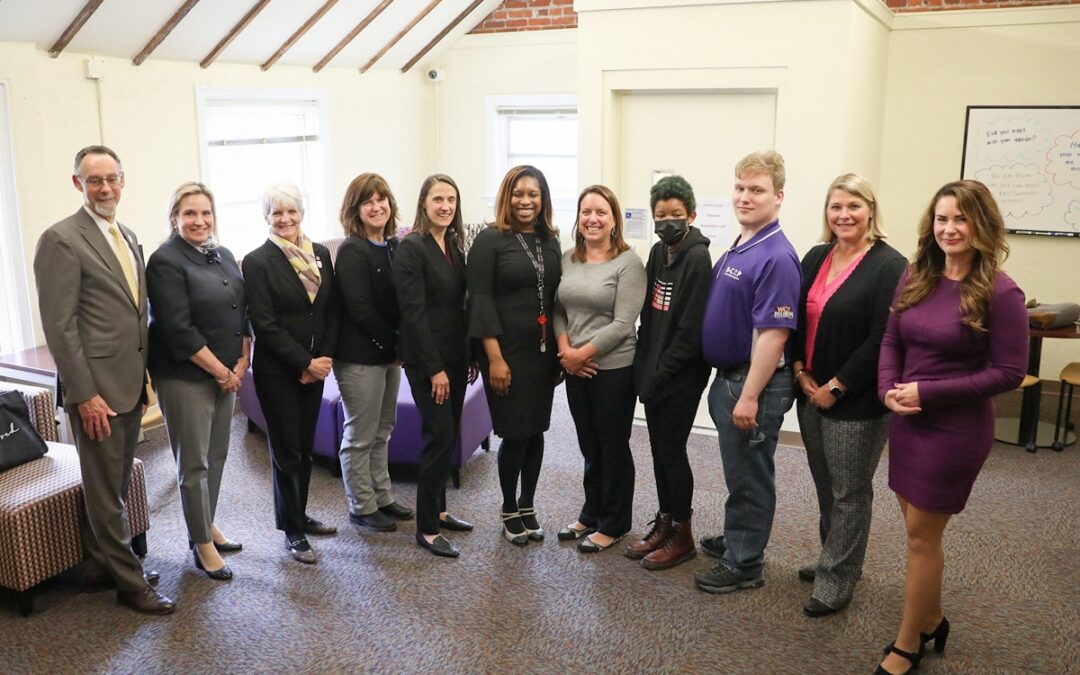
West Chester, Pa. – State Senator Carolyn Comitta and state Rep. Christina Sappey today joined Pennsylvania Department of Labor & Industry (L&I) Secretary Jennifer Berrier and Pennsylvania Department of Human Services (DHS) Acting Secretary Meg Snead at West Chester University to reinforce the Wolf Administration’s commitment to promoting competitive integrated employment for individuals with disabilities and to highlight a program that assists students with autism with the transition from high school to college and, ultimately, the workforce.
“Our communities, workplaces and universities are all enriched by the contributions of individuals with disabilities. Barriers to competitive integrated employment hurt everyone,” Berrier said. “Programs like D-CAP at West Chester – which break down these barriers – serve the individual needs of students with autism, but we are all beneficiaries of this commitment to inclusion.”
West Chester’s Dub-C Autism Program (D-CAP) is one of several throughout the commonwealth supported by the Wolf Administration’s 2017 initiative to offer financial and administrative support to students with autism in their pursuit of higher education and competitive employment. The initiative is supported by L&I’s Office of Vocational Rehabilitation (OVR).
Through this program, OVR supports D-CAP students by helping them identify a career track and prepare for competitive, integrated employment. OVR also provides financial assistance of up to $2,500 per student per semester to those who attend D-CAP, depending on the level of support needed. OVR is currently providing financial support to 52 students in the program.
DHS’s Office of Developmental Programs (ODP) provides services and supports to Pennsylvanians with Autism Spectrum Disorder and their families and caregivers. This includes services that support integrated and meaningful employment for adults with autism.
“DHS is committed to making a future that includes individuals with autism as fully integrated members of our communities, and we are thankful that West Chester University is a partner in this effort,” said Acting Secretary Snead. “Schools, universities, and workplaces that welcome the talents of all people, including people with autism, are a critical part of our efforts to build an inclusive community and strong economy. I encourage other universities and workplaces to look to West Chester as a model of opportunity and support for Pennsylvanians with autism.”
On Tuesday, representatives from the two departments joined Comitta and Sappey at the D-CAP Center to see the program in action, meet with students and learn about how the D-CAP program has made West Chester University a more accepting and inclusive campus.
“The Dub-C Autism program is a leading example of autism acceptance in action. While early childhood education and intervention remain important for young people with autism, higher education and career-oriented programs like this fill a vital need in supporting and empowering all students to succeed in our communities and workplaces,” said Sen. Comitta. “Students and individuals with autism offer diverse and unique talents, perspectives, and contributions. Thank you to all those who continue to prioritize autism inclusion and acceptance at schools, universities, organizations, and businesses across the Commonwealth.”
“It was wonderful to join Sen. Comitta, Secretary Snead, Secretary Berrier and students from the Dub-C Autism program today,” said Rep. Sappey. “We’ve learned so much about autism over the last 20 years so, it’s truly heartening to see inclusion in practice here. Neuro-diverse individuals want to be productive members of the community just like all of us, and this supportive programming keeps young people moving forward in their education and on the path to independent living. I am extremely proud of West Chester University for their leadership in this area.”
The D-CAP program has expanded to include multiple overnight, on-campus College Autism Readiness Retreat (CARR) summer programs for students with autism. West Chester’s HYPE program — High School Youth Preparation for Higher Education — also prepares students by helping them to obtain experience in a field of interest, exposing them to a college-living environment and improving their community integration skills. The program includes after-school classes with hands-on learning experiences during the school year at Southeastern Pennsylvania Autism Resource Center (SPARC), peer mentoring, parent education and support program, and a summer program that includes instruction and campus experiences at West Chester University.
“West Chester University is deeply grateful to Governor Wolf and his administration, particularly L&I’s Office of Vocational Rehabilitation and DHS’ Office of Developmental Programs, for supporting initiatives that are making a difference in the quality of life of students who have autism,” said West Chester University President Chris Fiorentino. “We strongly believe that if a student is accepted to West Chester University, it is our responsibility to do whatever we can to help that student achieve success and cross the finish line. Our Dub-C Autism Program (D-CAP) is an important example of how the University’s access mission is being implemented in intentional ways every day inside and outside the classroom. I could not be more proud of our D-CAP students and those D-CAP leaders who are working diligently to ensure that the program and its expanded initiatives are transformative for all involved. Inclusion is an uncompromising priority for West Chester University and the Commonwealth of Pennsylvania.”
More information on DHS’ resources for people with autism can be found here or at www.everydaylives.org. For more information, you can visit www.dli.pa.gov, or follow us on Facebook, Twitter, and LinkedIn.
For additional information on the Administration’s Employment First work to support competitive, integrated employment, visit the Employment First Website which includes annual reports, a link to the new Employment First data dashboard, and resources for individuals, employers, and providers.
April 14, 2022
West Chester, Pa (April 14, 2022) – Five Chester County nonprofit organizations that serve diverse communities were awarded more than $235,000 in total state grant funding for important safety and security upgrades, state Senator Carolyn Comitta said today.
The funds, approved by the Pennsylvania Commission on Crime and Delinquency (PCCD), are as follows:
- $24,430 for the Coatesville Center for Community Health.
- $24,980 Congregation B’nai Jacob in Phoenixville.
- $40,000 for Kesher Israel Congregation in West Chester.
- $45,757 for the Islamic Society of Greater Valley Forge.
- $100,000 for Masjid Ar Rahman in Coatesville.
The Pennsylvania Nonprofit Security Grant Fund Program was established in 2019 to provide grants to nonprofit organizations that principally serve individuals, groups, or institutions that often face bias and hate crimes. Eligible grant projects include a variety of measures to enhance security ranging from equipment and technology upgrades to planning, threat awareness, and response training
“As faith communities across Chester County, Pennsylvania, the nation, and the world, celebrate major religious holidays now and in the coming days, it’s vital that we continue to value, safeguard, and uphold our rights to worship peacefully, safely, and without fear,” Comitta said. “Chester County is home to a strong interfaith community. We value each other and support each other in standing against hate. These funds will help enhance the safety of our friends and neighbors who may be targeted by threats, bigotry, intimidation or violence.”
Masjid Ar Rahman, the only mosque in the City of Coatesville, is currently expanding its facility to better serve congregants and neighbors, said Imam and President Mohammed Jamaluddin
“Masjid Ar Rahman is located in a neighborhood that has seen hate crimes, arson, and break-ins in the recent past. We will use the grant money to improve the security of our new, expanded facility for our congregants and its neighbors,” he said.
Mark Snow, President of Congregation B’nai Jacob said the synagogue will use the funds to invest in the safety and security of its community as a critical initiative.
“Congregation B’nai Jacob is pleased and honored to have received this Security Grant award through the Nonprofit Security Grant Fund Program. This grant will help us further expand our overall security program and initiatives to support our Congregation,” he said
The Pennsylvania Nonprofit Security Grant Fund Program, now in its third year, was established by the legislature in Act 83 of 2019 in response to the 2018 attack on the Jewish community at the Tree of Life, New Light, and Dor Hadash congregations in Pittsburgh. According to the Anti-Defamation League, it is believed to be the deadliest attack on the Jewish community in the history of the United States.
Comitta, then a state representative, voted for legislation (House Bill 859) that established the program.
The Chester County recipients come as part of more than $5.23 million in funding awards to 120 churches, synagogues, mosques, temples, and other nonprofit organizations statewide.
“This is an investment in the safety and security of the diverse communities that are the tapestry of Pennsylvania,” said Gov. Wolf. “It’s unfortunate that hate continues to surface here, hurting Pennsylvanians and tearing apart our communities. I will continue to stand with and support these communities in any way I can.”
Projects that are eligible for funding through the Pennsylvania Nonprofit Security Grant Fund Program include:
- Planning, threat awareness, and response training.
- Equipment and technology, such as metal detectors, lighting, surveillance, communications systems, locksets, deadbolts, trauma kits, and antitheft devices.
- Vulnerability and threat assessments.
- Other projects to enhance safety or security.
PCCD selects awardees in consultation with the Governor’s Office of Homeland Security and the Pennsylvania State Police. Eligible applicants are included within a bias motivation category for single bias hate crime incidents as identified by the FBI’s Hate Crime Statistics publication. The categories include race/ethnicity/ancestry, religion, sexual orientation, disability, gender, and gender identity.
According to data from the Pennsylvania State Police Uniform Crime Reporting System, hate crimes have increased exponentially in Pennsylvania over the past two years. From 2016 through 2019, Pennsylvania saw an average of 88 hate crimes annually. In 2020, incidents of hate crimes rose by 33% to 111. Just last year, there was an increase of 97 percent, bringing the total to 219 crimes.
In January, the governor announced an additional $4.5 million to be allocated to the program from Pennsylvania’s American Rescue Plan Act dollars.
PCCD has issued two previous Nonprofit Security Grant Fund Program solicitations in 2020 and 2021. A total of $5 million in funding was awarded to each cohort for a total of 243 awards announced. Collectively, these funds have impacted more than one million people who are associated with these organizations.
Comitta also said that she will continue to work to ensure that the program is adequately funded in the current state budget process.
April 14, 2022
West Chester, Pa (April 14, 2022) – The Domestic Violence Center of Chester County (DVCCC) was recently awarded $50,000 in state grant funding for repairs to its independent housing program thanks to the work of state Senator Carolyn Comitta.
The funds will support priority infrastructure repairs, including replacing siding and corner posts, to the non-profit organization’s Phase IV independent housing program.
“On behalf of survivors of domestic violence, I am extremely grateful to Senator Comitta for helping the Domestic Violence Center of Chester County secure a generous $50,000 grant,” said Dr. Dolly Wideman-Scott, DVCCC CEO. “There are not many opportunities to apply for funding for our housing infrastructure repairs. Maintaining quality affordable housing for survivors of domestic violence is so critical; survivors and their children deserve to live in beautiful homes while addressing their experienced trauma. Along with housing, DVCCC provides wraparound services that facilitate a survivor’s ability to move forward and not return to an unsafe situation.”
The Phase IV program consists of 13 three-bedroom townhomes and four one-bedroom apartments available to eligible, income-verified participants and their families. Its goal is to help participants become self-sufficient by offering low monthly rental payments, financial counseling and goal-planning, and access to case management and all other DVCCC services. In addition, housing options are conveniently located near community services and public transportation.
“The Domestic Violence Center of Chester County provides vital resources and services to individuals and families recovering from domestic violence,” Comitta said. “By offering secure and stable housing options, DVCCC empowers survivors of domestic violence to pursue safe, healthy, happy, independent, and productive lives. I’m proud to support funding for these much-needed renovations.”
The organization, which is currently marking its 46th year serving survivors of domestic violence and their families, aims to reduce, remedy, and prevent domestic violence in Chester County. Since 1976, DVCCC has served more than 40,000 survivors of domestic abuse, averaging more than 3,000 survivors, and their dependent children each year.
In addition to the Phase IV independent housing program, DVCCC offers communal housing options through its emergency shelter and bridge transitional housing programs. Each program has its own case manager to provide services appropriate to those clients’ needs at the varying stages of separation from an abusive partner. In addition, DVCCC makes life skills workshops available to all residents of its housing programs. These workshops cover topics including goal-setting, budgeting, saving, distinguishing between healthy and unhealthy relationships, and skills and techniques for effective parenting.
DVCCC provides services at its main, confidentially located site and satellite sites in Coatesville, Kennett Square, Oxford, and Phoenixville. All services and free and confidential. Services are currently available in-person or virtually. They are also available in English and Spanish.
For more information on any of DVCCC’s housing programs, or to learn more about eligibility requirements and to apply please contact DVCCC at 610-431-3546 and dial option “1” for Counseling and Housing.
If you are experiencing domestic violence, call DVCCC’s 24-hour, free hotline 888-711-6270 or 610-431-1430.
If you are in immediate danger, dial 911. If you cannot call, you can text 911 if you are in Chester County.
Learn more about the Domestic Violence Center of Chester County, including opportunities to volunteer and support, at www.dvcccpa.org
###
April 13, 2022
Harrisburg, Pa (April 13, 2021) – The Borough of Modena was honored this week with a 2022 Governor’s Award for Local Government Excellence.
The awards are presented annually to municipalities, local government officials, and organizations for their dedication and commitment to strengthening their communities and better serving their residents.
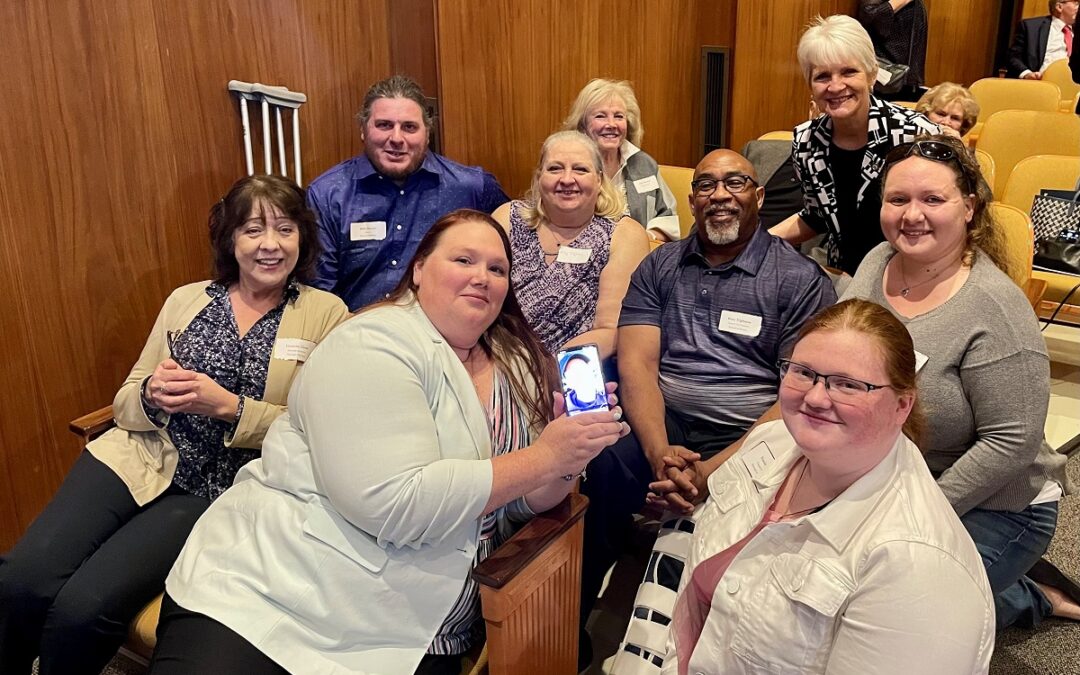
Modena Borough Council President Jennifer Daywalt accepted the award in the “Responding to Adversity” category on Wednesday at a special ceremony at the State Museum in Harrisburg. She was joined by Mayor Mike Harvey, Council Vice President Beau Tilghman, Secretary Victoria Cloud, and several borough council members, including Nicole Ewing and Felicia Handley.
“I am humbled and honored by this recognition from the governor’s office. Modena is a great community filled with caring and compassionate residents,” Daywalt said. “Although we have faced many challenges recently, we move forward and continue to make Modena a community to be proud of. I am thankful to have such great council, mayor and staff to work with. Without them, this wouldn’t be possible.”
State Senator Carolyn Comitta was on hand to personally congratulate Daywalt and the borough on receiving the recognition.
“As a former mayor and council member, I understand and appreciate just how important the work of our local government officials and staff is in ensuring strong, reliable public services and improving the overall quality of life in our communities,” she said. “Congratulations to Modena on receiving this recognition and I look forward to continuing to work to support the borough and all of the municipalities across Chester County.”
Modena was selected for the statewide award in part for its ongoing efforts to acquire and restore the historic Mode House and property located on 2.5 acres at 120 North Brandywine Ave in the borough.
Also known as the “McCain Property,” the home is thought to have been originally built in the late 18th century by William Mode, a well-respected Quaker and descendent of some of the earliest settlers in the area. At one point, the home sat near a Brandywine-powered mill—which processed grist, wood, and wool—established and run by the Mode family, from which the borough’s name is derived. Sadly, over time, it was abandoned and has fallen into considerable disrepair.
Through leadership of Daywalt and other community members, leaders, and groups, Modena is working to acquire and cleanup the property with the aim of preserving the historic structure as the borough’s administrative office and community center and developing the existing site into a public park with open space, trails, a playground, and native gardens.
A community cleanup of the site is currently scheduled for Saturday, April 30, from 9 a.m. to 1 p.m.
Administrated by the Pennsylvania Department of Community and Economic Development’s Governor’s Center for Local Government Services, the Governor’s Awards for Local Government Excellence are presented annually in nine categories:
- Building Community Partnerships.
- Innovative Planning and Sound Land Use Practices.
- Responding to Adversity.
- Intergovernmental Cooperation.
- Promoting Community/Economic Revitalization.
- Information Technology.
- Innovative Community/Governmental Initiatives.
- Health & Wellness Initiatives.
- Fiscal Accountability and Best Management Practices.
Each year, they are presented during “Local Government Week,” a time to honor the dedication of Pennsylvania’s local officials and encouraging citizens to learn how local government functions and affects each resident and business in the community.
With a population of under 600 residents, Modena is Chester County’s smallest municipality, and last year celebrated its Centennial Anniversary.

April 7, 2022
WEST CHESTER (April 7, 2022) – State Senator Carolyn Comitta and state Rep. Kristine Howard will hold a free shredding event on Saturday, April 30 from 10 a.m. to 1 p.m. at Malvern Fire Company.
Residents and families concerned about properly disposing of personal information should consider taking advantage of the opportunity to safely dispose of financial statements, tax forms, medical records, and other confidential information.
The documents will be destroyed onsite and the shredded paper will later be recycled.
“One of the best ways to protect your personal information is to safely dispose of documents that you no longer need, including financial statements, tax information, and medical records,” Comitta said. “This is a free service to help you securely dispose of sensitive information to prevent the potential for identity theft and fraud. I thank Rep. Howard and her staff for joining in this effort.”
“Despite living in an increasingly digital world, it’s still important to protect our printed information,” Howard said. “And so, I am proud to join forces with Senator Comitta’s office to provide this vital service for our constituents.”
Some examples of unneeded documents that should be shredded include: credit card statements and applications, bank records, canceled checks, income tax forms, insurance records, medical and retirement or pension fund information, and any documents that contain personal information like Social Security, credit card, or bank account numbers.
The event is free and open to the public. However, please note the following:
- This event is for individuals only, not businesses.
- There is a three (3) box limit per car.
- Only paper will be accepted. Please do not bring binders, binder clips, or books.
In addition, at the shredding event, nonperishable food items will be collected to benefit the Chester County Food Bank. While donations are welcomed and encouraged, they are not required to access the free shredding services.
Malvern Fire Company is located at 424 E. King Street in Malvern.
March 29, 2022
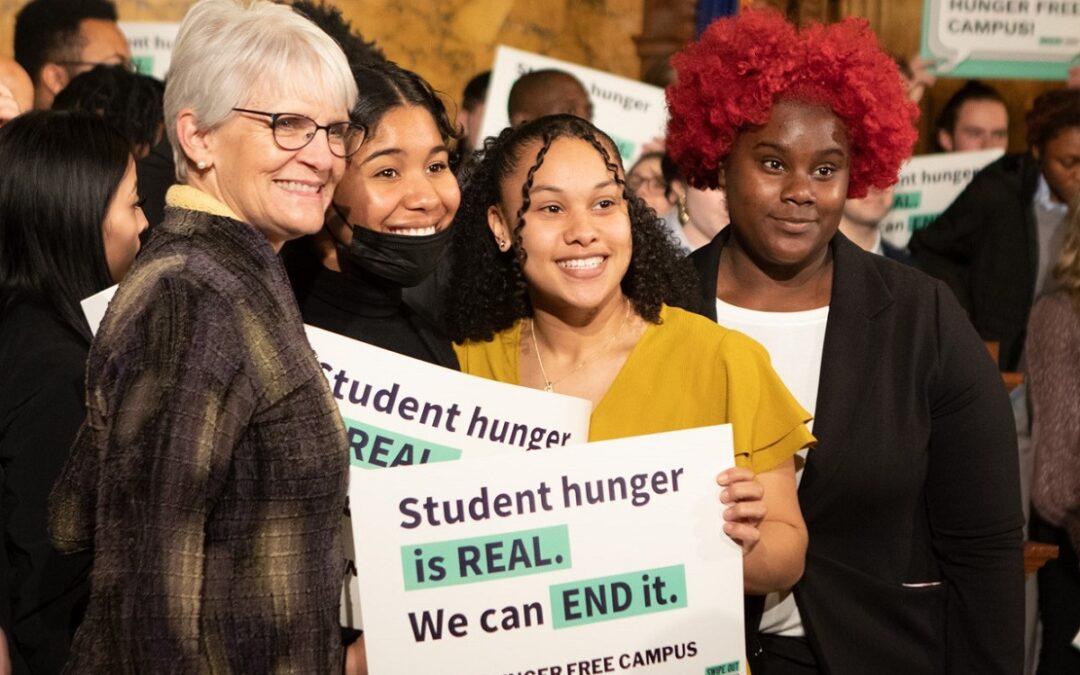
Harrisburg, Pa (March 28, 2022) — Senator Carolyn Comitta joined First Lady Frances Wolf, Senate Democratic Appropriations Chairman Vincent Hughes, House Democratic Leader Joanna McClinton, Representative Jennifer O’Mara, and college students and advocates to call for action to address food insecurity on Pennsylvania’s college campuses. Watch Video.
“College should not be a privilege reserved for individuals with disposable incomes, and hunger should never be what holds someone back from succeeding in higher education,” said First Lady Wolf. “And yet, national studies estimate that over 30 percent of college students are food insecure. We must do all we can to support our students as they pursue futures that can benefit all of Pennsylvania.”
In his 2022-23 budget proposal, Governor Tom Wolf allocated $1 million to create a grant program that could help Pennsylvania’s institutions of higher education address this issue on their campuses.
This program could help schools create or expand campus food pantries, increase outreach about available supports, hire social workers or benefits navigators to assist students, improve data gathering efforts, and more. The details of the program are still being developed, but it is inspired by the Hunger-Free Campus bills that Sen. Comitta and Rep. Malcolm Kenyatta have proposed in recent years.
“No student should have to go hungry to pursue the dream of higher education and career success. Studies and firsthand stories tell us that food and basic needs insecurity is a growing program on college campuses. Common sense tells us it’s a solvable one. And we’re working to take steps to solve it in Pennsylvania,” Sen. Comitta said. “I thank the First Lady for her commitment to ending hunger on campus, Governor Wolf for supporting the Hunger-Free Campus Initiative in his budget plan, and our students and anti-hunger organizations for their ongoing advocacy efforts.”
When coupled with the proposed budget increases for the postsecondary sector, this investment could have very positive impacts on our students and school communities by reducing barriers impacting college and career goal attainment
“COVID exposed an unspoken secret, that a significant number of college students are food insecure,” Sen. Hughes said. “Thanks to the leadership of the First Lady and Governor Wolf, we have an opportunity to make an impact to reverse the staggering number of college students who are food insecure. College students face enough challenges without needing to worry about where their next meal will come from.”
An estimated 36 percent of students know someone who dropped out of college due to food insecurity during the pandemic, and roughly 52 percent of students who faced food or housing insecurity in 2020 did not apply for support because they did not know how.
“There is a growing awareness at Penn State and on other college campuses of the significant impediment to student success caused by food insecurity. A student who lacks access to sufficient and healthy food simply cannot learn and participate as they otherwise would,” said Pennsylvania State University’s Vice President of Student Affairs Damon Sims. “It has been heartening to see the commitment of our student leaders to meaningfully address this fundamental issue in partnership with the Penn State administration. The funding proposed by Governor Wolf would make an enormous difference in our collective effort to overcome a challenge faced by too many students across the Commonwealth. We can all do better by these students, and I know we shall.”
All Penn State campuses have food pantries on campus or in the community. Most campuses offer either food pantries, food distribution services, and/or campus community gardens. Penn State President Eric J. Barron and First Lady Molly Barron recently established a food security endowment that will support the purchase of University meal plans for undergraduate Penn State students who encounter food insecurity.
A 2018 report released by the federal Government Accountability Office found that about half of all undergraduate students in 2016 were financially independent and the average age of a college student was 25 years old. About 22 percent of all undergrads had dependent children of their own and 14 percent were single parents.
Many college students who are coming out of high school have relied on free or reduced-priced meals throughout their education. Those programs do not exist for college students – even though the student’s socio-economic status likely has not changed. The food challenges they had in grade school follow them into the next phase of their lives and may even become more challenging as they juggle new financial responsibilities like housing, books, and other costs.
“The cost of higher education in Pennsylvania continues to rise while financial aid fails to keep up, and this can force students to financially neglect other areas of their lives. Food insecurity on college campuses has been a problem for decades, and Pennsylvania is overdue in addressing this,” said Rep. O’Mara. “Students cannot thrive and reach their full potential if their basic needs are not being met. We need to pass the Hunger-Free Campus Act that I introduced in the House alongside State Rep. Malcolm Kenyatta and provide for students throughout the commonwealth”.
National nonprofit Swipe Out Hunger brought approximately 100 students and school administrators to the State Capitol on Monday to meet with legislators and advocate for change.
Students from the following schools were in attendance: Bloomsburg University, Carnegie Mellon University, Community College of Allegheny County, California University of Pennsylvania, DeSales University, Kutztown University of Pennsylvania, Millersville University, Point Park University, Prism Career Institute, Robert Morris University, Temple University, University of Pittsburgh, University of Pennsylvania, West Chester University, Widener University, and Wilson College.
“It speaks volumes to have the First Lady support our coalition of more than 100 college students across Pennsylvania and other community partners to address student food insecurity through the Hunger-Free Campus Bill,” said Rachel Sumekh, founder and CEO of Swipe Out Hunger. “We’re thrilled to galvanize and organize together to ensure no student has to choose between food and their education.”
Sumekh’s organization works closely with leaders on the ground to not only ensure today’s students have access to meals, but to also address student hunger upstream with sustainable legislation and policies. Their national movement spans more than 400 colleges in all 50 states and has served 2.5 million nutritious meals to date.
March 25, 2022
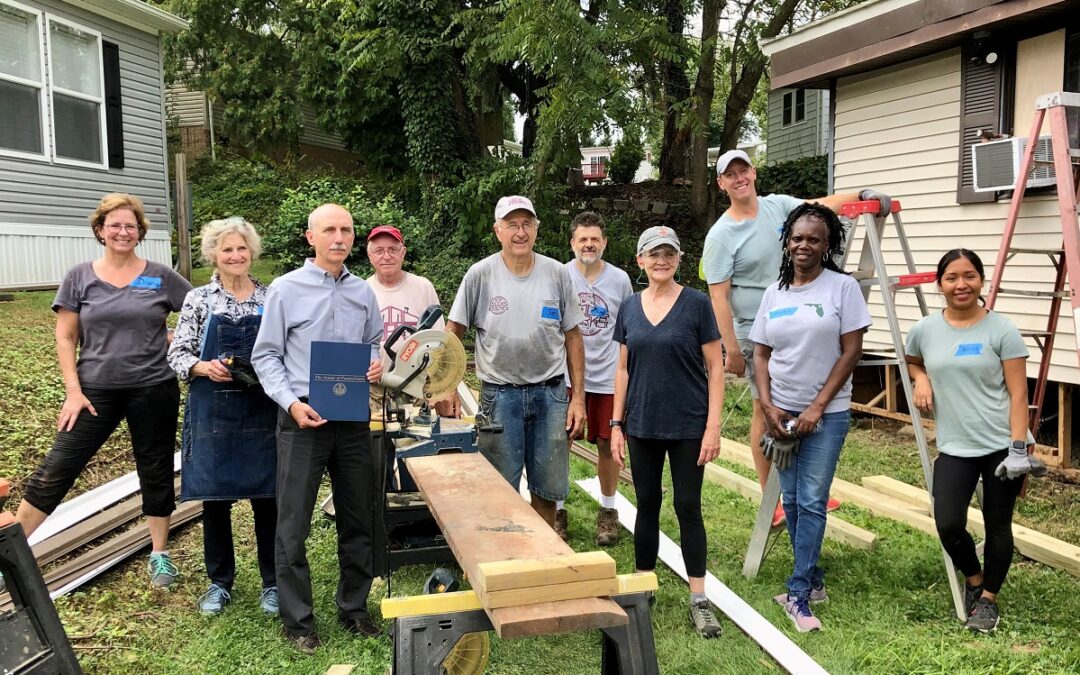
West Chester, Pa (March 25, 2022) – Good Works, Inc., a nonprofit organization that provides free home repairs to low-income residents and families, will receive $50,000 in state grant funding thanks to the work of state Senator Carolyn Comitta.
“Many families and seniors have experienced housing challenges during the pandemic, including necessary upgrades for health and safety, accessibility improvements, damage from storms, flooding and extreme weather, or simply affording essential maintenance and upkeep,” Comitta said. “Thankfully, community members can turn to the caring and welcoming team at Good Works. I appreciate all the staff and volunteers for their ongoing service to our friends and neighbors in need.”
The funds, which Comitta helped secure through the Pennsylvania Department of Community and Economic Development Keystone Communities Program, will support the purchase of materials and supplies.
Comitta also commended Good Works for its organizational resilience throughout the pandemic. Like many nonprofit organizations, Good Works experienced an increased demand for services and related challenges and impacts. Despite the emergence of COVID-19 variants, Hurricane Ida, economic uncertainty, supply shortages, and rising fuel and material costs, the group completed work on 40 homes last year and assisted 165 families through 27,605 volunteer hours.
“Good Works is honored to be the recipient of this grant that will provide critical building materials and supplies that our staff and volunteers will use to repair many substandard homes throughout Chester County,” said Robert Beggs, Executive Director of Good Works. “Senator Comitta’s staff volunteered their time and talent last year and this generous grant further demonstrates their commitment to addressing housing inequities in Chester County.”
A faith-based nonprofit organization, Good Works has provided vital home repair and rehabilitation services to more than 1,000 homes in our region through more than three decades of service. Along the way, the group has touched the lives of many, including seniors, veterans, disabled residents, and families. Much of their work is contributed through volunteer service, creating an environment where neighbors help neighbors.
Based in Coatesville, Good Works, Inc. primarily services homeowners in central and northern Chester County.
Individuals interested in volunteering are always needed and welcome to help. Learn more about opportunities to contribute at www.goodworksinc.org.


 Reload document
  Open in new tab