August 31, 2022
West Chester, Pa (August 31, 2022) – Five elementary schools in the Coatesville Area School District will receive more than $163,000 in total funding to provide students with fresh fruit and vegetable snacks during the school day, U.S. Rep. Chrissy Houlahan and state Senator Carolyn Comitta said today.
The grant funds, provided through the U.S. Department of Agriculture’s (USDA) Fresh Fruit and Vegetable Program (FFVP) and administered through the Pennsylvania Department of Education, are as follows:
- Caln Elementary School will receive $29,540
- East Fallowfield Elementary School will receive $24,920
- Kings Highway Elementary School will receive $35,000
- Rainbow Elementary School will receive $49,210
- Reeceville Elementary School will receive $24,990
Comitta, who serves on the Senate Education Committee, said making these healthy, nutritious snacks available to students is especially important this year since school lunches and breakfasts are no longer available for free to all students.
“It’s important that all children have access to healthy food options, including fresh, locally grown fruits and vegetables,” Comitta said. “Since children from low-income families tend to have fewer opportunities to regularly consume fresh produce, this is an important way to introduce them to new options, encourage them to make better dietary choices, and help build healthy eating habits.”
“A hungry child cannot focus on learning,” said Houlahan. “Senator Comitta and I know this firsthand from our own experiences as teachers. Providing our youngest students with healthy fruits and vegetables through grants from the USDA and the Pennsylvania Department of Education will go a long way to ensure our kids are getting the nutrition and the education that they need. I appreciate Senator Comitta’s efforts to secure these grant funds and look forward to spending time with our students in the upcoming school year.”
The goal of the FFVP is to create healthier school environments by providing healthier food choices, expanding the variety of fruits and vegetables that students experience, increasing fruit and vegetable consumption, and positively impact students’ present and future health.
The program, implemented in Pennsylvania in 2004 and now available in all 50 states, has successfully introduced elementary school children to a variety of produce that they otherwise might not have the opportunity to sample. According to the USDA, it also helps combat childhood obesity by increasing the overall acceptance and consumption of fresh, unprocessed produce among children.
Schools with the highest rates of students eligible for free and reduced-price meals are prioritized for funding. Grantees are required to spend most of their funding to purchase fresh fruit and vegetables and must develop a plan to establish partnerships to reduce other costs. Schools are also required to provide nutrition education to students.
The funding for the CASD schools comes as part of more than $7 million in FFVP grants awarded to 266 elementary schools across the Commonwealth.

August 29, 2022
West Chester, Pa (August 29, 2022) – As students across Chester County and Pennsylvania return to class this week, state Senator Carolyn Comitta is introducing new legislation to grow Pennsylvania’s educator workforce, increase diversity in the classroom, and break the cycle of teacher turnover in certain schools.
Comitta, a former public school educator and member of the Senate Education Committee, introduced Senate Bill 1316, legislation that establishes a “Grow Our Own Educators” Program in the Commonwealth.
The program calls for providing financial resources and a support structure for aspiring educators to become certified teachers within their communities. It would also equip students and professionals with the support and resources to pursue careers in education while developing pathways to fill and retain educators in high-need positions and schools.
“The right teacher can make the difference in a child’s education, career, and life,” Comitta said. “Throughout my career, I have seen firsthand how educators can foster the next generation of leaders, innovators, and entrepreneurs. This bill aims to address the challenges facing some of our schools by building a strong network of educators within their own communities.”
Across the state and nation, schools are experiencing an alarming decline in the number of teachers entering the workforce. Since 2012, the number of people who completed teacher-education programs in Pennsylvania has fallen 55 percent, according to the U.S. Department of Education. The decrease is twice as high as the national decline, which is 25 percent.
In addition, research shows that Pennsylvania has one of the least diverse educator workforces in the nation with less than 6 percent of teachers in Pennsylvania being persons of color and 55 percent of public schools employing only white teachers.
Comitta said her bill, a companion to state Rep. Mike Schlossberg’s House Bill 2206, aims to help address these challenges by reaching out to community members who are already involved with a school district and supporting them in becoming teachers.
“Pennsylvania schools have been struggling to attract and retain new teachers. It is one of the most pressing issues facing our communities and a problem that has only been exacerbated by the pandemic,” Comitta said. “By focusing on attracting and developing teachers from within their communities, we can rebuild a robust, resilient, and diverse educator workforce pipeline.”
Grow-your-own-educator programs have been implemented across the country as a proven tool to successfully recruit, develop, and retain diverse, passionate, and skilled educators.

August 23, 2022
West Chester, Pa (August 23, 2022) – Repairs are expected to begin this fall on four bridges in Chester County that were damaged by the remnants of Hurricane Ida last year, state Senator Carolyn Comitta said.
“The remnants of Hurricane Ida brought severe rainfall and flooding that took a significant toll on our local transportation infrastructure. We continue to work to repair and upgrade these structures to ensure that they are safe and reliable for residents and motorists,” Comitta said.
The work will occur on the following structures:
- Route 926 (Street Road) over a Branch of White Clay Creek in West Marlborough.
- Yellow Springs Road over a Branch of Pine Creek in West Pikeland.
- Pikeland Road over a Branch of Pickering Creek in Charlestown.
- Pennock Bridge Road over a Branch of White Clay Creek in New London Township.
According to PennDOT, the bridges suffered undermining or scour at their support abutments or piers from the remnants of Hurricane Ida in September 2021. They, along with two additional bridges in Bucks County, will be repaired under an $815,000 contract recently awarded to Loftus Construction, Inc.
“I want to thank our local partners for coming together in the wake of Ida to identify these important and extensive needs. I continue to work to advance projects that aim to make our infrastructure stronger and more resilient in the face of more frequent extreme weather events,” Comitta said.
Work on the bridges is expected to begin this fall and finish in the spring.
August 8, 2022
I am grateful that Energy Transfer/Sunoco Pipeline is being held accountable for the serious environmental crimes associated with the construction of the Mariner East Pipeline in our region and across the Commonwealth. I thank Attorney General Josh Shapiro and his office for their determination and hard work in pursuing this investigation and forcing the company to finally begin accepting responsibility for damaging wetlands, waterways, and drinking water supplies.
According to the Attorney General’s Office, as a result of Energy Transfer pleading no contest to dozens of charges, the company will:
- Provide independent evaluations of potential water quality impacts for homeowners from the construction of the Mariner East 2 Pipeline free of charge.
- Offer approved mechanisms for restoring, repairing, or replacing the impacted private water supplies free of charge.
- Pay $10 million towards projects that improve the health and safety of water sources along the routes of the pipelines.
In addition, the company will have a permanent criminal record to reflect these serious environmental crimes.
The Attorney General’s office is reaching out to residents along the pipeline route informing them about the free testing and water restoration. If you believe your drinking water was impacted by the construction of the Mariner East 2 pipeline, please contact the Attorney General’s Office by August 19 by emailing watertesting@attorneygeneral.gov or by calling 570-904-2643.
Under the plea agreement, you are entitled to have your water quality tested by independent, professional geologists. If the testing determines that pipeline construction has damaged your water supply, Energy Transfer is obligated to fully restore safe water.
When the Attorney General announced these charges last year, I was joined by my legislative colleagues in calling for the Pennsylvania Department of Environmental Protection (DEP) to stop issuing permits for the project and to halt construction.
While the $10 million Energy Transfer must pay to restore waterways damaged by its construction is significantly more than the maximum penalty required under state law, the company has already paid tens of millions in fines to push through this project. And just earlier this week, it reported strong second-quarter results to shareholders, including net income for the three months ended June 30, 2022, of $1.33 billion (a $700 million increase from the same period last year).
Pennsylvania residents have a constitutional right to “clean air, pure water, and to the preservation of the natural, scenic, historic, and esthetic values of the environment.” And I am again, deeply appreciative that Attorney General Shapiro and his office, with the support of local environmental groups and citizen advocates, acted as trustees of these resources and defenders of residents to hold Energy Transfer accountable.
I continue to strongly support legislation to enact stronger standards and tougher fines to better protect environmental health and public health and safety, as well as adequate resources to ensure that agencies like DEP can better enforce existing laws.
In addition to pipeline safety legislation I have introduced, I support a package of bills to establish siting procedures for the construction of new pipelines, require legislative approval for new projects, govern safety information for schools and first responders, and mandate automatic shut-off valves in high-risk areas.
However, the reality is I still do not expect the legislative majority to take up any pipeline safety bills at this time. That is why for years, I have been and continue to work on a parallel path – advancing key pipeline safety regulations through the Pennsylvania Public Utility Commission (PUC).
That process, while lengthy, continues and remains the path to the most significant progress on pipeline safety in Pennsylvania. According to the PUC, it is currently reviewing the comments from the Independent Regulatory Review Commission (IRRC) and assessing recommendations. It will then submit a final rulemaking to IRRC.
In addition, I and my fellow legislative colleagues recently asked the governor to expedite the process of approving new nominees for the five-member PUC, which is already two members short. While those concerns are initially related to the water and wastewater ratemaking process, a limited PUC could also potentially impact matters involving pipeline safety and pipeline safety regulations.
The Mariner East pipeline project may be complete, but unfortunately its impacts on residents and our environment continue. Earlier this summer, Sunoco failed to meet its deadline for cleaning up the spill in Marsh Creek Lake. This week marks two years since the spill, which sent more than 20,000 gallons of drilling mud into streams, wetlands, and the lake.
As more pipeline projects are being planned or are on the horizon for our region, it’s imperative that we to learn the lessons of Mariner East and be proactive in protecting our environment and residents through local and statewide advocacy, participating in the regulatory process, and supporting candidates and elected officials who prioritize our environmental rights under the Pennsylvania constitution.
###

August 5, 2022
WEST CHESTER, PA (August 5, 2022) – In order to empower greater community input and increase public transparency, state Senator Carolyn Comitta is introducing legislation to reform the process around hospital closures.
“A sudden, profit-driven decision to close an emergency facility can have a destabilizing effect on an entire region and people deserve a complete picture on the ramifications of a potential closure,” Comitta said. “This legislation looks to address these concerns by creating a transparent process that encourages greater public participation, so communities can quickly set a course of action to restore access to health services.”
The legislation comes in the wake of Tower Health’s decision to close two Chester County hospitals, Jennersville and Brandywine, earlier this year. The bill increases the notice hospitals must give before closing a facility, from 90 days to 180 days. It also establishes more comprehensive and defined standards for procedure and notification of a closure.
“Abrupt announcements and a lack of transparency around recent hospital closures left many people searching for answers concerning the future of critical health services in their community, Comitta said. “This bill will provide local and state officials, community leaders, and healthcare professionals additional time to assess a potential closure and reduce the likelihood of a lapse in emergency service.”
The bill also includes requirements for an approved Closing Plan and Health Equity Impact Assessment to be submitted to the Department of Health and Attorney General, and it calls for increased community input, data collection, public comment, and public hearings prior to closure.
“Like doctors and those in the medical community, hospitals have a duty to ‘first do no harm,’” Comitta added. “This bill aims to support and empower a community to seek other solutions for vital health services and prevent a ripple effect to other essential services. While we cannot reverse previous actions taken by emergency service providers, these reform measures bring Pennsylvanians towards a more transparent view of our healthcare system.”
###

August 4, 2022
West Chester, Pa (August 4, 2022) – Chester County schools, colleges, businesses, nonprofit groups, and environmental organizations can apply to receive some of the $900,000 in total state grant funding available for environmental education projects, state Senator Carolyn Comitta said.
“Quality environmental education programs promote critical and creative thinking skills, while inspiring students and young people to become more engaged with their local communities,” Comitta, who serves as minority chair of the Senate Environmental Resources and Energy Committee, said. “As we continue to face the growing impacts of climate change on nearly every aspect of our lives, it’s crucial that the next generation of leaders is prepared to make environmentally-informed decisions based on science and sustainability.”
The funding, made available through the Pennsylvania Department of Environmental Protection’s (DEP) Environmental Education Grants program, provides up to $5,000 for projects with a local focus, up to $30,000 for regional or statewide initiatives, and up to $85,000 for projects that engage students and teachers at the local, state, and national level.
“This grant supports environmental education projects that engage teachers, youth and residents in actions that help protect Pennsylvania’s abundant natural resources and preserve its beauty,” said DEP Acting Secretary Ramez Ziadeh.
While all education project topics are considered, priority areas are water quality, climate change, and environmental justice. Project examples include tours, demonstrations, and hands-on learning experiences, and workshops on stream monitoring, rain gardens, wetlands, green infrastructure, and other watershed stewardship; solar and other renewable energy, alternative transportation, energy conservation, and other approaches to address climate change; and improving air quality and community and municipal partnerships to address local environmental challenges.
Last year, the Land Conservancy for Southern Chester County was awarded a $3,000 Environmental Education Grant to expand its new leaf sensory garden and offer pre-school and summer camp field experiences, including lessons and activities.
DEP will hold a live webinar on Tuesday, September 27, 2022, from 12:00 PM to 1:30 PM regarding this grant funding. Program staff will review the application process, offer tips, and answer questions. The webinar is free, but registration is required. Registration details will be forthcoming.
Electronic applications must be submitted through the Keystone Login (first-time users will need to register.) This grant round has an application deadline of Friday, December 9, 2022, by 4:59 p.m. Instructions are available at Environmental Education Grants.
The Environmental Education Grants program was established by the Environmental Education Act of 1993, which mandates setting aside 5 percent of the pollution fines and penalties DEP collects annually for environmental education in Pennsylvania. Since the program began, more than 2,100 projects totaling over $12 million have been awarded grant funds.
###

August 2, 2022
West Chester, Pa (August 2, 2022) – Four organizations that provide early childhood education programs in Chester County will receive nearly $3.8 million in state funding through Pennsylvania Pre-K Counts and the Head Start Supplemental Assistance Program (HSSAP), state Senator Carolyn Comitta said.
“Early childhood education is the foundation for healthy, productive, and prosperous communities,” Comitta, who serves on the Senate Education Committee, said. “Investing in access to high-quality early learning programs, like these, will help put more children and families on a path to continued success in school, work, and life.”
The funding, made available through the Pennsylvania Department of Education (PDE) Office of Child Development and Early Learning, opens up 2,960 new Pre-K Counts slots statewide, and the increase for HSSAP will allow grantees to address increased costs to operate.
“Investing in early childhood education and expanding access to high-quality programs like Pre-K Counts and the Head Start Supplemental Assistance Program positively impacts families and children across the commonwealth,” said Acting Secretary of Education Eric Hagarty. “Increasing the number of slots available for these programs means more children will have access to the early learning that will benefit them and their families now and throughout their lives.”
The 2022-23 Pennsylvania Pre-K Counts Grant Program awarded more than $297 million in grants to 89 eligible applicants to provide high-quality pre-kindergarten services for age- and income-eligible children.
In Chester County the recipients are as follows:
- $50,000 for Creative Play Day School.
- $400,000 for KinderCare Education (also providing services in Cumberland and Lancaster Counties).
Pennsylvania Pre-K Counts provides high-quality pre-kindergarten services to at-risk three- and four-year-olds at no cost to families. Children living in families earning up to 300 percent of the federal poverty level are eligible to apply. Pennsylvania Pre-K Counts is offered in school districts, Keystone STARS 3 and 4 childcare programs, Head Start programs, and licensed nursery schools.
More than $87 million in HSSAP grant funding was awarded to 41 eligible applicants and will give existing Head Start grantees the opportunity to expand high-quality pre-kindergarten.
In Chester County the recipients are as follows:
- $2.8 million for the Chester County Intermediate Unit.
- $506,000 for Pathstone (also providing services in Carbon County).
HSSAP provides state funding to Head Start programs that serve three- and four-year-olds living in families at or below 100 percent of the federal poverty level. The program is offered to eligible families at no cost. The programs provide comprehensive education, health, nutrition, and parent involvement services aligned to the federal program requirements.
In total, more than $384 million in grant funding was awarded through Pre-K Counts and HSSAP. The programs will provide early childhood education opportunities to more than 37,213 children statewide.
“Education investment has been my top priority since I first considered running for this office,” Governor Wolf said. “That priority, commitment, and investment is nowhere more important than in its impact on Pennsylvania’s youngest citizens. Early childhood education makes a vast difference in a child’s path to a bright future and to realizing their full potential.”
In addition, this year’s budget contained a historic $1.8 billion in funding, including a $79 million increase for early education through Pre-K Counts and Head Start.

August 1, 2022
Berwyn, PA (August 1, 2022) – Children and young people attending summer camps at the YMCA of the Greater Brandywine will now have access to even more innovative environmental education and STEM programs thanks to funding secured by state Senator Carolyn Comitta.
Comitta recently visited the YMCA of the Upper Main Line to see firsthand how the $50,000 in state grant funding she secured through the Pennsylvania Department of Education is helping expand the organization’s already-impressive array of science-based educational opportunities.
“One of the best ways we can prepare our young people to meet the challenges of tomorrow is by enhancing their understanding of the world around them. Helping children grow into strong, confident, environmentally conscious, scientifically literate, and technologically capable adults is an investment in our future,” Comitta said. “I was glad to help secure this funding so that the YMCA can continue to help children and young people develop a lifelong love of the sciences.”
The funding helped support modifications to the YMCA’s “Zoo & STEM on Wheels” van, which transports multiple resident animals, science experiments, and other STEM learning resources to the thousands of children enrolled in Y childcare, after school, and summer camp programs, as well as students in area schools, through partnerships with local districts.
“The Upper Main Line YMCA provides educational programming in the areas of nature and STEM on its 54-acre property in Berwyn, PA to hundreds of children each year,” said Brian Raicich, Executive Director of the Upper Main Line YMCA. “We’re honored to have received the Department of Education grant and look forward to the additional programming and enhanced outreach opportunities it will help us to provide. We are thankful to Senator Comitta and her team for their support in making this happen and for taking the time to explore our campus.”
During her visit to the YMCA of the Upper Main Line, Comitta interacted with multiple campers and staff members while touring the Environmental Education Center, Artisan Village, Cassatt Preserve, and summer camp areas.
“I want to thank the YMCA of the Greater Brandywine and its staff, especially those at the Upper Main Line YMCA, for making environmental and STEM education a priority in their youth, summer, and after school programs,” Comitta said. “I appreciate your work and appreciate you striving to bring these programs and resources directly to diverse groups of children in communities throughout the entire county.”
###
July 29, 2022
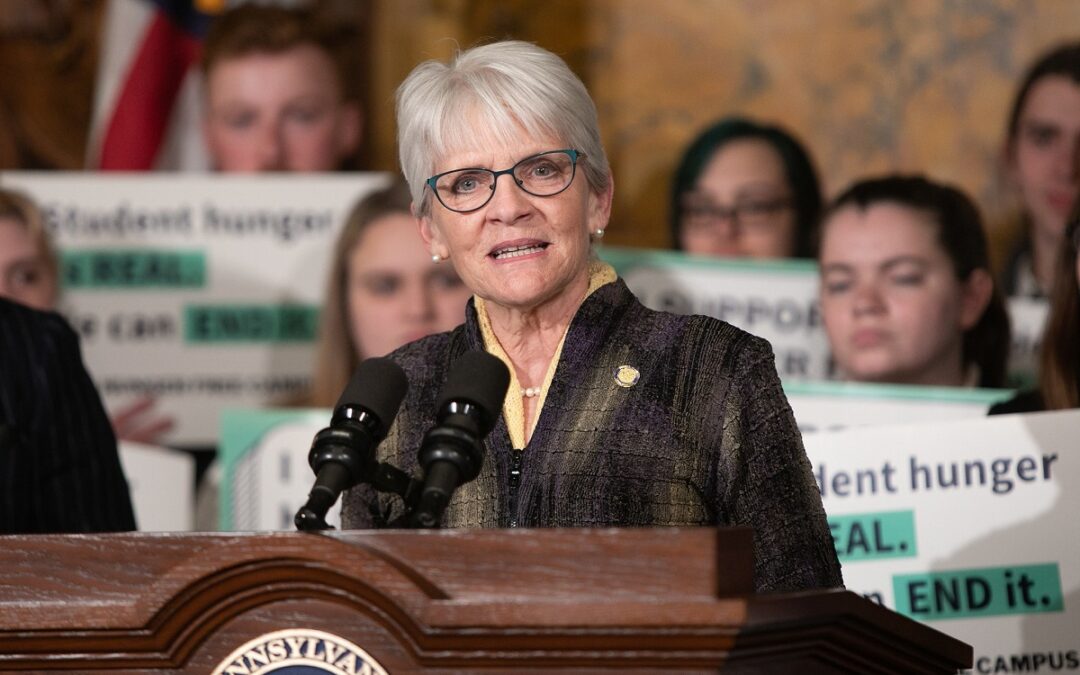
West Chester, PA (July 29, 2022) – A new initiative to tackle the growing problem of food insecurity on Pennsylvania college campuses is being supported with $1 million in state funding, state Senator Carolyn Comitta said today.
The Hunger-Free Campuses Program, championed by Comitta, West Chester University (WCU) officials and others, will provide grants to colleges, universities, and community colleges that set up and expand free food pantries on campus and take other steps to meet the nutritional needs of students.
The initiative is based on legislation introduced in the state Senate by Comitta (Senate Bill 719) and in the state House by Representatives Malcolm Kenyatta and Jennifer O’Mara (House Bill 1363).
Comitta, who last fall brought together students, legislators, and hunger advocacy organizations to discuss the bill at WCU and tour the university’s free campus food pantry, noted that hunger on college campuses impacts a growing number of students across the state and nation.
“The issue of hunger and basic needs insecurity among college students impacts nearly every campus across all geographical regions and demographics,” Comitta said. “It impacts nontraditional college students, first-generation students, international students, those who relied on free or reduced-price meals throughout high schools, and others who have been impacted by rising consumer costs in addition to managing new financial responsibilities like housing, books, tuition, and more.”
“This is a solvable problem. It is a bipartisan issue. I am glad that our solution received bipartisan support in the state budget. And, as a West Chester University alumnus, I am proud that the university continues to be a leader in this and other areas of social equity in the campus community,” she added.
According to national studies cited by the Wolf administration, about 1/3 of college students report missing meals due to food insecurity, nearly 35 percent of college students know someone who has dropped out due to food insecurity, and more than 50 percent of students who faced food or housing insecurity in 2020 did not apply for support because they did not know how.
In addition to supporting colleges and universities that establish campus food pantries, the Hunger-Free Campuses Program aims to increase Supplemental Nutrition Assistance Program (SNAP) outreach, improve data gathering, and support innovative programs that address food insecurity on campus. One such program, championed by the national student hunger advocacy organization Swipe Out Hunger, calls for allowing students to donate their unused meals or “swipes” from pre-purchased meal plans to those who face food insecurity
“As Pennsylvania college students return to campus in the fall – over 1/3rd will be fighting food insecurity, rising housing costs and endless inflation,” said Robb Friedlander, Director of Advocacy with Swipe Out Hunger. “With the Hunger Free Campus Act, strong leaders like Sen. Carolyn Comitta have shown that Harrisburg will not stand by as the next generation fights through this adversity but will support them to create a stronger state where every student can thrive.”
At WCU, about 200 students a week access the Campus Resource Pantry, which offers non-perishable food, fresh produce from campus gardens, personal care items, school supplies, and winter and career clothing. It is open to all undergraduate and graduate students regardless of need level.
“West Chester University and many other colleges and universities have invested in programs and resources to support students experiencing food insecurity, but food insecurity among college students remains an enduring social equity problem across the commonwealth and across the country,” said Ashlie Delshad, a WCU professor and a founder of the WCU Campus Community Garden, and Seth Jacobson, Senior Director of the WCU Center for Civic Engagement and Social Impact. “Colleges and universities cannot solve this problem on their own, which is why the recent approval for funding the Hunger Free Campus Bill in PA is so important. We are also hopeful that additional policy supports at both the state and federal level will build off this landmark program.”
###
July 26, 2022
WEST CHESTER, PA (July 26, 2022) – Millions of dollars in state funding will help pave the way for construction of a $65 million mixed-use commercial and entertainment development project in Coatesville, bringing new jobs and economic opportunity to city residents, said state and local leaders at a recent press conference.
The funds, including a $3.6 million state grant and a $5.4 million loan, will support IDG Development’s plans to develop the National Sports and Events Center (NSEC), on an approximately 25-acre site known as the Flats located at the city’s gateway. The project is expected to result in about 350 new jobs, including 100 permanent jobs. In addition, it is projected to drive $18.5 million annually in new direct spending after three years of operation.
“This is an opportunity for jobs, economic investment, and business growth for all Coatesville residents,” State Senator Carolyn Comitta said. “Coatesville’s revitalization has been a long time coming and we still have a way to go. As our progress continues, we must continue to work to ensure that Coatesville residents, businesses, and families are prepared to seize the opportunities that come with revitalization projects like this.”

Watch the Press Conference.
“The idea that Coatesville is rising is now a reality,” state Rep. Dan Williams said. “This project is something much bigger than a building – it represents the reaffirmation of the City of Coatesville’s value and an investment in people as well as place. It is a continuation of our work toward sustained economic growth that provides for the flourishing and well-being of Coatesville and the surrounding municipalities.”
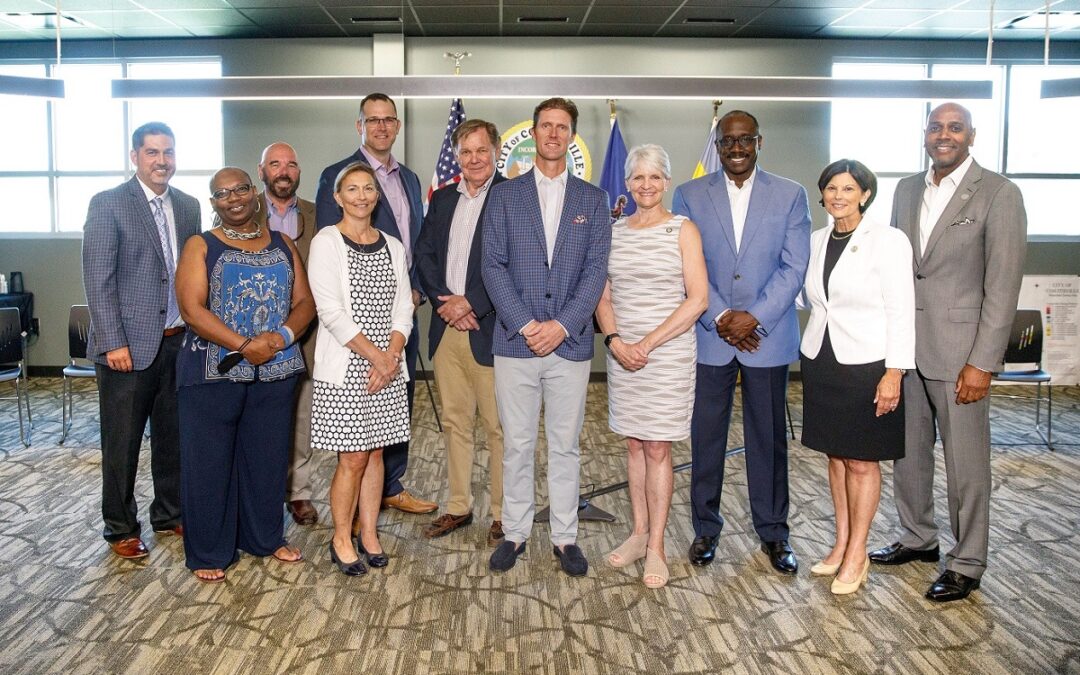
In highlighting the project’s economic impact, Comitta and Williams were joined by Chester County Commissioner’s Chair Marian Moskowitz; Coatesville City Manager James Logan; Coatesville City Council President Linda Lavender-Norris; Coatesville City Councilman Ed Simpson; Crosby Wood, Project Manager and Managing Partner IDG Development; Sonia Huntzinger, Executive Director of the Coatesville 2nd Century Alliance; and Michael Grigalonis, Chief Operating Officer and Executive Vice President of the Chester County Economic Development Council.
“This is a major foundational step that will add a lot of momentum to Coatesville’s economic growth and that will repurpose an area in the heart of the city that holds historic importance,” Moskowitz said. “The state funding underpins the site work necessary for the National Sports and Events Center and all that is planned to go with it for the next phase.”
She also highlighted that, in addition to benefiting the city and the people of Coatesville, the project would attract tourism dollars to Chester County by bringing mainstream and high-profile sporting events.
The NSEC would house the first indoor velodrome on the East Coast, offering bicycle track racing, training and development for local, Olympic, and world-class caliber athletes. The 245,000-square-foot project includes, in part, a 2500-seat arena, 12,000 square feet of supportive retail space, 8,000 square feet for a sports medicine provider, and a 10,000-square-foot sports performance facility. A hotel conference center is also planned to be constructed adjacent to the NSEC facility.
The project is being developed by IDG Development, a Coatesville-based joint venture led by New Heritage Properties of Coatesville. IDG’s principals are Rick Mayer of Guilford, CT and Crosby Wood, Patrick Kinzeler and David Chauner of Chester County.
“The state grant funding and loan are critical for galvanizing this project, and we appreciate the collaborative ‘all-hands-on-deck’ efforts by the Coatesville community and leadership members from the City, County and State,” said Crosby Wood, Project Manager and Managing Partner of IDG Development.
Wood noted that the center would also offer opportunities for youth programs through a partnership with the Boys and Girls Club of Philadelphia.
“This grant is a major step in getting the wheels in motion for development of the National Sports and Events Center,” said David Chauner, Managing Partner IDG Development.
“The center will bring value to the City of Coatesville and the region by serving as a destination hub for exciting cycling events as well as family entertainment, community events, and youth development.”
Last year, Coatesville City Council approved the sale of the Flats, the city’s largest parcel. Previously home to the G.O. Carlson Steel Company plant, the Flats had been eyed for development for years.
City Councilman Ed Simpson, representing the First Ward where the site is located, personally thanked Wood and praised the development team and members of the Coatesville Redevelopment Authority for their determination in supporting the project.
“Persistence and perseverance and this team never giving up is the reason we’re here today making Coatesville a better place,” he said.
City Council President Linda Lavender-Norris credited the spirit of unity, cooperation, and collaboration that continues to guide the city’s revitalization vision, efforts, and focus.
“We are one. We work together,” she said. “I love that fact that everybody locks arms. This is the only way that we could be at this point in our journey and working together makes all the difference.”
July 25, 2022
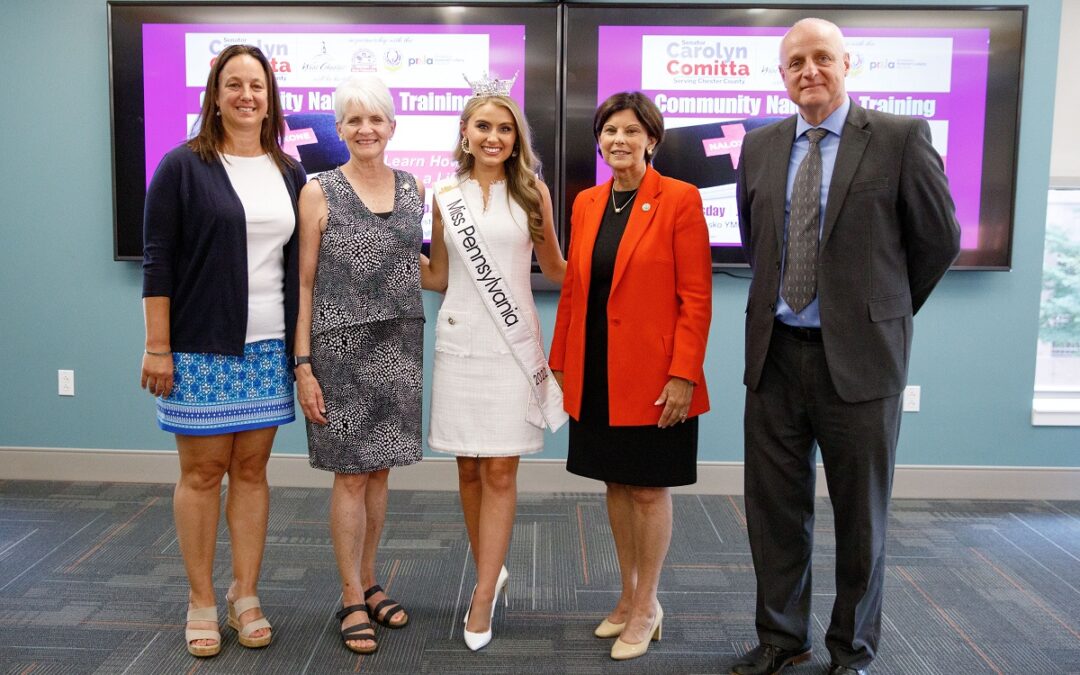
WEST CHESTER, PA (July 25, 2022) – State Senator Carolyn Comitta was recently joined by state and local officials and business leaders to discuss efforts to address the opioid epidemic and prevent overdose deaths with the use of naloxone.
Following the discussion, about 50 members of the public and employees in the restaurant and hospital industry attended a free training on identifying the signs of overdose and safely administering naloxone.
“The opioid epidemic is a community-wide problem that requires a community-wide solution,” Comitta said. “Naloxone is an important tool to help reverse the effects of an overdose, but for any tool to be effective, we need to know how to safely and properly use it. I am glad to be joined by a coalition of leaders to raise awareness, inform our community about naloxone, and ensure we have the tools necessary to save lives.”

Watch the Press Conference.
Naloxone is a medication approved by the U.S. Food & Drug Administration (FDA) to rapidly reverse an opioid overdose by quickly restoring breathing to a person if their breathing has slowed or stopped because of an opioid overdose. Naloxone can be administered by individuals with or without medical training to help reduce opioid overdose deaths.
The event was supported by the Pennsylvania Department of Drug and Alcohol Programs, Chester County Department of Drug and Alcohol Services, the Pennsylvania Restaurant and Lodging Association (PRLA), the West Chester Business Improvement District, and Good Fellowship Ambulance and EMS Training Institute.
“As we work to combat the overdose epidemic crisis in the commonwealth, expanding access to naloxone in all regions of Pennsylvania remains a top priority of the Wolf Administration,” said Special Assistant to the DDAP Secretary, Steve Ross. “You never know when you may come across an individual suffering from an overdose. I applaud Senator Comitta for bringing this group together today to raise awareness about the importance of naloxone, and training folks on how to use the life-saving medication.”
Pennsylvanians can access naloxone by:
The event was supported by leaders in Pennsylvania’s restaurant and hospitality industry. In a study looking at substance use, the restaurant industry was the most at risk for illicit drug use with nearly 20% of food services workers reporting using illicit drugs.
Joining the event was recently crowned Miss Pennsylvania, Alysa Bainbridge, a strong advocate for recovery that is raising awareness about opioid use disorder across Pennsylvania.
“I believe the first step toward progress in fighting the opioid crisis is dismantling the stigma that surrounds it,” Bainbridge said. “That’s the work I’m dedicated to as Miss Pennsylvania, and hope to encourage others across the state to do, too. Getting Naloxone in the hands of the community and teaching people how to use it is an important step to end the stigma. It’s easy to believe there’s nothing we, as individuals, can do to solve a crisis as big as the opioid epidemic, but each one of us holds the power to save lives in our hands with this crucial tool.”
Individuals seeking treatment or substance use support for themselves or a loved one can call the toll-free PA Get Help Now helpline at 1-800-662-HELP (4357). The free, confidential hotline is available 24 hours a day, 365 days a year and staffed by trained professionals.
Local support is available through the Chester County Department of Drug and Alcohol Service at 1-866-286-3767. All calls are confidential and support is available for those without insurance.
In addition, if your business or organization is interested in hosting a naloxone training event, contact Ethan Healey of Project Naloxone at ehealy@goodfellowship.org
###
July 19, 2022
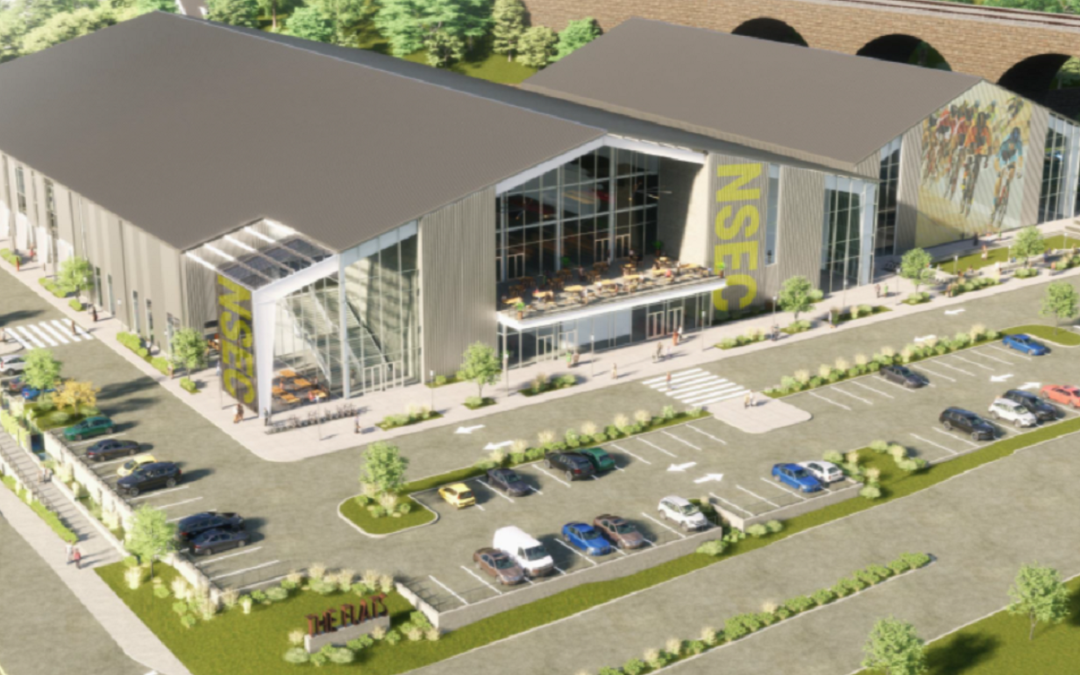
West Chester, Pa (July 19, 2022)– Plans to bring a multi-use sports facility, velodrome, and events center to the City of Coatesville will receive $3.6 million in state grant funding and a $5.4 million loan, state Senator Carolyn Comitta and state Rep. Dan Williams announced today.
The funds, approved this morning by the Commonwealth Financing Authority, will support IDG Development’s plans to develop a National Sports and Events Center (NSEC) at Coatesville’s gateway.
The $50-million project, which includes a 200,000 square foot multi-use facility, 12,000 square feet of supportive retail space, 8,000 square feet for a sports medicine provider, a 10,000 square foot sports performance facility, and a 150-room hotel, is slated for the approximately 25 acre site known as the Flats. The project is expected to create 348 jobs.
The funding package comes through the Pennsylvania Department of Community and Economic Development’s Business in Our Sites Program (BIOS), which provides support for the acquisition and development of key sites for future use by businesses, private developers, and others.
“This is a prime example of state and local partners working together with private enterprise for community-based economic revitalization that will bring hundreds of new jobs and significant investment to the City of Coatesville,” Comitta said. “The Flats site has been eyed for redevelopment for years. It’s an ideal location to build upon the city’s steel heritage with an economic boost that will both attract visitors and bring new opportunities to city residents.”
Comitta also thanked city officials, including City Manager James Logan, members of Coatesville City Council, and the Coatesville Redevelopment Authority, for their support of the project.
“I’m grateful when the Commonwealth provides resources like this to help advance Coatesville’s revitalization and will always fight hard to make funding like this a top priority,” Rep. Williams said. “We must move forward together by learning from experience and planning appropriately to make Coatesville the shining gem of Chester County it once was. This award provides the opportunity to get the solid start we need on this project and foster the progression that will make what is now only a plan into a reality.”
“First, I would like to acknowledge Senator Comitta, Rep. Williams, DCED and the CFA Board for their support and selection. We owe a great deal of thanks to the Senator and the state Rep. for their continued leadership and ability to see our vision for the city’s revitalization,” Coatesville City Manager James Logan said. “This is one step toward several more steps that will move the IDG Development group closer to Phase I of their proposed National Sports & Entertainment Center and Hotel project located on the Flats. The announcement of the BIOS award signals the commitment to breathe new life into the City of Coatesville with smart economic development projects that will impact the entire city, business landscape and residents.”
Last year, Coatesville City Council approved the sale of the Flats, the city’s largest parcel, to IDG Development, a Coatesville-based joint venture led by New Heritage Properties of Coatesville. IDG’s principals are Rick Mayer of Guilford, CT and Crosby Wood, Patrick Kinzeler and David Chauner of Chester County.
“Our entire development team is incredibly grateful to our partners at the state for recognizing the importance of this project and the economic impact it will have not just on the City of Coatesville but on the entire region. This funding for the land development will underpin the entire project,” said Wood.
The NSEC would house the first indoor velodrome on the East Coast, offering bicycle track racing for local, Olympic, and world-class caliber athletes. Developers and city officials expect the project, which has close proximity to the new train station currently under construction, to provide a significant economic boost to the city’s ongoing downtown revitalization.
State funding will be used to develop two pad-ready sites through acquisition, infrastructure/site preparation, construction, engineering, landscaping, curbs and sidewalk installation, and administrative costs.
The $5.4 million loan carries an interest rate of 3 percent and a 20-year term.

July 14, 2022
WEST CHESTER, PA (July 14, 2022) – State Senator Carolyn Comitta announced today that nearly $980,000 has been awarded to upgrade and improve traffic signals at five intersections on Valley Forge Road in Tredyffrin Township.
“This investment in our infrastructure will help improve the safety and efficiency of our roadways,” Comitta said. “I strongly support this and other investments that make Tredyffrin and all of Chester County a safer community for drivers and pedestrians.”
The funding was made possible through the Pennsylvania Department of Transportation’s Green Light-Go grant program. This fund provides reimbursements to municipalities for efficiency and operational updates to existing traffic signals.
“After years of studying and planning for improvements along the Valley Forge Road corridor, we are excited to finally have the funding in place to upgrade the signal infrastructure to make it safer for both pedestrians and drivers,” said Tredyffrin Board of Supervisors Chair, Julie Gosse.
“Valley Forge Road is an important connector between homes, businesses, parks, and trails in the Township,” said Township Manager Bill Martin. “Receiving this funding will help us provide safer, more adequate pedestrian facilities for our community.”
Green Light-Go was made possible through Act 89 of 2013 and can be used for projects such as installing LED technology, signal retiming, developing special event plans, as well as upgrading traffic signals to the latest technologies.
###
July 5, 2022
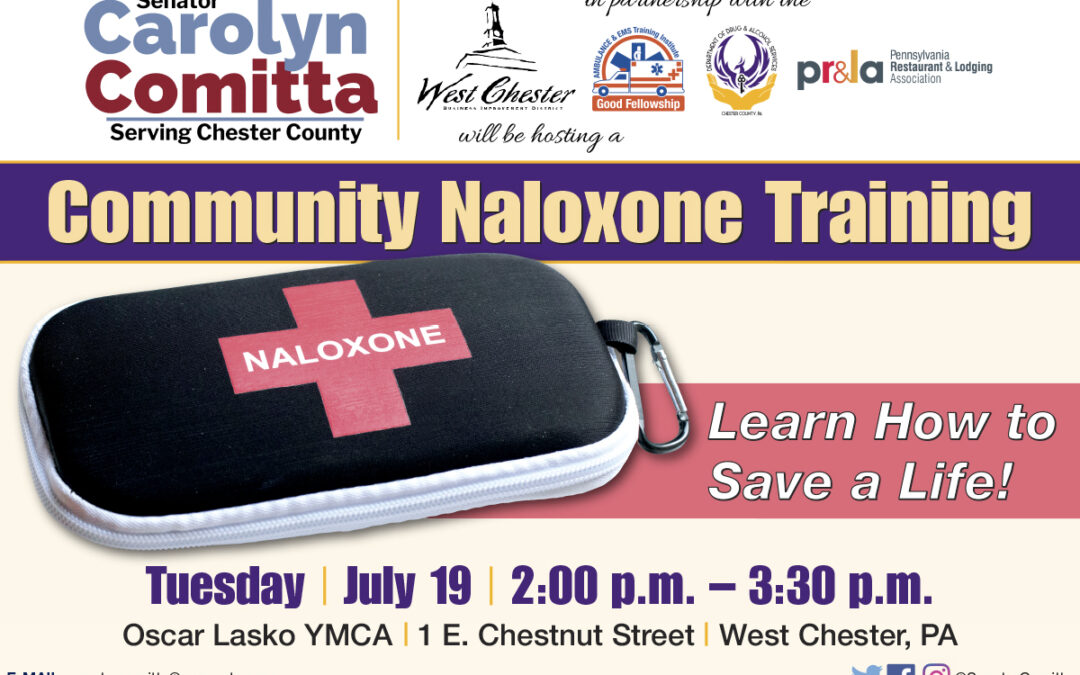
West Chester, Pa (July 5, 2022) – Individuals, businesses, community organizations, restaurant and hospitality employees, and others interested in learning how to properly administer Naloxone to those experiencing a drug overdose can attend a free Community Naloxone Training on Tuesday, July 19 at 2 p.m. at the Oscar Lasko YMCA in West Chester, state Senator Carolyn Comitta said.
The event is being supported by the Pennsylvania Department of Drug and Alcohol Programs (DDAP), the Chester County Department of Drug and Alcohol Services, the Pennsylvania Restaurant and Lodging Association (PRLA), the West Chester Business Improvement District, and Good Fellowship Ambulance and EMS Training Institute.
<<Register Now>>
Naloxone, also known by the brand name Narcan, is a medication that can rapidly reverse an overdose by blocking the effects of opioids.
“Too many of our friends and neighbors have sadly lost loved ones to opioid and drug addiction. We all have a role to play in working to prevent further tragedies in our community,” Comitta said. “Learning to identify the signs of overdose and how to safely and effectively administer Naloxone is an important step that can help save lives. I encourage all community members to join us for this informative event so that they can be prepared and empowered to act in case of an emergency.”
Since 2014, previous Secretary of Health Dr. Rachel Levine and current Physician General Dr. Denise Johnson, signed standing orders allowing members of the general public and first responders to obtain naloxone from their local pharmacy. More recently, the Pennsylvania Commission on Crime and Delinquency partnered with Prevention Point Pittsburgh and NEXT Distro to support a statewide mail-based naloxone program for individuals to request medication for personal use.
“Naloxone is truly lifesaving and one of our greatest assets in the management of the overdose crisis in Pennsylvania,” said DDAP Secretary Jen Smith. “You never know when you may come across someone who is suffering from an overdose and having naloxone with you could mean the difference between life or death. I encourage all Pennsylvanians to take advantage of this resource and events like this one that increase your knowledge of naloxone’s life-saving capability and comfort level in administering it.”
A recent study found that 1 out of 3 overdoses occur in the presence of a bystander. Readily available naloxone administered by a trained bystander can help save a life until emergency medical care can arrive.
“Overdoses can happen anywhere, and we want to make sure that the West Chester Community has the resources and training needed to deal with this disease,” said John O’Brien, Executive Director of the West Chester Business Improvement District.
“Last year in Chester County we lost more than 100 lives to accidental drug overdose in Chester County, a majority of which involved opioids,” said Vince Brown, Director of Chester County Department of Drug and Alcohol Services. “We must work together to provide comprehensive solutions to the opioid epidemic, naloxone access being one part. The medication saves lives. And once stabilized following an overdose, someone who is suffering from an Opioid Use Disorder has a chance to obtain treatment and recovery; and we know, treatment works and recovery is possible.”
“The hospitality industry, like many others, has been significantly impacted by the opioid epidemic. It’s vital that we spread the word about the resources available so our operators, employees, and communities are equipped with the tools and knowledge they need to address the challenges we’re facing,” said Ben Fileccia, PRLA’s Senior Director of Operations. “We appreciate Sen. Comitta’s and Secretary Smith’s efforts and outreach on this subject and for including us in this important conversation.”
Registration for the free training event is required and interested individuals can sign up by going to pasenatorcomitta.com/register or by calling Senator Comitta’s office at (610) 692-2112
Information on ways to obtain naloxone is available on DDAP’s website https://www.ddap.pa.gov/overdose/Pages/Naloxone_Reversal.aspx
If you or someone you know is struggling with opioid use disorder, the Chester County Drug and Alcohol Services confidential referral hotline is available at 1-866-286-3767.
###

June 28, 2022
Harrisburg, Pa (June 27, 2022) − Seven members of the Pennsylvania Senate Democratic Caucus circulated a memo on Friday afternoon to take steps to codify into state law the personal right to make decisions about health and reproduction, including access to safe and legal abortions.
The co-sponsorship memo was circulated by state Senators Katie Muth (D- Montgomery/Chester/Berks), Amanda Cappelletti (D-Montgomery/Delaware), Lindsey Williams (D-Allegheny), Maria Collett (D-Bucks/Montgomery), Judy Schwank (D-Berks), Christine Tartaglione (D-Philadelphia), and Carolyn Comitta (D-Chester).
“The Supreme Court decision handed down on Friday was not made in the interest of the people and shows that the highest court in our nation has a majority that is being run by harmful right wing special interests,” Muth said. “If we cannot trust the Court to protect the rights of Pennsylvanians, then it is up to us in the state legislature to defend our rights to make decisions about our own bodies. We cannot and we will never back down in the fight to protect our rights, our bodies, and our right to choice.”
The legislation comes on the heels of the devastating ruling handed down by a partisan Supreme Court on Friday that overturned the 1973 Roe v Wade ruling and eliminates the constitutional right to an abortion after almost 50 years.
“Codifying Roe will go a long way to protect the right to determine our own bodily autonomy here in the Commonwealth. Currently, the right to make decisions about our own bodies is under threat because extremists refuse to accept the reality that abortion is a necessary and vital health care procedure,” Cappelletti said. “We must do all that we can to protect and even expand access, and this legislation is the first step to doing so.”
In 1973, the U.S. Supreme Court ruled in Roe v. Wade that abortion rights being left to the individual states was a violation of the right to privacy and equal protection under the law. This ruling had provided American women the reproductive freedoms and personal health choices they deserve as equal citizens.
“Last week’s Supreme Court ruling took away the federal right for millions of Americans to seek life-saving reproductive healthcare. Abortion is only legal in Pennsylvania right now because the anti-choice bills run by Republicans in the legislature have been vetoed by the governor. The time is now to codify Roe into state law to ensure that reproductive healthcare remains safe and accessible for future generations,” Williams added. “Deciding if, when, and with whom to start or grow a family is a human right. I trust people to make the best decisions about their lives, families and their healthcare. This legislation is about our right to privacy and our right to bodily autonomy and I am proud to support it.”
In the dissenting opinion filed on Friday, Supreme Court Justice Stephen Breyer wrote that “withdrawing a woman’s right to choose whether to continue a pregnancy does not mean that no choice is being made. It means that a majority of today’s Court has wrenched this choice from women and given it to the States. To allow a State to exert control over one of “the most intimate and personal choices” a woman may make is not only to affect the course of her life, monumental as those effects might be.”
“After nearly 50 years of legal precedent, we are seeing nothing less than a rollback of our fundamental rights to bodily autonomy. This ruling could be devastating to Pennsylvanians, but it does not have to be,” Collett added. “Our legislature must codify Roe v. Wade and ensure safe, legal, and accessible reproductive care for everyone, regardless of their income level or other social barriers.”
According to April 2022 polling done by Franklin & Marshall College, which has regularly polled on the issue since 2009, only 16 percent of Pennsylvanians believe that abortion should be illegal in all circumstances.
“Without Roe, state legislatures across the country will be lining up to restrict, ban or protect abortion access. Given that only 30% of Pennsylvanians agree with the overturning of Roe, I believe this legislation will do what our constituents expect us to do – protect access to abortion,” Schwank said. “We can’t allow the people of this commonwealth’s personal health care decisions to be made by a vocal minority.”
The Senators all agree that it is up to the legislature to step up and take action to protect women’s freedom of choice.
“While abortion currently remains safe and legal in Pennsylvania, we must take steps to keep it that way. In overturning Roe v. Wade, the Supreme Court showed just how fragile protections for women’s health, women’s rights, and women’s choice are,” Comitta said. “Codifying these protections into law is a matter of representing the majority of Pennsylvania voters who believe abortion should be legal, standing up for all women, and saying no to an extremist agenda of government-mandated pregnancy.”
The Senators indicated that language is currently being drafted to codify the protections of the 1973 Roe v Wade ruling into Pennsylvania law and that it will be introduced soon.
“We just witnessed an unprecedented repeal of the rights of women in America by activist justices acting against the interest of the majority of Americans. Pennsylvania’s legislature needs to act now to ensure we protect the rights of women here in Pennsylvania,” Tartaglione said. “This legislation will ensure women retain the right to safe abortions and protects women from having the government interfere in the private decision-making process between her and her healthcare team.”
Click here to read the co-sponsorship memo that was circulated on Friday.
###

June 24, 2022
West Chester, Pa. (June 24, 2022) — State Senator Carolyn Comitta issued the following statement today in response to the U.S. Supreme Court’s decision to strike down Roe v. Wade, jeopardizing access to reproductive rights, vital women’s healthcare, and abortions for women across the nation:
“To say I am disappointed in this decision would be a tremendous understatement. This ruling from the Supreme Court is a blatant attack on the personal freedoms, reproductive rights, and access to healthcare of women across the nation.
Abortion is healthcare. Decisions women make about their own bodies should only be between them and their doctors.
Today’s ruling will stand as an organizing call to redouble our efforts to protect reproductive rights and access to vital women’s healthcare in Pennsylvania and across the U.S. And that includes electing leaders who are on the right side of reproductive justice, public opinion, and history.
We can march, peacefully protest, advocate, and lobby, but I also strongly encourage everyone to vote in every election to ensure our voices are heard when it comes to reproductive rights and abortion rights.”
June 23, 2022
West Chester, Pa. (June 23, 2022) — State Senator Carolyn Comitta issued the following statement today in response to the U.S. Supreme Court’s decision to strike down the state of New York’s concealed carry law:
“I’m extremely concerned and disappointed that at this moment, following a surge in deadly gun violence and multiple mass shootings, the U.S. Supreme Court would move to invalidate basic, commonsense efforts at the state level to better protect our residents and communities. Studies show that more firearms do not make our communities safer. Rather, they make them more dangerous and increase the likelihood of gun violence.
The fact that the court’s majority failed to consider the growing and practically ubiquitous impacts of gun violence on communities across this nation in its decision seems tone-deaf.
The idea that six justices would overrule the efforts of duly elected state legislators to enact reasonable licensing laws to safeguard their communities is confounding.
This week, Congress is considering what may become the first gun control measure to pass in decades. In Pennsylvania, the legislature has not passed a single gun control measure since 2019, when we enacted Act 79 to keep firearms out of the hands of domestic abusers. At that time, it represented the first new state law in more than a decade to deal directly with firearms.
I believe public opinion is on the side of meaningful, effective, and comprehensive gun reform. For example, according to a 2021 poll, 84 percent of voters, including 77 percent of Republicans, support requiring all gun purchasers to go through a background check.
I remain hopeful that we can and will come together to pass laws to keep our communities, our schools, and our children safe. However, when basic measures, like those safeguarding the streets of some of our largest cities, are struck down by the Supreme Court, it seems like we’re taking a big step back for every inch we move forward.”
June 23, 2022
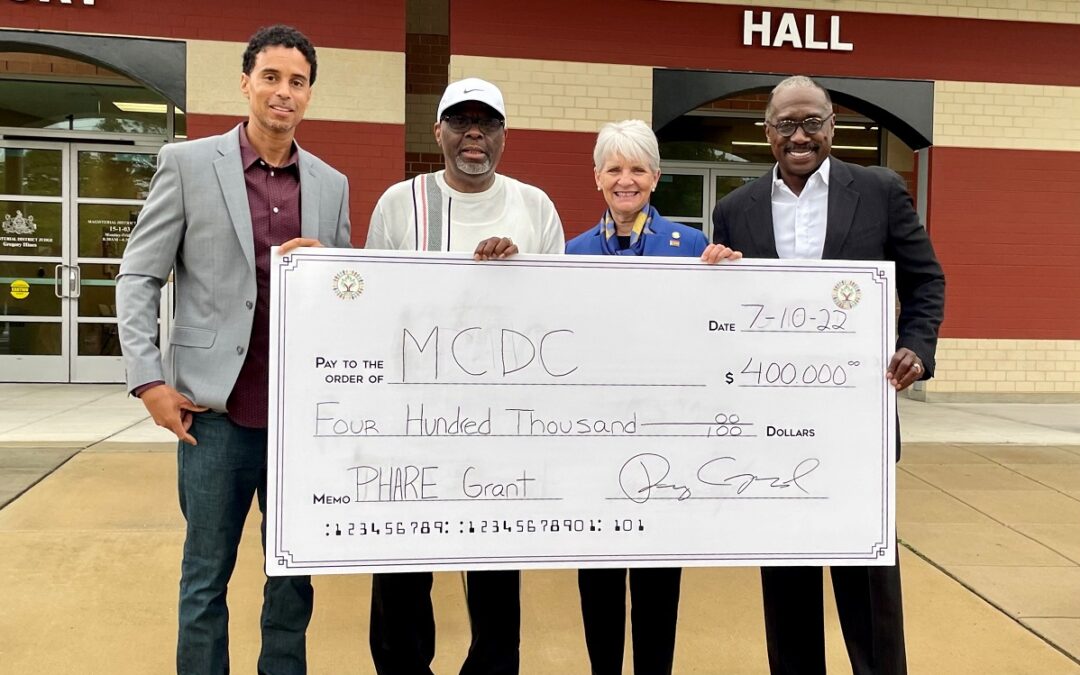
West Chester, Pa (June 23, 2022) – A program that assists residents in the Coatesville area with vital home repairs was awarded $400,000 in state funding, state Senator Carolyn Comitta and state Rep. Dan Williams announced.
The funds, awarded through the Pennsylvania Housing Affordability and Rehabilitation Enhancement (PHARE) Fund, come as part of more than $2.8 million awarded to ten organizations supporting housing assistance, affordability, and preventing housing insecurity in Chester County.
The funds for the Coatesville project will support the Movement Community Development Corp’s (MCDC) Coatesville Housing Rehabilitation Program, which aims to provide vital repair and rehabilitation services to vulnerable residents and property owners who may be at risk of losing the ability to live in their homes due to costly repairs.
“Safe, affordable housing is a basic necessity,” Comitta said. “MCDC’s Housing Rehabilitation Program is a community-driven effort to help ensure that community members in need have access to vital home repairs at no cost. As we look to the end of this pandemic, it’s important that we continue to work to ensure that every resident, every senior citizen, and every family has a safe, healthy living environment to call home.”
“MCDC’s Housing Rehabilitation Program is a community-first, results-driven local initiative that has helped many in our district,” Williams said. “It’s critical that we continue to advocate for funding like this in order to ensure residents have some sort of safety net when it comes to unexpected home repairs. I look forward to all the great work that will come as a result of this funding.”
“Our program has helped community members who are widows, who are on fixed incomes, and who are living at or below poverty level at no cost to them. It is providing necessary relief for those who can least afford it. To see the smiles and to hear the heartfelt gratitude that’s expressed by the recipients is reward enough for our efforts. It has given them renewed pride in their homes, and renewed faith in our representatives,” said Alphonso Newsuan, MCDC Founder and Executive Director. “MCDC cannot thank state Representative Dan K. Williams and state Senator Carolyn Comitta enough for all of their support.”
Now in its second year, MCDC has assisted more than 25 residents with home repairs that helped them maintain property value and stay in their homes. Last year, MCDC received $500,000 in PHARE funding.
Administered by the Pennsylvania Housing Finance Agency, PHARE is funded through the Realty Transfer Tax Fund and the Marcellus Shale Fund. All of the Chester County projects were funded through the Realty Transfer Tax Fund.
Other projects that received funding through PHARE are as follows:
$1,000,000 for Pennrose Property’s Liberty House Preservation Program. Located in Phoenxiville, Liberty House is a 50-unit supportive housing community that caters to many of Chester County’s most underserved populations, including those facing housing insecurity and/or who have mental health challenges or intellectual disabilities. The preservation project will provide numerous functional and aesthetic improvements to help ensure the development’s sustained performance over the next thirty years.
$375,000 for the Chester County Department of Community Development for Emergency’s Street Outreach Emergency Response Program, which aims to offer a continuum of services to our most vulnerable individuals in order to make housing insecurity rare, brief, and non-recurring.
$300,000 for the Housing Authority of Chester County’s Housing Locator Program. The program, which helps prevent housing insecurity by helping individuals and families move into permanent housing represents the only housing search assistance program of its kind in Chester County.
$200,000 to the Friends Association for Care and Protection of Children for its Women’s Diversionary Reentry Program (NIA House). NIA House is a diversionary reentry home for women who would otherwise experience housing insecurity upon release from incarceration. In addition to providing interim housing, NIA House serves as a reunification point for women and their children, a place to access multiple wrap-around services, and a safe and understanding environment to ground in community and heal.
$100,000 for the Friends Association for Care and Protection of Children for its Eviction Prevention Court & Homelessness Prevention Program. Now in its second year, the program is the first of its kind in Chester County to provide legal representation, financial support, and social service support to households facing eviction. Currently, it operates in three district courts with the goal of expanding throughout the entire county.
$150,000 for Human Services Inc. for its Safe Haven and Forensic House Community Residence programs, as well as the agency’s two Psychiatric Rehabilitation programs and Homeless Support programs.
$100,000 for the W.C. Atkinson Memorial Community Service Center for Housing Rehabilitation and Intensive Care Management. The Center, which is completing the rehabilitation of and upgrades to its five supportive homes and 22-bed emergency men’s shelter, assists individuals in identifying their root cause of housing insecurity, acquiring stable housing, and becoming self-sufficient.
$100,000 to Safe Harbor of Chester County for its Shelter and Case Management Program. A fully ADA-approved emergency shelter in West Chester, Safe Harbor is the only shelter available for single women and one of the largest for single men in Chester County, providing more than 65 percent of the total emergency shelter beds available for single adults. Safe Harbor provides residents with case management services to help them move toward self-sustainability and permanent housing placement, while also working with former residents to help ensure housing security.
$100,000 to Open Hearth Inc. for its Targeted Homelessness Resource Coordination (THRC) program is a community-wide effort to end housing insecurity in Chester County led by the THRC program coordinator. The coordinator leads case conferencing and resource coordination and works with all housing providers to prioritize individuals in need of permanent housing.
“Chester County is fortunate to have a network of advocates and organizations dedicated to providing all community members with safe and stable housing options,” Comitta said. “This funding maintains our commitment to providing affordable, quality housing for all residents and helps break the cycle of housing instability. I want to thank the government agencies, nonprofit organizations, and community members who make these programs possible.”
For more information on the PHARE program visit www.phfa.org

June 21, 2022
West Chester, Pa (June 21, 2022) – State Senator Carolyn Comitta announced today that Berwyn Fire Company will receive an additional $500,000 in state funding for a new, state-of-the-art firehouse, bringing the total state investment that she helped secure for the project to $2 million.
“I’m thrilled that we secured additional state funding to support Berwyn Fire Company,” Comitta said. “Providing strong emergency response services is a top priority for our communities. I hope the added funds will help bring the new fire station closer to reality so that our firefighters and emergency first responders have the equipment and resources they need to continue to do their jobs safely and effectively.”
The funding, awarded through the Pennsylvania Redevelopment Assistance Capital Program, will support the construction and development of a new, main fire station located on the company’s existing footprint on Bridge Avenue in Berwyn.
“This is phenomenal for us. Our current building dates back to 1929, so it is a major project. Along with other funding sources and municipal funding, this gets us that much closer to having it fully funded,” said Eamon C. Brazunas, Assistant Chief of Berwyn Fire Company. “We appreciate the Senator’s support in making the project a priority. Bringing these taxpayer dollars back to the Tredyffrin area is a win for the community.”
The new station will replace the more than 90-year-old existing structure to allow firefighters and company personnel to respond faster and more safely to fire and EMS emergencies in the growing region for decades to come.
The new firehouse will feature four apparatus bays, as well as four private bedrooms, four private bathrooms, a common bedroom, and a laundry room. In addition, it will have a kitchen, fitness room, office space, radio room, emergency management coordination room, and additional storage space. It will also have clearly defined cold, warm, and hot zones to reduce carcinogen exposure.
Berwyn Fire Company is currently in the midst of a capital campaign to raise funding for the new, main fire station in Berwyn, as well as a new permanent sub-station in Tredyffrin.
Founded in 1894 the Berwyn Fire Company is a non-profit organization that provides fire suppression, rescue, EMS, and fire prevention services for the people who live, work, and travel through Tredyffrin and Easttown Townships. Its combined 70 volunteers, 10 full-time employees, and 28 part-time employees respond to more than 2,150 ambulance calls and 900 fire calls annually. In addition to emergency calls, its emergency first responders spend approximately 1,000 hours per year training to prepare for scenarios when every second counts.
The Redevelopment Assistance Capital Program is a Commonwealth reimbursement grant program administered by the Office of the Budget for the acquisition and construction of regional economic, cultural, civic, recreational, and historical improvement projects. RACP projects are authorized in the state budget, have a regional or multi-jurisdictional impact, and generate substantial increases or maintain current levels of employment, tax revenues, or other measures of economic activity.
For more information, visit www.berwynfireco.org
###
June 16, 2022
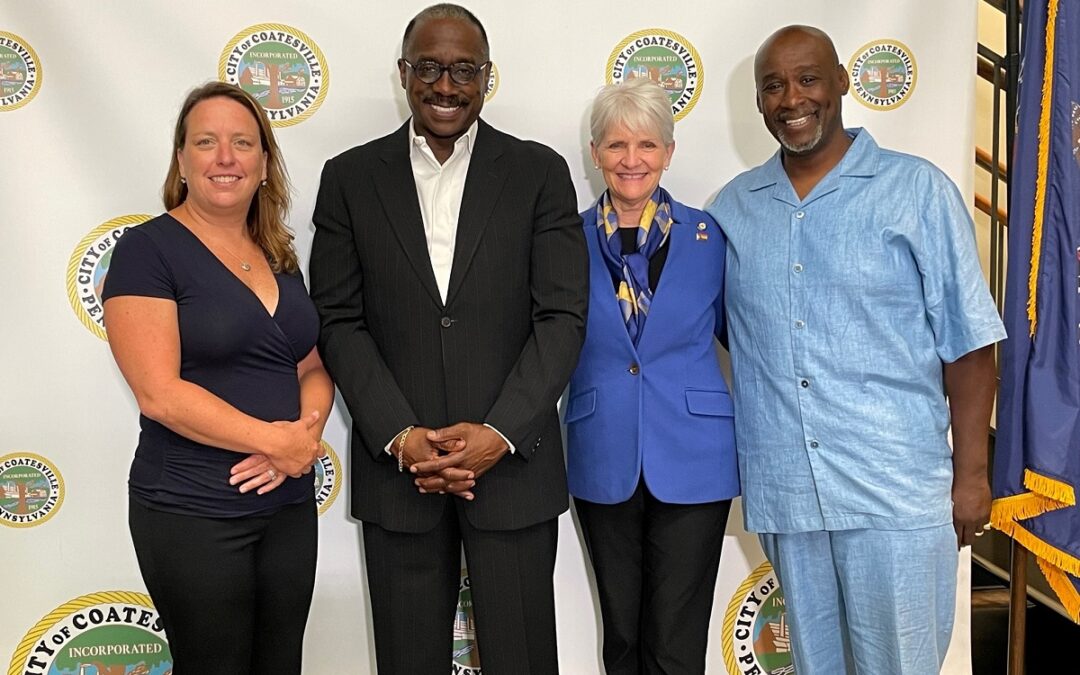
Today, state Senator Carolyn Comitta and state Representative Dan Williams were joined by Pennsylvania Department of Human Services Acting Secretary Meg Snead was joined by at Coatesville City Hall to call on Pennsylvania’s Republican-led General Assembly to finally act to support Pennsylvanians by passing legislation for the American Rescue Plan Act (ARPA)-funded $500 million PA Opportunity Program, which would send $2,000 checks to Pennsylvanians.
“We are all eager to put COVID-19 behind us, but the fact is many Pennsylvania families are still recovering from the economic fallout of the pandemic and rising consumer costs,” said Senator Comitta. “The Pa Opportunity Program puts relief where it belongs – in the pockets of Pennsylvanians who need it the most. This one-time payment can make a big difference for families struggling to pay for necessities like utilities, groceries, childcare, or gas.”
“The cost of everything from gas to groceries is a little higher right now than it was just a few weeks ago and for Pennsylvanians living paycheck to paycheck even a small increase in expenses can mean painful decisions like paying for food or rent,” said Acting Secretary Snead. “In the Department of Human Services, I see the disadvantages in communities across Pennsylvania and these $2,000 checks would make a great impact as prices around us soar.”
In February, Gov. Wolf unveiled a $1.7 billion proposal for Pennsylvania’s $2 billion in federal ARPA dollars. While Democratic leaders in the Senate and House have introduced legislation, Senate Bill 1204 and House Bill 2531, to support Gov. Wolf’s PA Opportunity Program, Pennsylvania’s Republican-led General Assembly have been slow to act on committing the federal funding or introduce a plan for the dollars. With continued inaction by the legislature, the money will be sent back to the federal government by December 31, 2024.
“Pennsylvanians shouldn’t have to wait any longer,” said Snead. “Let’s get this money into the hands of our neighbors who need it the most.”
In Gov. Wolf’s proposed PA Opportunity Program, $500 million in ARPA dollars would provide direct payments of up to $2,000 for Pennsylvania households with an income of $80,000 or less. The program aims to help families still recovering economically from the COVID-19 pandemic or support them with covering pandemic-related costs and managing the current, every day increasing cost of living.
“Pennsylvanians are feeling the pinch of rising prices on everything from gas to groceries,” said Rep. Williams. “While we still need to address the corporate greed and price gouging occurring, we’re seeing far too much of, our friends and neighbors need assistance right now. With a record state surplus this year and American Relief Plan funds that haven’t been used, let’s not delay and put this money to work for everyday Pennsylvanians. The Pennsylvania Opportunity Program would provide relief payments to help working families address their greatest needs.”