November 15, 2022
West Chester, Pa (November 15, 2022) – The Coatesville 2nd Century Alliance was awarded $80,000 in state funding to support Coatesville’s ongoing community revitalization, state Senator Carolyn Comitta and state Rep. Dan Williams said.
The funding comes through the Pennsylvania Department of Community and Economic Development’s Neighborhood Assistance Program (NAP), which promotes community participation and collaboration among nonprofit, business, and residential projects in distressed areas or low-income neighborhoods.
“Successful revitalization calls for cooperation and collaboration among community members, businesses, and organizations. As work on the new Coatesville train station continues and more projects are on the horizon, investments like this help support and strengthen the city’s downtown business district,” Comitta said. “I want to thank the 2nd Century Alliance for its ongoing work in the team effort that is driving Coatesville to success and growth.”
“This funding will help continue the hard work we and members of the community are doing to revitalize Coatesville. By improving opportunity and quality-of-life, we can go a long way to building Coatesville back better than before,” Williams said.
NAP projects are designed to improve access to job and economic opportunities, quality education, affordable housing, quality-of-life amenities, and other key factors in building healthy communities.
The program has five main components: The Neighborhood Assistance Program (NAP), Special Program Priorities (SPP), the Neighborhood Partnership Program (NPP), Charitable Food Program (CFP), and the Enterprise Zone Program (EZP). The funding for Coatesville comes through the Neighborhood Partnership Program.
“The NPP tax credit program is a critical source of funding for our downtown initiatives. We are grateful to Senator Comitta and our private sector donors, Knox Equipment Rental and Bob and Jennifer McNeil, our partners in this program who recognize the vital importance of a sustained, strategic approach to revitalizing Coatesville’s commercial district,” said Sonia Huntzinger, Executive Director of the 2nd Century Alliance.
In Coatesville, the funds will support the fifth year of the 2nd Century Alliance’s downtown revitalization plan, focusing on the retention, celebration, and promotion of the existing business base. Specifically, the alliance plans to utilize the funds to support:
- Façade improvements to enhance the existing building stock and entice new businesses to the district.
- Downtown small businesses growth by providing financial assistance to help new businesses launch or existing businesses reach the next level.
- The “Made in Coatesville” Small Business Incubator, which provides a cost-effective, physical location where entrepreneurs can sell and market their goods and services. This initiative aims to provide businesses with the necessary tools that will give them the greatest chance for growth, success, and adding jobs to the community.
“Pennsylvania’s communities are the foundation of our economic success,” said Gov. Wolf. “The Neighborhood Assistance Program encourages businesses to make impactful investments in worthy projects across the commonwealth, helping to improve the lives of Pennsylvanians. The rewards we can provide through tax credits in this important program advance and improve communities and ensure Pennsylvania remains the best place to live, work, and play.”
The funding for the Coatesville 2nd Century Alliance comes as part of $36 million in total NAP investments awarded to 220 community revitalization projects across the Commonwealth. More than one-quarter (56) of the projects that received NAP funding were in southeastern Pennsylvania.
NAP encourages private sector investment into projects that will help improve distressed communities by providing tax credits to businesses that donate capital to support projects that address neighborhood and community problems. NAP can be used for projects in categories including affordable housing, community services, crime prevention, education, job training, food access, blight, special population issues, veteran’s initiatives, and long-term community revitalization.
###

November 15, 2022
West Chester Pa (November 14, 2022) – The Friends Association will receive $50,000 in state funding to support important renovations and upgrades to its emergency shelter thanks to the work of state Senator Carolyn Comitta.
“For 200 years, the Friends Association has been helping our neighbors build stability, financial independence, and resilience,” Comitta, who serves on the Senate Health and Human Services Committee, said. “With this investment, we continue to work to ensure that everyone – every individual, family, and child – has a safe, healthy place to call home and the opportunities that come with it.”
The funds will support critical plumbing repairs at the nonprofit organization’s Family Center, which provides emergency housing for families in six apartment units. The updates will help ensure that families have access to a trauma-informed care environment within each unit.
“We are incredibly grateful to Senator Comitta for this generous funding and her ongoing support and advocacy for Friends Association and the families we serve,” said Jennifer Lopez, CEO of the Friends Association. “This funding comes at a perfect time. For more than a decade the beloved Family center has provided more than 118,000 nights of shelter for families experiencing the trauma of homelessness. The monumental effort to restore the aging building will ensure it continues to serve families with dignity for decades to come.”
Comitta announced the funding at the dedication of a mural on the Friends Association’s building on West Chestnut Street in West Chester. The mural, painted by West Chester University sophomore Noah Burns, depicts the organization’s values and service to the community on its 200th anniversary.
In addition to providing emergency housing, the Friends Association offers a number of services to help prevent housing insecurity, assist people in recovery, address systemic racism and inequity, promote community health and wellness, and empower families and individuals with the skills they need to overcome adversity.
For more information about the Friends Association, visit www.friendsassoc.org
###

November 14, 2022
As a result of the legislative redistricting process, new state
Senate and
House Districts officially take effect December 1, 2022.
For the 19th Senatorial District, the new maps mean the following municipalities will be:
Added:
- East Goshen
- Easttown
- West Goshen
- Willistown
- Newlin
Removed:
- Atglen
- Avondale
- Charlestown
- East Whiteland
- Franklin
- London Britain
- London Grove
- New Garden
- Parkesburg
- Phoenixville
- Sadsbury
- Schuylkill
- West Grove
- West Pikeland
- West Sadsbury
We look forward to again serving East and West Goshen, which Senator Comitta previously represented as state representative for the 156th District, and we’re excited to connect with communities in Easttown, Willistown, and Newlin.
To those constituents and municipalities who will have new representation under the new maps, we have thoroughly enjoyed getting to know you and working with you. Please also know that our office is working with fellow state lawmakers to help ensure a seamless transition of services. As always, feel free to contact us with any questions or concerns that may arise.
November 10, 2022
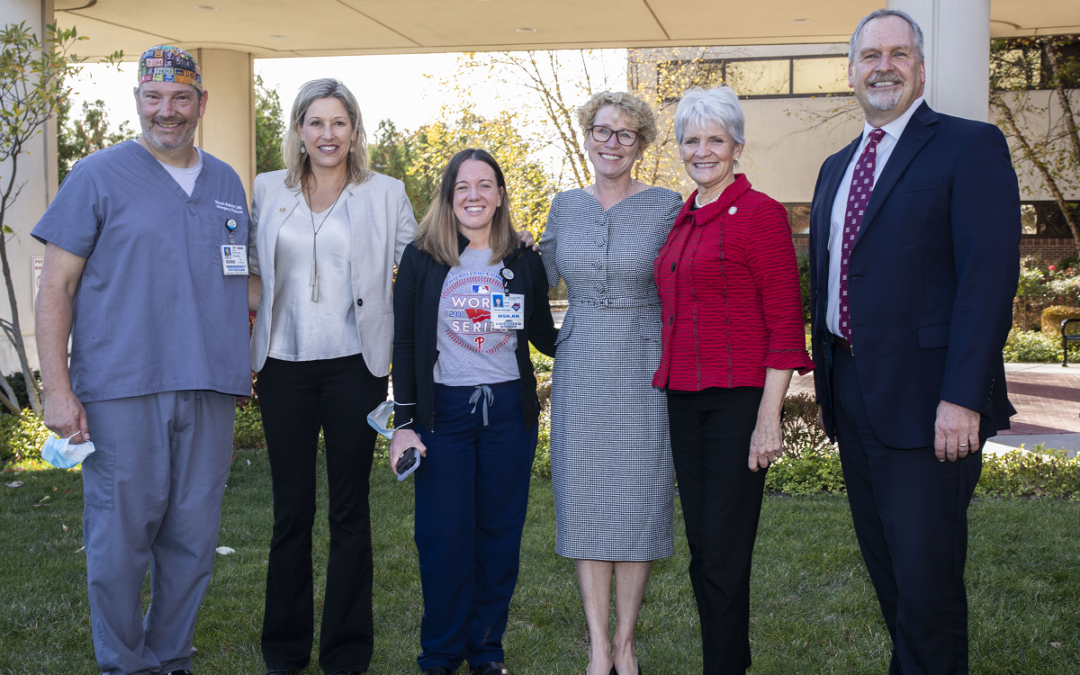
Paoli, Pa (November 10, 2022) – Paoli Hospital, part of Main Line Health, is planning to expand its emergency department thanks, in part, to nearly $2.1 million in federal grant funding secured by state Senator Carolyn Comitta, state Rep. Melissa Shusterman, and state Rep. Kristine Howard.
Comitta and Shusterman announced the $2,087,500 in funding, which comes through the federal American Rescue Plan Act, at a press conference alongside U.S. Rep. Chrissy Houlahan, who voted for the ARPA in Congress, and Jim Paradis, President of Paoli Hospital.
“We are receiving this grant at a critical time in our health system as we are facing capacity challenges, local closures of area hospitals and longer hospital stays,” said Paradis. “This important funding will support our infrastructure expansion plans, beginning in early 2023, that include the addition of eight new treatment rooms to our existing 28-room emergency department. We are fortunate that by securing this grant we will continue to make vital investments in our hospital that will lead to better health outcomes for our patients and our community.”
Paoli Hospital continues to provide vital services to residents in the region. Both the COVID-19 pandemic and an influx of patients resulting from Tower Health’s closures of Brandywine and Jennersville hospitals, in addition to other factors, have continued to drive up patient volume.
“Investments in our healthcare infrastructure benefit the entire community and add to the strong and healthy quality of life throughout the region. Our towns and neighborhoods continue to grow and these funds will help ensure Paoli Hospital continues to grow with it,” Comitta, who serves on the Senate Health and Human Resources said. “I want to thank all of our partners who have been part of this team effort.”
“Paoli Hospital has been operating at over 100 percent capacity to meet the needs of our community,” Shusterman said. “Staff members have shown tremendous ingenuity and made great sacrifices to ensure our loved ones get the care they need. This much-needed funding will help alleviate some of that strain and I am happy to have collaborated with my colleagues to ensure Paoli hospital gets the resources it needs.”
“As the region’s only trauma center, Paoli Hospital provides an incredibly important service. I am thrilled to see this additional funding,” said Howard.
The state legislators also thanked Houlahan for supporting the ARPA in Congress, which provided crucial funding that made this and many other important community investments possible.
Construction on the Paoli Hospital Emergency Department expansion project is expected to begin in the new year.
Comitta also noted that she and her legislative colleagues are working to secure funds to support the reopening of both Jennersville and Brandywine Hospitals. Jennersville was acquired by ChristianaCare earlier this year. Stakeholders and community partners continue to work to facilitate discussions in finding a new owner/operator for Brandywine Hospital.
November 9, 2022
West Chester, Pa (November 9, 2022) – Pennsylvania drivers and motorists who want to show their support for protecting pollinators can now do so – on their license plates.
Recently, the legislature unanimously approved and the governor signed into law Act 112 of 2022, creating the Pollinator Conservation Registration Plate and the Pollinator Habitat Program Fund.
Based on legislation introduced by state Senator Carolyn Comitta and state Representative Kristine Howard, sales of the specialty license plates will support a new program to support the migration of pollinators by creating native grass and perennial wildflower-filled habitats along our state highways.
Apply Now!
“Pollinator decline and the loss of pollinator habitat is a major concern,” Comitta, who serves as minority chair of the Senate Environmental Resources and Energy Committee, said. “This a simple way motorists can help raise awareness and support for the need to protect these tiny creatures – creatures that have a mighty impact.”
According to the Pollinator Partnership, birds, bats, bees, butterflies, beetles, and other small animals that pollinate plants are responsible for bringing us one out of every three bites of food. Pollinators also provide pollination services to over 180,000 different plant species and more than 1200 crops. And pollinators add $217 billion dollars to the global economy and honeybees alone are responsible for billions of dollars in agricultural productivity in the United States.
Due to a variety of factors including urbanization, pesticide use, climate change, and the spread of emergent predators, pollinator populations have been in a steady decline. Beekeepers in the United States lose about 30% of their colonies each year.
“Protecting our pollinators is imperative,” Howard said. “By creating roadside native grass and perennial wildflower-filled habitats along our state highways, we will not only reduce maintenance costs, but beautify our state and protect our crops.”
The Pennsylvania Pollinator Conservation License Plates are $38 in addition to the regular registration fee. $25 of the fee is dedicated to the habitat program fund.
“Pollinators are vital to environmental health, public health, and our very way of life,” Comitta said. “By cultivating new pollinator habitats, we are not only supporting these animals, but our food supply, our agriculture industry, and our economy as a whole.”

November 4, 2022
West Chester, Pa (November 3, 2022) – State Senator Carolyn Comitta was joined by state and local officials this week to celebrate the groundbreaking for the Hankin Group’s new Phoenixville Senior Housing project.
The Exton developer’s Phoenixville Senior Housing project will repurpose the former Borough maintenance property into a state-of-the-art 50-unit affordable senior housing community with a focus on healthy lifestyles. In support of the project, the Borough of Phoenixville has donated the property located at the intersection of Buchanan and Morgan Streets.
“Phoenixville Senior Housing began with a vision from the Borough to find the best way to meet the housing needs of their community,” said Bob Hankin, CEO of Hankin Group, “The architecture of the building has been designed to knit into the fabric of historic Phoenixville and energize the surrounding neighborhoods by incorporating pedestrian-friendly environments and beautiful streetscapes. The inside is designed to Enterprise Green Communities standards. This will ensure high-efficiency systems and low utility expenses.”
The project was made possible, in part, by nearly $1.2 million in Low Income Housing Tax Credits reserved through the Pennsylvania Housing Finance Agency (PHFA).
“Our senior citizens helped build the towns and boroughs that we call home today. So, it’s only right they have a place of their own in the heart of Phoenixville and get to share in its success as a thriving destination and a safe, healthy, walkable community,” said state Senator Carolyn Comitta. “This project has been a long time coming, but teamwork and persistence paid off. I want to thank all our partners who worked together to get us to this point, and I look forward to the building’s opening.”
Phoenixville, a historic river town with a long-time resident base, has experienced an urban rebound like few other towns in the Philadelphia area. The Borough’s success has produced unintended consequences of growth. The housing demand in Phoenixville is high and affordable housing options are dwindling. In 2017, the Borough created an Affordable Housing Task Force to address limited affordable housing options in the Phoenixville area.
“The Phoenixville Borough is so grateful to our extraordinary partners for helping to bring this vision of affordable senior housing into reality,” said Peter Urscheler, Mayor of Phoenixville, “This project is more than a building, it’s a reflection of our very best selves; a community diverse in people and in types of housing units, a place that reflects Phoenixville’s innermost desire to be inclusive and supportive of all our residents, especially our seniors.”
“With rising housing prices, and continued pressure of redevelopment, Phoenixville Borough Council sought to find solutions that would allow our seniors to affordably stay in the borough, within their community, amongst their family and neighbors, in vibrant walkable downtown, said Jonathan Ewald, Borough Council President, “Partnering with the Hankin Group and with the support from Chester County and PHFA, this project represents the best long-term use, an overall community benefit, and a true public, private partnership.”
To tackle the growing issue of housing costs outpacing income, the Phoenixville Senior Housing project was created with full support and effort made by multiple organizations. Phoenixville Senior Housing is provided in a joint venture by Hankin Group, PA Housing Finance Agency, Borough of Phoenixville, Chester County Department of Community Development, Key Bank and Phoenixville Federal Bank. KeyBank’s Community Development Lending and Investment (CDLI) group helped finance the construction of the Phoenixville Senior Housing with a Low Income Housing Tax Credit Investment (LIHTC).
“A range of housing options available across all incomes is a cornerstone for a healthy community, and developments like Phoenixville Senior Housing are crucial,” said Chester County Commissioners’ Chair Marian Moskowitz.
Phoenixville Senior Housing is designed to encourage interaction between residents and the wider community through its physical design and community partnerships. The development will include accessible units and access to group activity, community, and fitness rooms. A supportive services office will monitor and counsel the tenants on a variety of healthy lifestyle topics. Hankin Group has entered MOUs with Health Care Access, the Clinic and Phoenixville Hospital to administer healthcare-related services to increase the knowledge, self-care, and awareness of the mental, emotional, physical, social, and spiritual aspects of health in the residents through healthy eating, exercise, disease management, referrals to specialized health resources, and defined healthcare services plans.
November 3, 2022
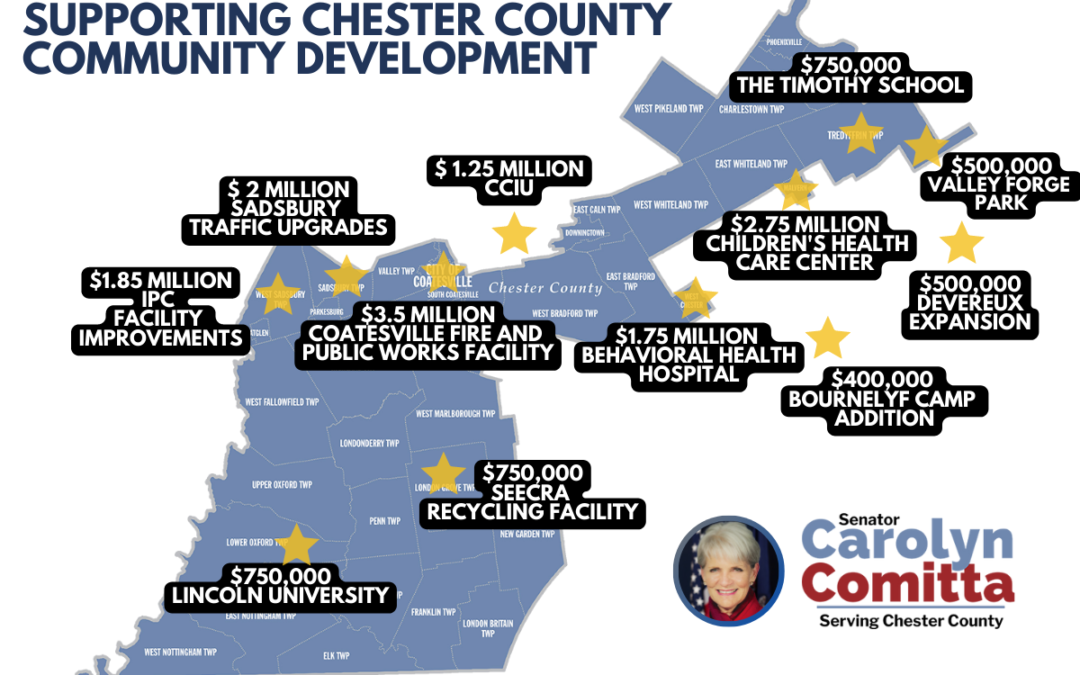
West Chester, Pa (November 3, 2022) – Twelve organizations throughout Chester County will receive $16.75 million in total state funding for investments in community development, economic growth, education, public health and safety, behavioral health, transportation, recreation and tourism, historic preservation, and public works.
“These investments offer more opportunities for residents and families throughout Chester County – opportunities for education in the trades, for young people with disabilities, and for students at one our nation’s oldest historically black universities, opportunities for healthcare for children and people with behavioral health challenges, opportunities for new jobs and careers, and opportunities to enhance the emergency response services we all rely on to stay safe,” Comitta said. “These investments touch nearly every corner of my district, and I hope they will add to the strong quality of life that continues to define our region.”
The grant funds, awarded through the Redevelopment Assistance Capital Program, are as follows:
- $1.25 million for the Chester County Intermediate Unit to support renovations to its Learning Center vocational shops, including Automobile Services, Carpentry, Cosmetology, Culinary Arts, Horticulture, HVAC, and other trades. The project would allow the CCIU to expand the programs to offer adult education and training programs to the surrounding Coatesville community that has a significant need for job creation, employee training, and employment retention. Renovations include replacing windows, improving doors and security and upgrading lighting and HVAC systems.
- $2 million for traffic improvements and site work at the Shoppes at Sadsbury. The project calls for the construction of a 5-lane connector road linking Route 30 with Route 10 to relieve traffic at the intersection of Route 30 and Route 10.
- $3.5 million for the City of Coatesville to build a new firehouse and public works facility. Coatesville’s existing Public Works building is more than 70 years old and in need of extensive and expensive repairs. Also, the city needs its own designated location for a central firehouse, as it currently rents space from two locations that are shared with other users. In addition to the demolition of the existing public works building and the construction of the new facility, the funding will support street improvements along City Hall Place and Kersey Street.
“We were thrilled to receive the news about the $3.5-million-dollar RACP award that will go towards the construction of a much-needed fire station and public works facility,” said Coatesville City Manager James Logan. “For more than 10 years, the Coatesville Fire Department has leased spaced from supporting emergency organizations to house its fire apparatus and supplies. We will now have the opportunity to take care of our own and give them space for training and protecting our residents to improve our fire and health safety services throughout the community. Although this is one of many steps in building our capital stack to fund the construction project, we are confident we can identify future grant opportunities to meet our objective.”
- $1.849 million for International Paper to remediate the roof at its corrugated packaging plant in Atglen. As part of the conversion to a container plant, the company will replace and repair the existing roof. The new plant, which is expected to bring approximately 150 new jobs to the area, is slated to be operational next year.
- $750,000 for Lincoln University’s new Agricultural Research and Commerce Complex, a state-of-the-art research, testing, and food processing complex. The project calls for the development of a 10,000 to 15,000-square-foot solar-powered R&D greenhouse adjacent to Lincoln’s Ivory Nelson Science Center, a 30,000-foot “clean” food plant with a warehouse and freeze-drying facility, and a 5-acre research farm for growing and testing high value crops (ranging from greens to industrial hemp to mushrooms for manufacturing).
- $750,000 for the Southeastern Chester County Refuse Authority for a Materials Recovery Facility. The facility will allow the landfill to process single-stream recycled materials on site, significantly reducing the cost of recycling and keeping the economic benefits in Pennsylvania. The MRF project is expected to create ten new full-time jobs in Chester County and become a model for other rural waste and recycling centers.
- $1.75 million for a new Behavioral Health Hospital on the Campus of Chester County Hospital. Haven Behavioral Healthcare will completely renovate an existing hospital building on Chester County Hospital’s campus to open an inpatient hospital with outpatient services. The hospital will help meet the behavioral health needs of an influx of patients resulting from the closure of Brandywine Hospital.
“Haven Behavioral Healthcare has been a pillar in the behavioral health community throughout eastern Pennsylvania for over a decade,” said CEO Kathy Gill. “We are beyond excited and grateful for the overwhelming support and opportunity to serve Chester County and the region. The RACP funds will not only provide world-class healthcare services for healing but will also bring about 100 new jobs to the community. We want to thank Senator Comitta and Representative Herrin for their support.”
- $400,000 for the Bournelyf Special Camp to construct a new, multi-purpose, ADA-accessible building. In addition, the camp will use the funds to replace the existing pool and renovate the pool house, to ensure that both are ADA-compliant and safe and accessible for campers. Located in Westtown, the Bournelyf Special Camp is a local non-profit organization committed to creating physically challenging and empowering opportunities for young people with disabilities.
Richard Curth, Executive Director of the Bournelyf Special Camp, said the organization’s executive board was delighted to receive the official notice that the camp was among those nonprofits from across the state that were approved for a grant. “A $400,000 grant for our new program facility is a game-changer. Our campers for generations to come will benefit from this funding. We are extremely grateful,” he said.
- $500,000 for Devereux Children’s Services to construct additional classroom and residential space at its therapeutic day and residential Mapleton School in Williston. The project calls for renovating a wing of its acute children’s behavioral healthcare center from semi-private to single rooms. It includes extensive renovations, such as demolition, drywall, windows, roofing, electrical, plumbing, and HVAC.
- $2.75 million for Nemours Children’s Health to construct a new pediatric healthcare facility in the Malvern area that will provide a comprehensive suite of health and wellness offerings. The new 43,000-square-foot, two-story building planned for the Uptown Worthington complex will expand access to 22 specialties including behavioral health for which the need is critical. The new facility will serve patients and families in southeastern Pennsylvania and spur economic development by creating construction jobs, clinical and administrative positions, and additional employment opportunities.
“Nemours Children’s Health is committed to providing Pennsylvania families with access to high-quality pediatric care,” said Mark Mumford, Executive Vice President and Chief Executive of Nemours Children’s Health, Delaware Valley. “Thank you to Senator Carolyn T Comitta for your dedication to children’s health and for your partnership on this grant, which will allow Nemours Children’s to care for even more children.”
- $500,000 for the Friends of Valley Forge for the construction of an addition at the new Valley Forge Park Alliance Headquarters and Café located at the historic Maurice Stephens House. The project calls for design work, as well as rehabilitating an existing parking lot and installing sidewalks, electricity to the parking lot, signage and landscaping.
- $750,000 for the Timothy School to renovate and expand classroom space. The project calls for the addition of classroom and administrative office space, as well as the selective demolition and construction of the existing main education building. Located in Tredyffrin, the Timothy School is the oldest approved non-profit private school in Pennsylvania devoted exclusively to teaching students with autism.
“The Timothy School is thrilled to be named a grant recipient,” said Executive Director Sarah Greim. “The $750,000 grant award will enable us to begin moving forward with our building expansion project, which is greatly needed to provide an adequate and efficient learning space for our students with autism. We are grateful to Senator Comitta for her ongoing support of this important project and all our endeavors.”
The Redevelopment Assistance Capital Program is a state grant program administered by the Office of the Budget for the acquisition and construction of regional economic, cultural, civic, recreational, and historical improvement projects.
To receive funding, projects must have a regional or multi-jurisdictional impact, and generate substantial increases or maintain current levels of employment, tax revenues, or other measures of economic activity.
###

October 19, 2022
West Chester, Pa (October 19, 2022) – Planning assistance is coming to Oxford Borough to build a more accessible, walkable, and bikeable community state Senator Carolyn Comitta announced today.
The borough was awarded $25,000 in funding through WalkWorks, a program managed by the Pennsylvania Department of Health and the Pennsylvania Downtown Center in partnership with the Department of Conservation and Natural Resources to equip more communities with safe and accessible walkways and develop community-level transportation plans.
“As Oxford borough continues to grow as a popular destination for families and businesses, it is important that we have an inter-connected and accessible system of transportation,” Comitta said. “This assistance will go a long way to improving access to essential services, support active recreation, and enhance the health and well-being of Oxford residents.”
With this funding, Oxford Borough will develop a comprehensive Action Transportation Plan. Community leaders will work over the next year with professional transportation and community planners to collect data, assess current conditions and aspirations, and incorporate public input to improve pedestrian, bicycle, and transit networks.
“It is important to us that the municipality be responsive to concerns about pedestrian safety, and that the Borough provide infrastructure to support non-vehicular modes of transportation,” Oxford Borough Manager Pauline Garcia-Allen said. “An Active Transportation Plan will provide the framework for how we prioritize, fund and execute projects and policies that enable and promote walkability, bikeability and ADA accessibility in Oxford.”
Oxford Borough was one of eight Pennsylvania municipalities to receive the award.
The grant recipients were selected from a competitive pool of high-quality applicants by a multidisciplinary review team that included representatives from DOH, the Pennsylvania Downtown Center, the Pennsylvania Department of Transportation (PennDOT) and their Local Technical Assistance Program, DCNR and the Department of Community and Economic Development.
“Pennsylvanians deserve safe transportation access no matter how they travel,” PennDOT Acting Deputy Secretary for Multimodal Transportation Andy Batson said. “This initiative recognizes and invests in the unbreakable link between community connectivity and our citizens’ health and mobility.”
For more information about WalkWorks visit www.health.pa.gov

October 18, 2022
Harrisburg, Pa (October 18, 2022) — State Senator Carolyn Comitta today released the following statement in response to repeated threats targeting Coatesville Area School District schools:
“I am deeply concerned by the series of threats targeting Coatesville schools. While all credible threats must be taken seriously, these are especially troubling given their repetitive nature coupled with recent reports of violence in the Coatesville community.
My office is regularly communicating with the school district and law enforcement. We are working to identify available state resources to support the community, hold those responsible accountable, and help ensure that schools stay open as safe, healthy places for young people to learn and grow.
Students, parents, teachers, and the entire Coatesville community deserve stability, safety, and peace of mind.”

October 6, 2022
West Chester, Pa (October 6, 2022) – Coatesville area senior citizens can apply for or renew their free SEPTA Senior Key Card at Coatesville City Hall on Friday November 4 from 10 a.m. to noon at a joint event offered by state Senator Carolyn Comitta and state Representative Dan Williams.
“Whether it’s going to the supermarket, the doctor’s office, or visiting family and friends, the SEPTA senior fare program is a great resource to help our older neighbors save money and get where they need to go,” Comitta said. “Representative Williams and I are offering this free event to help seniors apply for their cards quickly, conveniently, and efficiently.”
“With SEPTA’s expanding services into Coatesville, this is truly a great way for seniors to get around town and get to the places they need to get to. I hope that as many seniors as possible take advantage of this free program,” said Rep. Williams.
The SEPTA Senior Key card is available free of charge to all seniors aged 65 and older. With the card, seniors can ride all SEPTA buses, trolleys, subways, and regional rail lines for free within Pennsylvania. Trains to and from New Jersey and Delaware using the senior card are charged at half fare.
To apply, seniors must bring a form of identification that verifies age. This includes a driver’s license, photo identification card, birth certificate, passport, or Social Security statement of age.
For more information on the SEPTA Senior Key Card visit septa.org/senior or contact Senator Comitta’s office at (610) 692-2112 or Representative Williams’ office (484) 200-8256.
October 6, 2022
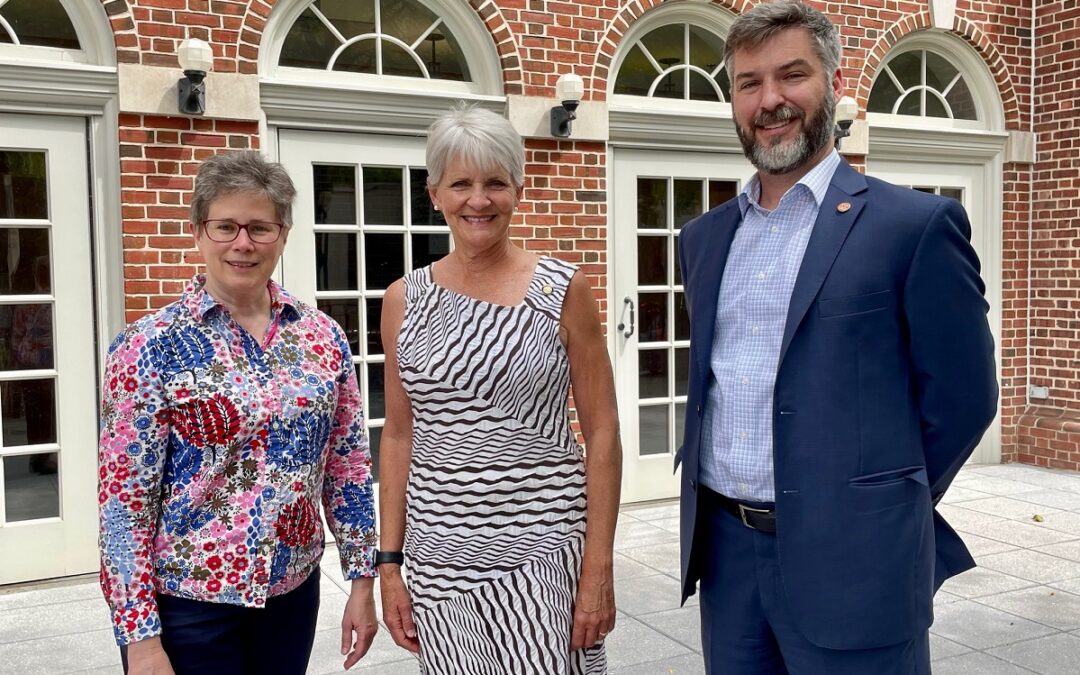
West Chester, Pa (October 6, 2022) – The Chester County History Center (CCHC) will be able to better protect its collections, archives, and historical artifacts from potential water damage thanks to the work of state Senator Carolyn Comitta.
Comitta recently secured $50,000 in state funding to replace the sump pumps located in both CCHC’s main building and its historical Horticultural Hall building. The buildings, which are both more than a century old, are situated over underground springs and face constant challenges in managing water flow.
Comitta said supporting upgrades to CCHC’s physical infrastructure benefits the entire community as the buildings themselves have historic value and serve as community assets and gathering places, in addition to housing our local and regional historic treasures.
“The Chester County History Center and Horticultural Hall are not only a hub for historical and cultural preservation in our county, but they’re also important historic landmarks in their own right. It’s important that we continue to strive to protect and preserve the buildings themselves and their contents for future generations to enjoy, learn from, and add to,” said Comitta, who also serves on the Pennsylvania Capitol Preservation Committee.
Founded by local citizens in 1893, the CCHC is currently home to extensive collections, including more than 500,000 manuscripts, 20,000 volumes, 300 years of public records, 80,000 images, and 80,000 artifacts.
CCHC comprises two historic and architecturally significant buildings – Horticultural Hall, built in 1848 and the site of the first Women’s Right to Vote conference in Pennsylvania, and the former YMCA building built in 1908.
“The work of Senator Comitta and her team have successfully preserved 300 years of our county and nation’s history. From our almost 200-year-old building to our handwritten letters by George Washington and Abraham Lincoln, this grant secures our shared history. We could not be more grateful for this clear dedication to our community,” said Conor Hepp, CCHC President.
The new, fully functional sump pumps not only better protect the integrity of the buildings and CCHC’s collections they also help prevent potential museum closures and disruptions to its busy exhibit schedule and educational programs due to the threat of flooding.

October 4, 2022
West Chester, Pa (October 4, 2022) – State Senator Carolyn Comitta reminded Pennsylvania nonprofit organizations that serve those with diverse memberships can apply now for up to $150,000 in state grant funding for important safety and security upgrades.
Applications are currently being accepted for the Nonprofit Security Grant Program through the Pennsylvania Commission on Crime and Delinquency. The program, funded with a $5 million state budget appropriation, is accepting applications until Monday, October 31, 2022, at 11:45 p.m.
“Our region is home to a strong interfaith community and we value our freedom to worship peacefully, safely, and without fear of threats, intimidation, and violence,” Comitta said. “These funds can help better protect our friends and neighbors who may be targeted by bigotry and hate.”
She also noted that last year five nonprofit organizations in her Chester County district, including two mosques and two synagogues, were awarded nearly $250,000 in state funding for important safety upgrades.
The Nonprofit Security Grant Program supports nonprofit organizations that principally serve individuals, groups or institutions that are included within a bias motivation category for single bias hate crime incidents as identified by the FBI’s Hate Crime Statistic Publication. Those hate crime incidents include race/ethnicity/ancestry; religion; sexual orientation; disability; gender; and gender identity.
Applications can be submitted online https://www.pccd.pa.gov/schoolsafety/Pages/Non-Profit-Security-Grant-Fund.aspx
Projects that are eligible for funding include:
- Planning, threat awareness, and response training.
- Equipment and technology, such as metal detectors, lighting, surveillance, communications systems, locksets, deadbolts, trauma kits, and antitheft devices.
- Specialty trained canines.
- Vulnerability and threat assessments.
- Other projects to enhance safety or security.
Grant awards range from a minimum of $5,000 to a maximum of $150,000. Non-state matching funds (fundraising dollars, federal or local government funds, etc.) are required for funding requests of over $25,000. PCCD will select awardees in consultation with the Governor’s Office of Homeland Security and the Pennsylvania State Police.
The program, now in its third year, was established by the legislature in Act 83 of 2019 in response to the 2018 attack on the Jewish community at the Tree of Life, New Light, and Dor Hadash congregations in Pittsburgh. Comitta, then a state representative, voted for legislation (House Bill 859) that established the program.
In addition, Comitta reminded potential applicants that organizations eligible for PCCD’s Nonprofit Security Grant Fund Program may also be eligible to apply for security funding through the PA Department of Homeland Security/PA Emergency Management Agency (PEMA).
Information about their grant program can be found at https://www.pema.pa.gov/Grants/NSGP/Pages/default.aspx

September 29, 2022
West Chester, Pa (September 29, 2022) – State Senator Carolyn Comitta recently joined disability advocates from across the Commonwealth and Governor Tom Wolf to mark the passage of legislation supporting Pennsylvania workers with disabilities.
Act 69 of 2021 (Senate Bill 156) increases the earnings allowance for workers with disabilities who rely on the Medical Assistance for Workers with Disabilities (MAWD) program. MAWD pays for vital home and community-based services, like care attendants, which are not covered by private insurance.
“Today we’re empowering more individuals with disabilities to more fully pursue their career goals while maintaining access to the vital support services they need to lead healthy, independent lives,” Comitta, who serves on the Senate Health and Human Resources Committee, said. “None of this would have been accomplished without the hard work of disability advocates from across Pennsylvania who continue to strive to create a more accessible and equitable society for all.”
Specifically, Comitta credited the persistent efforts of Chester County-based disability rights activist and West Chester Area School District teacher Jessica Keogh for helping push the bill, introduced by Senator Bob Mensch, over the finish line.
“Being part of such a historical moment means so much to me as I strive to be the best advocate and educator for my students,” said Keogh.
Before the passage of Act 69, the MAWD program was only eligible to individuals with disabilities with an income of less than 250 percent of the federal poverty level and less than $10,000 in savings.
Since the legislation took effect, the earnings cap was raised to 600 percent of the federal poverty level and allowed individuals to accrue more than $10,000 in countable assets since their initial eligibility.
Comitta said she hopes the new law will continue to encourage more individuals with disabilities to consider new job opportunities or return to work without fear of losing vital benefits.
September 28, 2022
Landenberg, PA – State Senator Carolyn Comitta today joined Department of Conservation and Natural Resources (DCNR) Secretary Cindy Adams Dunn and state and local officials for the celebration at Big Elk Creek State Park in Chester County, one of three new state parks just added to the Pennsylvania system.
“We are thrilled to have one of our new state parks right here in Chester County. Increased opportunities for outdoor recreation, like the new Big Elk Creek State Park, contribute to public health and wellness, environmental conservation, local economic activity, and the overall quality of life in our communities,” state Senator Carolyn Comitta said. “I thank Governor Wolf, Secretary Dunn, and all those who joined us in working to make it a reality.”
Big Elk Creek is 1,712-acres and was acquired with the assistance of the Mt. Cuba Center and Chester County. It features 3.5 miles of the Big Elk Creek, a tributary of the Elk River and the Chesapeake Bay. Big Elk Creek was an important transportation and natural resource corridor for indigenous people for thousands of years and an important area for freedom seekers on the Underground Railroad to the North.
“We are proud to welcome Big Elk Creek into our wonderful network of state parks,” said Dunn. “The addition of this park in one of the fastest growing areas in Pennsylvania will provide healthy, safe access to the outdoors for generations to come. We are grateful to Governor Tom Wolf and the state legislature for prioritizing the health and wellness of Pennsylvanians in this region.”
“Chester County is beyond pleased that the commonwealth has chosen Big Elk Creek as one of its next state parks,” said Chester County Commissioners Chair Marian Moskowitz. “We know the investment will further highlight the land’s natural attributes and habitats and become a place that our residents and visitors will love. When it comes to parks, trails and open spaces, Chester County ‘gets it.’ Our businesses and employers value them, our families love them, and we have proven that our 30-year investment is paying us back in dividends, environmentally and economically. We thank DCNR for ensuring this beautiful area gets the resources needed to make it a state park that everyone can enjoy.”
Big Elk Creek joins Susquehanna Riverlands in York County, Vosburg Neck in Wyoming County as the three new additions to Pennsylvania’s state park system, bringing the total number of state parks to 124. The names are temporary, as final names for the state parks will be decided during the planning process.
Including the addition of Washington Crossing to the state park system in 2016, Governor Wolf has added four parks to the system during his eight years in office. This is more than any governor has added in the past 40 years.
In keeping with the state park selection process, each of the new locations has criteria that warrants conservation. The Vosburg Neck site will be Wyoming County’s first state park, while the Big Elk Creek location is under significant pressure from residential and commercial development. In York County, the Susquehanna Riverlands site adjoins and builds on large tracts of already preserved open space. Also, each site is within a half-hour of heavily populated areas where land for recreation use is often at a premium.
People can access Big Elk Creek and the other new state parks; however, all have limited visitor amenities such as parking and trails. A master planning process for each park will include evaluation of natural resources, visitor amenities, and recreation opportunities, and the chance for the public to provide input.
Find more information about Pennsylvania state parks on the DCNR website.

September 21, 2022
Harrisburg—September 21, 2022 — This morning, members of the Women’s Health Caucus, the Pennsylvania Department of Human Services, and an advocate from Planned Parenthood held a press event to talk about postpartum Medicaid expansion and the need to protect abortion rights in the commonwealth.
On April 1, 2022, postpartum Medicaid coverage was expanded from 60 days to 12 months in Pennsylvania. This action was made possible by a provision in the American Rescue Plan Act. The Wolf Administration and DHS Acting Sec. Meg Snead took advantage of the provision which will provide low-income Pennsylvanians and their children with the postpartum care they need for a healthy start.
The event also highlighted the need to protect and expand access to abortion and all forms of reproductive health care in the face of ongoing efforts to ban and restrict abortion in Pennsylvania.
In America, we talk a lot about valuing live, but it is more dangerous to be pregnant and give birth here than in any other developed country in the world,” said DHS Special Advisor Sara Goulet. “We are the only industrialized nation where women are dying at a higher rate now than they were 25 years ago.”
“The mission of the Women’s Health Caucus is to improve maternal health outcomes and total family health for every Pennsylvanian regardless of race, income, or religion,” said WHC co-chair Sen. Judy Schwank. “Abortion and all forms of reproductive health care are a part of that conversation and must be protected to ensure no one is denied the care they need.”
“The full scope of reproductive health care includes access to abortion,” said WHC co-chair Sen. Amanda Cappelletti. “Your ability to access it and your ability to freely discuss your options is a part of that spectrum of care. Whatever your reason for getting an abortion is, it is valid.”
“Access to health care is essential, especially during the first twelve months of pregnancy,” said WHC co-chair Rep. Mary Jo Daley. “This historic investment in the children and birthing people of Pennsylvania is one of the most important steps that can be taken to combat maternal mortality in the commonwealth.”
“In light of the deeply alarming crisis of maternal mortality and ongoing efforts to roll back reproductive freedom and access to care, we are sending a message,” said Sen. Carolyn Comitta. “All Pennsylvanians must feel safe accessing the full scope of reproductive, perinatal, and maternal health care.”
“Thankfully, as we stand here today in Pennsylvania, abortion is still legal, but meaningful access to reproductive health care isn’t created equal,” said Sen. Lindsey Williams. “Black women and other communities of color continue to experience maternal mortality rates twice as high as white women. We are fighting to preserve access to safe, legal abortion, and we also need to continue to improve the full picture of reproductive health care services for Pennsylvania.”
“We all know that the attacks on reproductive health care and the lack of support for maternal health care hurt Black and Brown communities the most,” said Sen. Tim Kearney. “It’s imperative for racial justice that we defend the reproductive care in Pennsylvania. That’s why I’m grateful DHS moved to extend Medicaid coverage for new mothers.”
“Instead of addressing maternal mortality, instituting paid family leave or tackling any number of pieces of pending legislation that could improve women’s lives, extremists in Harrisburg keep introducing unpopular bills attacking our right to make our own choices about our own health,” Sen. Maria Collett. “We will keep up the fight to ensure Pennsylvanians can access the care they deserve.”
###

September 20, 2022
West Chester, Pa (September 20, 2022) –Plans to improve opportunities for outdoor recreation in Malvern and West Grove will receive more than $197,000 in total state funding, state Senator Carolyn Comitta announced today.
The funds, approved today by the Commonwealth Financing Authority, are as follows:
- $158,249 for Malvern Borough for the Randolph Woods Preserve Phase 1 Improvements.
- $39,082 for West Grove Borough for the West Grove Borough Park Master Plan.
“Enhancing our community parks and improving access to our open space preserves are important investments in the strong quality of life that continues to define Chester County,” said Comitta, who serves as minority chair of the Senate Environmental Resources and Energy Committee. “More opportunities for outdoor recreation contribute to public health, environmental health, and the overall economic health of our region.”
“Randolph Woods is a personal favorite of my staff and mine, and I’m very pleased to see Malvern Borough receive this funding,” said state Rep. Kristine Howard. “These planned updates include several ADA-compliant improvement projects, which will allow even more people to access and enjoy this beautiful park.”
“We in Malvern Borough are grateful for DCED’s support in bringing the Randolph Woods Nature Preserve improvements to fruition. Phase 1 of the Master Site Plan focuses on ADA-accessible amenities that will make this ‘hidden gem’ a refuge for people across southeastern Pennsylvania, bringing them in direct contact with the natural resources surrounding this headwaters of the Crum Creek,” said Dr. Amy Finkbiner, Malvern Borough Council President.
“West Grove Borough is pleased to accept the Greenways, Trails and Recreation Program Grant on behalf of the residents and visitors of the Borough. This funding supporting the development of a Park Master Plan will provide the framework for future improvements and amenities for the Borough park and trail systems to serve the community for years to come,” said West Grove Borough Manager Greg McCummings. “West Grove Borough is grateful for the support from the Pennsylvania Department of Community and Economic Development and the elected officials who supported our application.”
The projects were funded by Act 13 of 2012 (the Marcellus Legacy Fund), which allocates funding for planning, acquisition, development, rehabilitation and repair of greenways, recreational trails, open space, parks, and beautification projects using the Greenways, Trails and Recreation Program.

September 20, 2022
West Chester, Pa (September 20, 2022) – Three projects to restore, improve, and maintain streams and watersheds in Chester County will receive nearly $470,000 in state funding, state Senator Carolyn Comitta announced today.
The funds, approved today by the Commonwealth Financing Authority, are as follows:
- $205,000 for Tredyffrin Township for Phase 2 of the Gregory Lane/ Jenkins Arboretum Stormwater Improvement Partnership Project.
- $150,000 for the Borough of South Coatesville for the Unnamed Tributary of the West Branch Brandywine Creek Stream Restoration.
- $114,000 for the Brandywine Red Clay Alliance for the Bucktoe Creek Stream Restoration.
“Pennsylvania is home to more than 86,000 miles of rivers, streams, and creeks – second in the nation only to Alaska,” said Comitta, who serves as minority chair of the Senate Environmental Resources and Energy Committee. “As we continue to face increased precipitation and extreme weather events, these funds can help support communities in effectively managing stormwater runoff to better protect our streams and water resources,”
The projects were funded by Act 13 of 2012 (the Marcellus Legacy Fund), which allocates funding through the Watershed Restoration and Protection Program to restore and maintain stream reaches impaired by the uncontrolled discharge of nonpoint source polluted runoff, and ultimately to remove these streams from the Department of Environmental Protection’s (DEP) Impaired Waters list.
According to DEP’s Integrated Water Quality Report, one-third of all Pennsylvania waterways are now considered impaired enough to negatively impact wildlife, recreation, or drinking water. In Chester County, nearly 72 percent (1,020) of the 1,416 miles of streams, creeks, and waterways assessed by DEP were listed as impaired. Stormwater runoff and agricultural runoff remain leading sources of water quality impairment, according to the report.
###

September 14, 2022
West Chester, Pa (September 14, 2022) –Small businesses in Chester County will have more opportunities to access loans and financing thanks to investments from the American Rescue Plan, U.S. Rep. Chrissy Houlahan and state Senator Carolyn Comitta announced today.
The Chester County Economic Development Council (CCEDC) was recently awarded $20 million in federal funding to help spur economic growth and job creation opportunities through equity investments and loans to small businesses.
“Small businesses are a leading force for job creation and economic opportunity within our community,” Comitta said. “This investment continues to support and grow Chester County’s ability to succeed as a home for innovation, enterprise, and entrepreneurship.”
“When it comes to supporting our small businesses, resources are more important than rhetoric,” said Houlahan. “In the midst of the pandemic when our small businesses were disproportionately hurt, I voted for the American Rescue Plan to deliver relief to our community. Now, as inflation pressures remain top of mind for small business owners, I’m glad to see these federal funds coming to Chester County to help keep Pennsylvanians on payroll and keep our Main Streets open for business.”
CCEDC will use the funding, which comes through the State Small Business Credit Initiative (SSBCI), to create or recapitalize revolving loan funds to support financing for small businesses.
Applications for funding through the Chester County Economic Development Council and other economic development partners are scheduled to be open to businesses by October 17, 2022.
“We are delighted to be awarded these funds through the Pennsylvania Small Business Credit Initiative,” said Gary Smith, President & CEO of the Chester County Economic Development Council. “This award will allow us, in partnership with seven other county-wide economic development partners, to make critical investments in local small businesses of all kinds as they continue to grow and recover from the pandemic and its economic impacts. In particular, expanding credit access to socially and economically disadvantaged groups is a strategic priority of our organization, and we are pleased that this program, which will offer below-market, fixed-rate small business loans, enables us to make those investments on an even larger scale.”
For more information on this program and other financing opportunities from Chester County Economic Development Council visit their website.

September 9, 2022
West Chester, Pa (September 9, 2022) – This year, all Pennsylvania students can begin the school day with a good, nutritious, meal thanks to the Universal Free School Breakfast Program, state Senator Carolyn Comitta announced today.
“Access to a healthy meal to start off the school day is important for a more fulfilling and productive educational experience for our children,” Comitta said. “By providing universal free breakfast in Pennsylvania schools we can take hunger out of the equation and set our students up for success in the classroom and beyond.”
The program will go into effect on October 1, 2022, and provide 1.7 million students with free breakfast through the end of the 2022-23 school year. The Universal Free School Breakfast Program is funded with $21.5 million in prior year funding from the School Food Services General Fund appropriation.
From March 2020 through the 2021-2022 school year, the U.S. Department of Agriculture approved waivers to afford universal free student breakfast and lunch to great success. Comparing the 2018-19 school year, when free breakfast was not universal, to 2021-22, when school was fully in-person and breakfast was universally free, breakfast consumption increased by nearly 16 percent.
Following the expiration of the waivers, Comitta and her Democratic colleagues on the Senate Education Committee signed a letter to Governor Tom Wolf asking the administration to take additional steps to continue providing free meals to students.
The letter also calls on the state legislature to act on legislation that would create a permanent, universal school meal program.
“While this is a great investment in moving us towards a hunger-free Pennsylvania, we need continued investment in free school meals for our students,” Comitta said. “I am extremely supportive of the Universal School Meal Program legislation introduced by Sen. Lindsey Williams which makes this important initiative permanent.”
###

September 7, 2022
WEST CHESTER, PA (September 6, 2022) – Six projects to improve outdoor recreational opportunities, conserve natural resources, and help revitalize local communities in Chester County will receive more than $2.8 million in funding, state Senator Carolyn Comitta said today.
“Preserving open space, protecting our natural resources, and expanding recreational opportunities adds to the healthy and vibrant quality of life that continues to attract residents, families, and businesses to the Chester County region,” Comitta, who serves as Minority Chair of the Senate Environmental Resources and Energy Committee, said. “These historic investments will continue to pay dividends in ensuring strong environmental health, public health, and economic opportunity.”
The projects, located in the 19th Senatorial District, will receive grant funding administered through the Pennsylvania Department of Conservation and Natural Resources (DCNR) Community Conservation Partnerships Program (C2P2).
They are as follows:
- $1.5 million for Penn Township for the further development of Penn Sports Park, including the construction of pedestrian walkways, a gazebo and pavilion, batting cages, ballfields and multi-purpose fields, utility and park maintenance buildings, a parking area, stormwater management measures, ADA access, landscaping, and project signage, as well as the installation of bleachers, lighting and other utilities.
- $163,400 for the Brandywine Red Clay Alliance to support the acquisition of a conservation easement on approximately 30 acres in London Britain Township for woodland protection and connectivity to the White Clay Creek Preserve.
- $116,000 for the Chester-Ridley-Crum Watersheds Association for the construction of approximately 100 acres of riparian forest buffers along waterways in the Delaware River Watershed, Chester and Delaware counties. Work will include landowner outreach and engagement, buffer plantings and post-planting establishment, and project signage and other related site improvements.
- $600,000 for West Whiteland Township for further development of Exton Park, including the construction of pedestrian walkways, pavilions and an amphitheater, a comfort station, stormwater management measures, ADA access, landscaping, project signage, and other related utility and site improvements.
- $375,000 for the Willistown Conservation Trust to support the acquisition of approximately 6 acres for an addition to the Kirkwood Preserve.
- $98,600 for the Willistown Conservation Trust for the rehabilitation and further development of approximately 0.5 acres of Rushton Woods Preserve. Work will include the construction of pedestrian walkways and the installation of stormwater management measures, riparian forest buffers, landscaping, project signage, and other related site improvements.
“I’m pleased to see these investments in our open spaces and environment,” said state Rep. Christina Sappey. “By preserving land and installing green infrastructure, such as riparian buffers, we are expanding natural habitats while further protecting our waterways.”
The Chester County projects come as part of $90 million in funding awarded to more than 330 projects statewide, including:
- 43 trail projects; protecting nearly 7,207 acres of open space.
- 20 projects for river conservation.
- Planting 214 acres of streamside forest buffers including 47 that are multifunctional with the possibility of producing a harvestable profit for the landowner.
- 141 projects to develop or rehabilitate recreation, park, and conservation areas and facilities.
In total, they represent the largest single investment in Pennsylvania recreation and conservation in agency history, surpassing the previous record of $70 million in 2021.
“The health and vitality of our communities is reflected in the quality of parks and trails, access to rivers, open spaces and outdoor recreation opportunities,” DCNR Secretary Cindy Adams Dunn said. “This grant round is historic, as it is the largest amount we ever issued to help protect and enhance our natural amenities throughout Pennsylvania.”
The C2PR grant program is funded by a variety of state and federal funding sources. The Chester County projects were funded through the Keystone Recreation, Park and Conservation Fund, the federal Land and Water Conservation Fund, and support made available to DCNR through the state fiscal year 22-23 budget as the State Parks and Outdoor Recreation Program.
“Pennsylvania encompasses some of the most beautiful natural areas in the nation,” Governor Tom Wolf said. “By investing in the upkeep and expansion of our recreational areas, we are not only improving the quality of life for citizens. We are also making Pennsylvania an even better destination for visitors who will contribute to the economic health of communities all across the commonwealth.”
Wolf also announced an unprecedented additional 2022 fall grant round, which was made possible in part from appropriated funds in the Commonwealth of Pennsylvania’s 2022-23 budget. That same support also secured funding for the creation of three new state parks to be announced this fall.
“This special fall grant round was made possible thanks to the bipartisan investment in conservation and outdoor recreation we secured in the recent commonwealth budget,” Gov. Wolf said. “These additional funds will help us support even more local park, trail, water quality, and landscape projects across Pennsylvania.”
The C2P2 special fall grant opportunity will highlight helping underserved communities, closing trail gaps, supporting an invigorated focus on the outdoor recreation sector, and planting trees along streams and in communities. The deadline to submit applications for the fall grant round is Oct. 27.
For the supplemental fall grant round, there is a lower match requirement for municipalities with populations under 5,000 people. For these communities, the match is only 20% of the grant amount with no cap on project size. This lower match requirement makes the fall funding round an ideal opportunity for smaller municipalities to apply for grants.
The special fall funding round is also an ideal time to apply for tree planting, lawn conversion, and streamside buffer grants. The round includes more than $8 million in Keystone Tree Fund money and other funds to support watershed and community forestry practices.
For more information on the fall grant round or to apply, visit the DCNR Grants Customer Service Portal.
###