
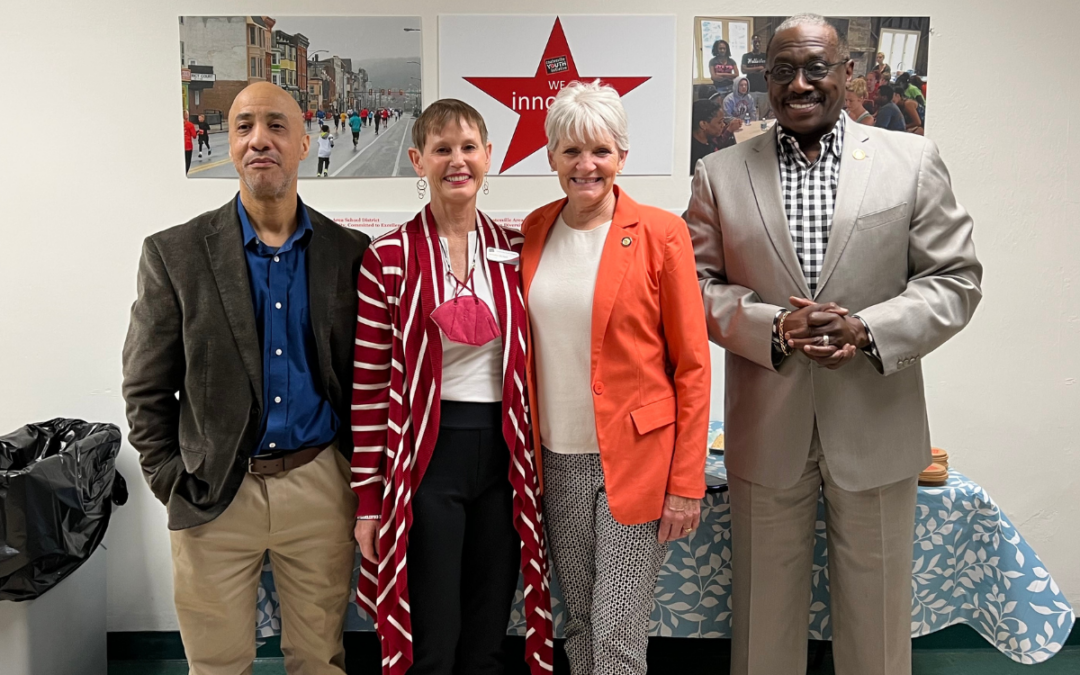
Harrisburg, Pa (April 22, 2026) – Two nonprofit organizations serving young people and teens in Chester County were awarded state funding for violence prevention programs and after-school activities, State Senator Carolyn Comitta said.
The funding, approved this week by the Pennsylvania Commission on Crime and Delinquency (PCCD), comes through the Violence Intervention and Prevention (VIP) and Building Opportunities through Out-of-School Time (BOOST) grant programs.
- The Coatesville Youth Initiative was awarded $278,000 in VIP support to expand its Youth‑Led Community Violence Prevention Initiative, an upstream prevention model serving youth ages 14–17 across the Greater Coatesville Area. The initiative, which is expected to serve 500 individuals total in two cohorts, aims to strengthen protective factors, reshape peer norms, and increase community access to violence‑prevention, behavioral health, and support services.
- The Young Men and Women In Charge Foundation was awarded $498,000 in BOOST funding for its out‑of‑school‑time Pre‑College Program, which provides academically focused, STEM‑enriched programming; structured mentoring; leadership development; family engagement; and college and career readiness support services during after‑school hours, evenings, and weekends. The program serves approximately 286 economically disadvantaged and historically underrepresented students in four high‑need communities, including Coatesville.
In addition, Chester County was awarded $477,000 in VIP funding to launch a new, county‑wide violence‑reduction initiative involving the Chester County Detectives and the Adult Probation, Parole and Pretrial Services Department. The project aims to enhance the county’s capacity to prevent, investigate, and respond to firearm‑related violence by collecting, organizing, and analyzing firearm‑related data to support detectives in identifying patterns and multi‑case linkages in gun‑related investigations and working directly with individuals convicted of violent or firearm‑related offenses. It is expected to serve about 150 individuals each year.
“Gun violence remains the leading cause of death for children and teens in the United States,” Comitta said. “But we can help keep kids safe by engaging them in afterschool activities, providing opportunities for mentoring, teaching conflict de-escalation, emotional regulation, and coping skills, and getting them on the right track for college and career success. These programs not only help young people avoid dangerous situations, but they also show how to develop the foundational skills for a safe, healthy, and productive life.”
Funding for the projects come as part of $65 million in total support for 177 projects, including 148 VIP grants and 29 BOOST grants statewide. PCCD selected the recipients from 464 eligible applications.
VIP funds support a wide range of community-based violence prevention and intervention efforts, including street outreach and violence interruption programs, reentry and workforce development programs, victim services, hospital-based violence intervention programs (HVIPs), and more.
BOOST grants, first established under VIP in 2024-25 state budget, focus specifically on increasing access to structured outside and after-school activities that help keep young people safe and engaged, such as mentoring, summer programs, and youth enrichment initiatives.
“The VIP Grants program has become a cornerstone of PCCD’s violence reduction strategy. It has brought together evidence-based approaches with community-driven solutions,” PCCD Executive Director Kirsten Kenyon said during her testimony. “It also represents one of the most significant statewide investments in community safety our Commonwealth has ever made.”
Under Governor Shapiro, state funding for the VIP program has more than doubled. Over the past three years, PCCD has provided more than $1 billion in funding through 6,764 grants across Pennsylvania to address and prevent violence in our communities.
During that time, the Commonwealth has experienced a 40 percent decrease in firearm-related crimes, a 35 percent decrease in homicides, and a 26 percent decrease in assaults.